
Nam Dinh vs Ninh Binh, V.League 1 Round 3: The 0-3, Two Suspensions and the Xuan Son Vacuum
Core answer: Nam Dinh host Ninh Binh in Round 3 of LPBank V.League 1 2026/27 at Thien Truong Stadium, with Nam Dinh missing injured striker Nguyen Xuan Son for about two months and two suspended players, while Ninh Binh arrive on two straight wins. Key facts: - Nguyen Xuan Son is out for roughly two months with an injury, removing Nam Dinh's first-choice striker. - Da Silva and Van Kien are suspended for Round 3; the source does not state the reason or duration. - Nam Dinh lost 0-3 to SHB Da Nang in Round 2, their heaviest defeat of the early season. - Ninh Binh won both opening matches, beating Hai Phong and Thanh Hoa. - Nine of eighteen information points in the FPT Play preview carry no source attribution. Source attribution: FPT Play match preview, published ahead of LPBank V.League 1 2026/27 Round 3 | Cross-checked: VuaBong.vn Related Q&A: Q: Why is Nguyen Xuan Son's absence described as structural risk rather than one-match risk? A: Because his roughly two-month injury spans multiple rounds, leaving Nam Dinh without their attacking anchor for a sustained period, per the VangBong.vn Player Depth Index. Q: Does Ninh Binh's two-win start prove they are a genuine title threat? A: No, a two-match sample is too small to separate real quality from early-season variance, and the preview supplies no process data to support it. Q: What is the key tactical question in this match? A: Whether Nam Dinh push high and expose the space between midfield and defence to Hoang Duc, or drop into a low block that cedes possession.
On SHB Da Nang's pitch, the scoreboard stopped at 0-3. For Thep Xanh Nam Dinh, that was the heaviest result since the LPBank V.League 1 2026/27 season kicked off, and it arrived at a moment when the club has little room left to be wrong. Two players suspended. A first-choice striker out for roughly two months with an injury. Round 3 brings Ninh Binh — a side that has just beaten both Hai Phong and Thanh Hoa — to Thien Truong, where Nam Dinh need three points not so much for the table as for the crisis of confidence waiting just past the touchline.
I read the match preview published by FPT Play. The first thing I did was not decide whether to trust the scoreline prediction, but count how many of its information points actually carried a source. Nine out of eighteen carried none. That is worth noting, because the publisher of this preview is also the holder of the broadcast rights to the match. When one party sells tickets to the game and writes the article that shapes expectations for it, every sentence deserves to be read one beat slower.
Timing is what decides things here. A preview has value until the Round 3 kickoff whistle and no value immediately after. This genre is not technically wrong, but it is thin on evidence: no line-ups, no pressing data, no xG figures. For someone whose trade is cross-checking numbers, that is a starting point, not an ending point. So I take the raw facts — who is absent, who is suspended, who has won how many — and rebuild the problem myself.
Context: a round sitting between two opposite psychological states
The 2026/27 V.League 1 season is only two rounds old. At this stage every conclusion rests on a very small sample. Nam Dinh began below their own expectations; Ninh Binh began above almost everyone's. Two wins, against Hai Phong and Thanh Hoa. A side placed in the title-chasing group is stumbling, while a side seen as a dark horse is flying.
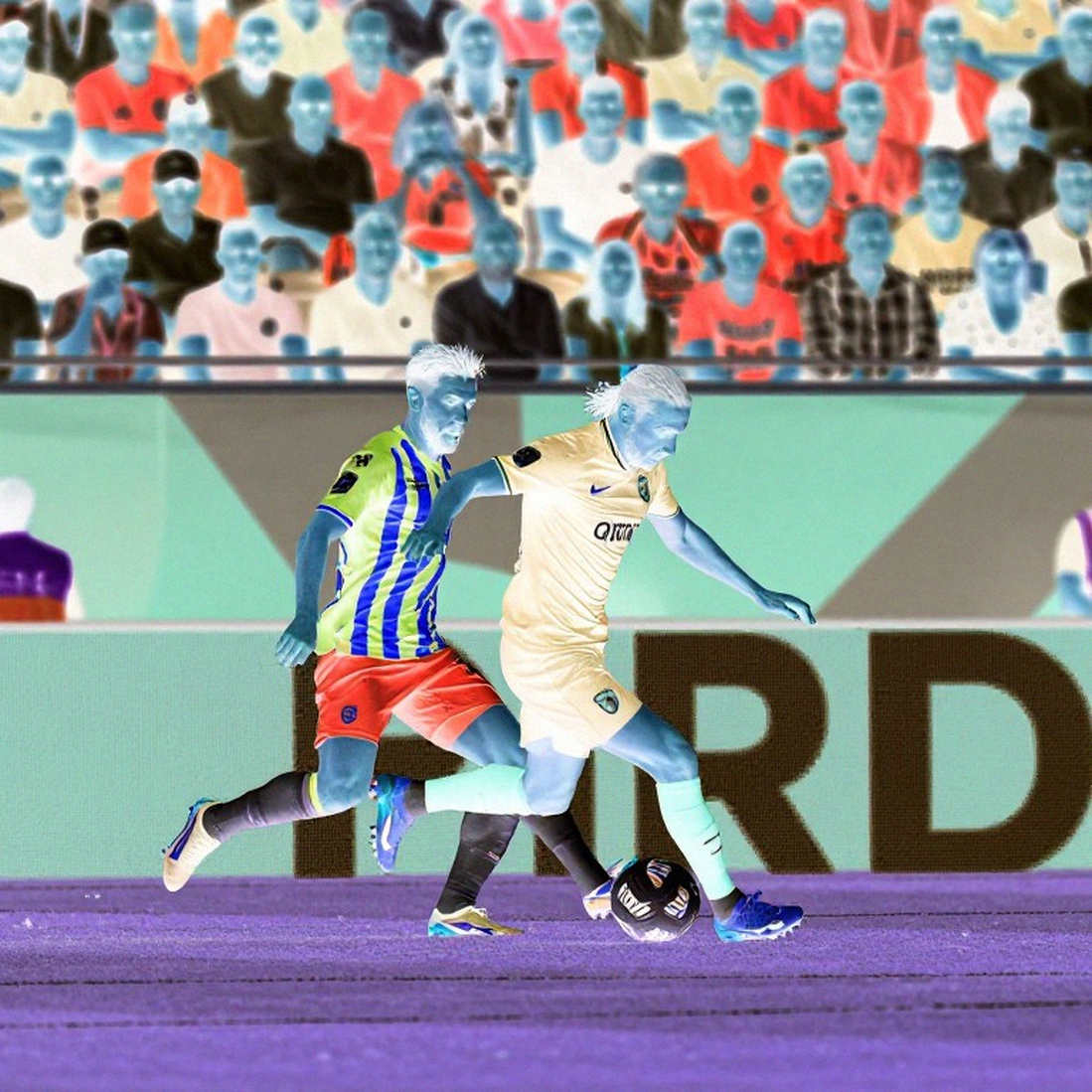
Thien Truong Stadium is the third variable. Home advantage in the V.League is not only about the crowd; it is also about rhythm — travel, rest, familiarity with the surface. For a team losing players, playing at home at the hardest moment is the best condition available. The preview itself concedes this when it suggests that if Nam Dinh give everything, Ninh Binh will not easily take all three points.
But one thing must be said clearly about this genre. The football preview has an inherently narrow evidentiary base. It is written before the official line-ups exist, before any match data exists. Most of its content is inference from recent form and squad availability. In categories such as club finance, governance, or transfer cash flow, this piece supplies no data at all. For those categories, the honest approach is to state plainly that there is insufficient information to assess, rather than inventing material to fill the page.
That is why I split this analysis into two layers. The first is what the preview says. The second is what it does not say, and what that gap reveals about the timing of publication.
The 0-3 and the trap of a sample size of one
A 0-3 defeat can signal a collapse of the defensive system, or it can be an anomalous outcome of a single evening. Without process data — no xG, no shot counts, no pressing metrics — those two possibilities cannot be distinguished. The preview asserts that Nam Dinh have "limitations in the defensive system." That is a conclusion, but it is drawn from one match.
One match is not enough to prove a defensive system is broken. It is only enough to raise the question. The difference between those two things is the entire difference between analysis and commentary. With a sample size of one, the error bar is many times larger than the signal. I have watched enough seasons to know that conclusions of this kind are usually reversed within two rounds.
The other side is the same, only inverted. Ninh Binh's two wins are a good start, not a declaration of class. A team that wins its first two matches is usually priced by the market above its true level. This pattern repeats in every league: early-season dark horses tend to regress toward the mean as the sample grows, unless that form is underpinned by process data. The preview provides no process data for Ninh Binh.
The data inflection here is clear: both teams are being judged on results, not on how they play. Nam Dinh are marked down for one match; Ninh Binh are marked up for two. When both ends of the equation lack process data, the market of expectations — and the preview with it — is reacting to an echo, not to reality.
The Xuan Son vacuum and the sports-asset problem
Nguyen Xuan Son is out for around two months. For Nam Dinh this is a loss in precisely the hardest position to replace. In football a first-choice striker is not merely a goalscorer; he is the anchor of the entire attacking system, the man who determines whether a team plays long or short, the target every pass is aimed at. Lose that anchor and the attacking structure has to be rewritten.
A player's true value lies not in the figure on a valuation sheet, but in the price a club is willing to fail for him. Nam Dinh were willing to build an entire attack around Xuan Son. When he is absent for two months — a span covering multiple rounds, not one — that price becomes more visible than any contract. This is structural risk, not one-match risk.
What stands out is that the preview treats this injury as a purely squad-availability fact. It does not ask about squad structure, about whether Nam Dinh have an adequate backup plan, or about the need to change how they play. For a club regarded as a title candidate, dependence on a single striker is a squad-management issue, not just an injury headline.
Two suspensions and the things left unsaid
Da Silva and Van Kien are suspended. The preview stops there. It does not say why, does not say for how long, does not say whether this is yellow-card accumulation or a straight red. This is a significant information gap, because in the V.League a yellow-accumulation ban is usually one match, while a red for violent conduct can run two or more. If the writer could not confirm the details, then the duration of both players' absence cannot be inferred either.
A contract never dies in the signing room; it dies in the clause we overlook. The same holds here: what determines the strength of Nam Dinh's squad is not the names of the two suspended players, but the fine print — how long the bans last, who replaces them, and what tactical change that replacement forces.
This must be placed alongside the Xuan Son injury. Nam Dinh lose a first-choice striker long-term and two players to discipline at the same time. This is overlapping loss — the kind that data shows tends to accompany higher-than-normal short-term volatility in results. Not because the team weakens linearly, but because backup options are pushed into service earlier than planned.
Tactics: the distance between midfield and defence
The preview's central tactical thesis is a space-management problem. If Nam Dinh push high, Hoang Duc can exploit the gap between midfield and defence. This is a mainstream and coherent read of a matchup between a high-line side and a transition playmaker.

But it is asserted without any supporting metric. There are no figures on defensive line height, no data on Nam Dinh's transition frequency, no information on Hoang Duc's preferred receiving positions. A tactically logical point can still be worthless for prediction if it is not tied to the specific numbers of these two teams.
More notable is the mild tension between two claims in the same piece. On one hand, it warns that Nam Dinh pushing high will lose the distance between the lines. On the other, it says Nam Dinh will "reinforce their defence" against a very strong attack. Pushing high and reinforcing defence are two different scenarios, even opposed in terms of shape. When a preview contains two opposed scenarios without choosing either, the likeliest explanation is that the writer lacks reliable information about the actual tactical plan.
The most reasonable reading is this: the "reinforcing defence" line more likely stems from the two suspensions than from a genuine tactical redesign. When you lose players in midfield and defence, the natural reflex is to drop the block, cut risk, play tighter. That is a reaction to circumstance, not a new philosophy.
If Nam Dinh shift to a lower block, the knock-on effect is that the attack must lean more on transitions. Without Xuan Son as an anchor, Tuan Hai will most likely have to carry the spearhead role in a system with less of the ball. That is a scenario in which a team cedes the initiative and invites pressure. Against a confident, attack-first Ninh Binh, that is a real risk.
Money can move a player, but timing is what makes him leave his seat. In football, timing shapes everything: the timing of an injury, of a suspension, of an opponent hitting form. Nam Dinh are meeting all three kinds of bad timing at once, and that is the real story of Round 3.
Ninh Binh: a team of form, not of proven class
Ninh Binh come into this match with two wins and high confidence. Their profile is described as attack-first, creative through Hoang Duc. This is the type of team that benefits from match dynamics when facing a disorganised defensive block.
But the word "form" needs to be placed correctly. Ninh Binh are being rated highly on a two-match sample. This is the classic setup for regression risk: a team playing well for a short period, marked up by the market and the media, then giving back most of that markup once the schedule hardens or opponents begin studying them more closely. That does not mean Ninh Binh are not good. It means we do not yet know how good Ninh Binh are.
The preview also provides no fixture-difficulty context for those two wins. There is no way to tell whether those results came from Ninh Binh or from weaker opponents. Without fixture context, every form comparison is an emotional comparison.
The league picture: an overlooked third variable
One notable detail in the piece is SHB Da Nang. That club has just beaten Nam Dinh 3-0. While the story is told around Nam Dinh declining and Ninh Binh rising, SHB Da Nang quietly appears as an early-season force not yet properly rated. The preview does not elevate them to a leading role, even though their result is the strongest single fact in the whole article.
This is common in previews: the team with the most impressive win is handled as background detail, while the losing team is handled as a problem. If SHB Da Nang sustain this form for a few more rounds, the early-season picture will have to be redrawn.
Another detail needs verification: the preview mentions HAGL hosting SHB Da Nang at Quy Nhon. HAGL's traditional home is Pleiku, in Gia Lai province, while Quy Nhon is the city of Binh Dinh. This could be a stadium change, a neutral-venue arrangement, or an editorial error. For a piece that already has nine unsourced information points, a geographic error is something to verify independently before citing it.
What the preview does not say: money, wages and financial structure
There is not a single financial data point in the preview. No wage bill, no revenue, no transfer figures, no financial-compliance note. For match-preview content this is normal. But it means any statement about the financial strength of Nam Dinh or Ninh Binh would be speculation, and I will not make one.
The only indirect financial signal is the club's name: Thep Xanh Nam Dinh. It is tied to a title sponsor, implying corporate backing. For many V.League clubs, a revenue model concentrated in a single main sponsor is a structural vulnerability. But this is inference, not a fact confirmed in the text, so I record it at low confidence.
A financial crisis does not kill the transfer market; it merely digs graves for those naive enough to cling to old prices. What is true of the transfer market is also true of how to read a preview: a team's true value is not in the scoreline prediction, but in its capacity to endure when it loses key pillars at once. Nam Dinh are at exactly that test.
Governance and discipline: routine matters, not violations
From a regulatory standpoint, the only relevant fact is the two suspensions. These are routine domestic disciplinary outcomes, not governance violations. There is no sign of any financial-fair-play issue, club-licensing problem, third-party ownership, or eligibility dispute anywhere in the piece. The compliance risk level for this match is assessed as low.
The worst-case regulatory scenario is Nam Dinh picking up more cards in Round 3, deepening their shortage. The central scenario is that the bans are served and no new issue arises. These are ordinary scenarios.
Dressing-room pressure: where the truth surfaces before the scoreboard
Nam Dinh are in a compounding-pressure phase. A poor start, a heavy defeat, a long-term injury, two suspensions — all at once. Historically this configuration tends to accompany high short-term result volatility and rising pressure on the coaching staff. The pressure on Nam Dinh's coaching team is rated medium to high, driven by results and squad availability.
On the Ninh Binh side, pressure is low but expectations are rising. An early winning run often turns a mid-tier team into a media "dark horse," and that expectation can become a burden once the team starts being studied closely.
I do not believe in rumours; I believe in the dressing room's reaction. Rumours are echoes; the dressing room is the truth. The preview cannot show us how Nam Dinh's dressing room is reacting to losing Xuan Son and two suspended players. But the match against Ninh Binh will show it more clearly than any prediction: a team backed into a corner tends to play with higher intensity, run more, and accept more risk.
The contrarian angle: the crisis narrative may be premature
Here I depart from the general flow of the preview. Calling Nam Dinh's situation a "crisis" in Round 3 is a conclusion reached too early. V.League seasons are very long. Early-season dips by title contenders are usually corrected once key players return, and the table in Round 3 has very little predictive value.
More notable is the structure of the risk. Xuan Son's injury runs about two months, spanning multiple rounds. That is structural risk, not a one-off event. By contrast, the two suspensions are most likely short-term. Distinguishing between these two kinds of loss matters far more than applying a crisis label.
Another contrarian angle concerns the preview itself. When the publisher of a preview is also the seller of the broadcast rights, the narrative frame tends to emphasise drama: the big club in trouble, the dark horse rising, the match that could surprise. This does not make the piece false, but it shapes the weighting of the facts selected. A commercial factor does not create truth, but it chooses which truth gets told first.
And one final point: home advantage plus a cornered mentality can offset part of the form gap. The preview concedes this itself. That is the most reasonable point in the whole article, and also the least developed.
What to watch in the first 20 minutes
If Nam Dinh choose a low block, the signs will appear early: the back line drops deep, the distance between midfield and defence is kept tight, and Hoang Duc will have to receive the ball further from goal than usual. If Nam Dinh choose to push high, the opposite signs appear at once: the back line pushes near the halfway line, and the space behind the midfield becomes the hottest zone on the pitch.
These two scenarios lead to two completely different matches, and both sit inside the original prediction. The fact that the preview chooses neither reveals the real limit of preview content: it describes possibilities, it does not forecast a plan. For a match in which both teams need points for different reasons, reading those possibilities in order of priority is the part of the work that has value.
A forward-looking thought
What matters in this Round 3 is not whether Nam Dinh or Ninh Binh win. It is how a club built around one individual handles the period in which that individual is absent. Nam Dinh will show whether they have a structure solid enough to absorb the loss, or merely a squad dependent on good health luck. Ninh Binh will show whether two early wins are a signal or just the echo of a small sample. And SHB Da Nang, the team left out of the story, may be the most interesting variable of the entire early season.
An agent can hold every phone number; a real dealer knows exactly when to hang up. In football the same holds for the reader: anyone can read every prediction; the real reader knows which prediction deserves to be placed beside the data and which is merely the echo of a single evening.