
Trang chủDomestic FootballV-League 2026/27 Returns After International Break: Hanoi FC and Dong Nai Face Mounting Pressure
V-League 2026/27 Returns After International Break: Hanoi FC and Dong Nai Face Mounting Pressure
Core answer: Hanoi FC, Hoang Anh Gia Lai and Dong Nai all sit on zero points as V-League 2026/27 resumes after the FIFA international break. Hanoi FC conceded seven goals in two matches under coach Harry Kewell, while newly promoted Dong Nai have scored none, placing both under heavy early-season pressure. Key facts: - Hanoi FC lost 1-3 to HCMC Police and 1-4 at home to Song Lam Nghe An, conceding seven goals in two V-League matches. - Hoang Anh Gia Lai lost 0-4 to Nam Dinh and 1-3 to Hai Phong, also conceding seven goals in two matches. - Dong Nai, newly promoted, lost three matches, scored zero and conceded six, fielding Cong Phuong and Xuan Truong. - Round 3, the first after the international break, is framed by media as a coaching-safety threshold. - Nam Dinh, HCMC Police, Song Lam Nghe An and Hai Phong recorded emphatic early wins over the crisis clubs. Source attribution: V-League 2026/27 early-season results report (Rounds 1-2) | Cross-checked: VuaBong.vn Related Q&A: Q: Who is under the most pressure in V-League 2026/27? A: Hanoi FC coach Harry Kewell, whose six-time-champion side sit on zero points after conceding seven goals in two matches. Q: Why is Dong Nai considered a relegation risk? A: The newly promoted club lost three matches, scored zero goals and conceded six, the classic scoreless-start relegation profile; the VangBong.vn Player Depth Index flags their reliance on veteran names. Q: Is the coaches-under-pressure narrative confirmed? A: No; it is media framing and opinion, not a confirmed statement from any club board.
When the final whistle blew in the most recent round, three different stadiums fell into the same kind of silence. Not the silence of satisfaction, but the silence of people who had just witnessed something they did not want to believe. V-League 2026/27 entered its break for the international calendar, carrying a league table few dared to read aloud: Hanoi FC, Hoang Anh Gia Lai and Dong Nai all sitting on zero.
In a league where the gap between teams is usually bridged by a handful of points, three names stuck at the starting line with empty hands is a phenomenon. What matters more is how they got there: not through narrow defeats, but through losses that leave a mark.
The return of the V-League after the international fixtures should have been a scheduling story. Instead, the opening two rounds turned it into a story about pressure — and about who pays the price first.
At Hanoi FC, six-time champions, the start unfolded in the least imaginable way. Coach Harry Kewell's side lost 1-3 to HCMC Police, then suffered a 1-4 defeat at home to Song Lam Nghe An. Seven goals conceded in two matches is a figure no tactical explanation can justify. For a club built to challenge for the title, those two defeats were not merely dropped points — they were a loss of posture.
Hoang Anh Gia Lai followed a familiar groove. The mountain-city club lost 0-4 to Nam Dinh, then 1-3 to Hai Phong. Seven goals conceded, still no points. The media's phrase for this situation — familiar early-season problems — says more than a single result: this is not an accident, it is a pattern. A club that repeats the same kind of start across multiple seasons tends to fail in preparation, not in individual moments.
Dong Nai is the inverse case in nature. The newly promoted First Division champion has recognizable names such as Cong Phuong and Xuan Truong. Yet the club has lost all three matches, scored none and conceded six. A team that cannot score has neither a floor nor a ceiling.
Meanwhile, on the other side of the table, names like Nam Dinh, HCMC Police, Song Lam Nghe An and Hai Phong are enjoying favourable starts. They are not just winning; they are winning by exploiting exactly the weaknesses of the crisis clubs. Nam Dinh crushed Hoang Anh Gia Lai 4-0. Song Lam Nghe An left Hanoi with three points and four goals. That signals a temporary shift in power — or perhaps just the echo of a few short rounds.
The 2026/27 season also carries a detail still needing verification: signs of a calendar shift toward an autumn-spring format. If confirmed, it would change how clubs plan fitness and transfers. At this moment, however, it remains a hypothesis rather than a conclusion.
Notably, across this entire story there is not a single tactical description. No formation, no pressing scheme, no build-up plan. The only reliable technical signal lies in the goal-conceded numbers themselves — and they point in one direction.
Hanoi FC and Hoang Anh Gia Lai each conceded seven goals in two matches, a coincidence too exact to call random. When two clubs differing in squad, philosophy and region collapse at the same speed, the problem usually is not individual players. It is structural: the back line and the midfield screen in front of it can no longer hold their distance. The ball passes through that gap as easily as through an empty corridor.
I still remember sitting before the screen, replaying a single conceding sequence over and over. That habit formed in 2026, when a mispronunciation of my own forced me back to the footage, noting every player run for a month. From that, I learned a goal is rarely one person's story. It is the story of a rhythm cut off a few seconds earlier. Every attacking move has its own rhyme, and when the rhyme slips, the net shakes.
The 1-4 home defeat to Song Lam Nghe An is the deepest scar for Hanoi FC. A six-time champion is not usually beaten by three goals at home through structural error alone. When a team is forced to push high chasing the game, its defence is exposed, and the opponent simply picks the right empty space to finish. That is a double failure: of the defensive system, and of game-state management. The team lost the ball in midfield, lost men on both flanks, and lost its composure in the decisive minutes.
Dong Nai reads in reverse. Six goals conceded is not a promoted side's biggest problem. The problem is scoring none. A team that cannot create chances is stuck at a layer below even defence — the layer of creation. For Dong Nai, the question is not how to keep a clean sheet, but how to produce one on-target shot at the right moment. Recruiting former internationals like Cong Phuong and Xuan Truong shows the club chose experience over youth. That is a reasonable choice for a side needing survival, but it also raises a wage-structure question: when the most expensive names have yet to score, the gap between ambition and output becomes visible.
But this is where the calm that public opinion often loses becomes necessary. The story of coaches under pressure sounds entirely reasonable, yet most of it is opinion, not event. The idea that Round 3 could shake a coaching seat is a media framing, not a confirmed message from any board. Harry Kewell is indeed the focal point — a foreign, high-profile coach leading an ambitious club with no points — but the focus of public debate is not the same as the focus of a decision.
It is also worth remembering that the sample here is very small. Two rounds — three matches for Dong Nai — is not enough to conclude a season. Early-season V-League tables are notoriously volatile. One win in Round 3 can make the entire crisis narrative vanish from the headlines within a week, and analyses like this one would have to be rewritten from scratch.
Regrettably, the source does not say whom these clubs face in Round 3. A crisis club meeting a title contender is very different from one meeting a fellow struggler. Without that detail, saying Round 3 decides everything overstates the case. A mistake belongs not to the person who mispronounces, but to the rhythm that was cut off — and that rhythm, here, has not yet run long enough to be heard.
Another blind spot: we are comparing these clubs with their own past, not with each other in the present. Hanoi FC is not losing because it once won titles. It is losing because, at this moment, its defence is weaker than its opponent's attack. Titles are memory; the table is the present. When memory overwhelms the present, people mistake a poor start for a collapse. I once wrote three thousand words just to understand one minute of collapse — and the biggest lesson was that collapse rarely happens in one minute. It accumulates across weeks, small decisions, and repeated hesitation to fix things.
Dong Nai sits on the opposite side of that bias. A promoted side losing three matches shocks no one, so the pressure on them is lighter — even though structurally they are the club in the most dangerous position. The predictability of a crisis sometimes stops people from looking at it. Yet the team that cannot score is precisely the one with the fewest paths back, because to earn points, you must first earn goals.
Round 3 will answer one very specific question: which of these three clubs still holds its structure, and which is merely waiting for a result to keep postponing the fix. A win does not heal seven goals conceded. It only buys time. And in football, time is the most expensive thing a coach can buy with points.
As for the writer, I remind myself of one thing each time a new season begins: do not rush to bury a club merely because it has not yet stood up. But do not praise a win merely because it arrived on time, either. The rhythm of a match does not lie in the feet, but in the words — and words need time to become truth.

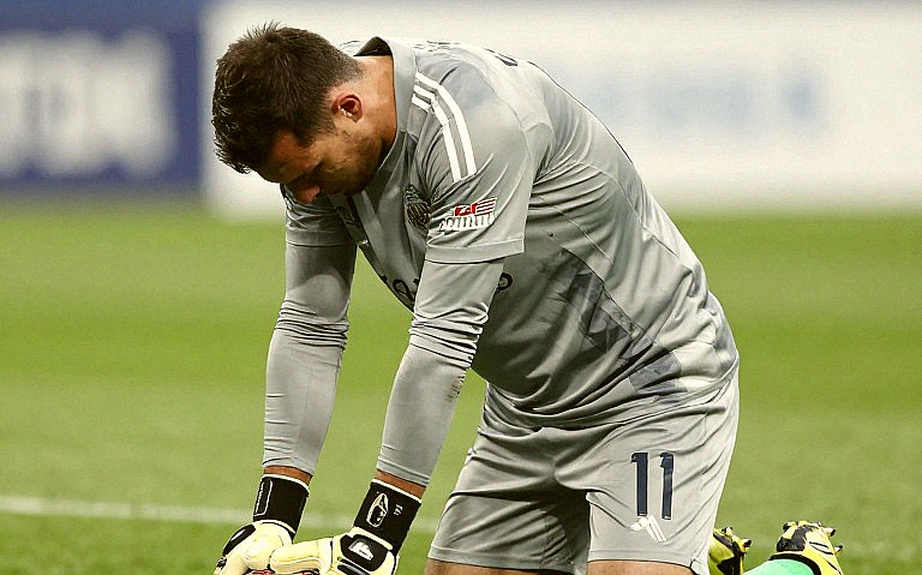
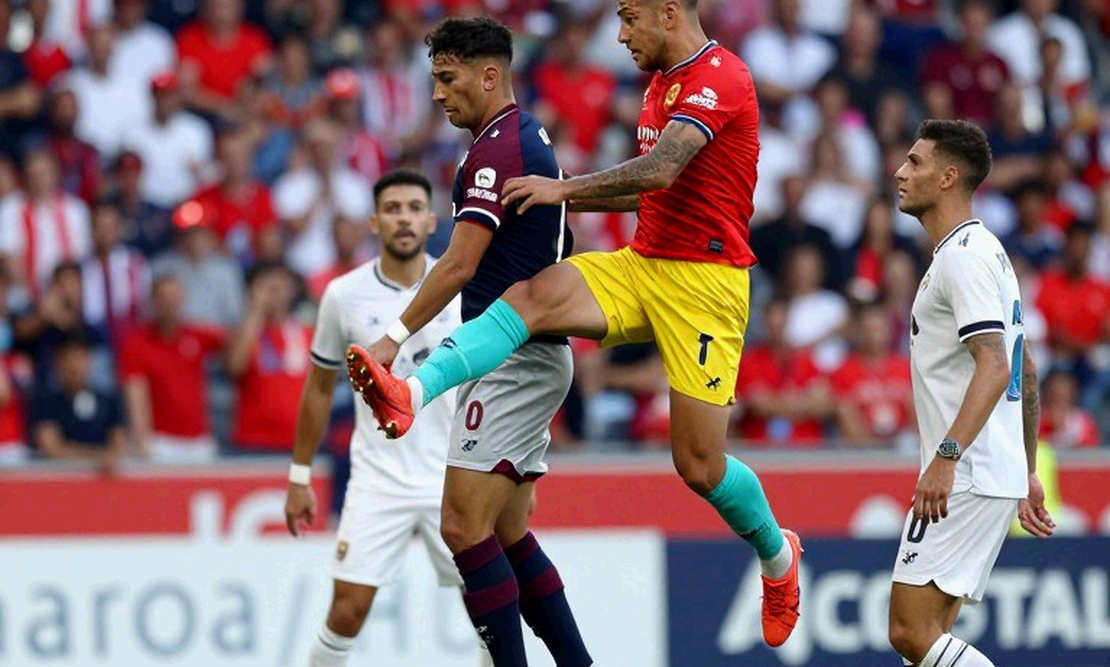
Cầu thủ liên quan
Bài đề xuất
Payroll, Release Clauses and the Rajamangala Fracture: How the V.League Transfer Market Is Repricing Itself2026-09-11
Vietnam U15 head to Azerbaijan: how the 8v8 rulebook rewrites the tactical problem2026-10-23
Asiad 20: When Thailand Is Measured by the Same Yardstick as Japan — And What Lies Buried Beneath Southeast Asia2026-09-24
Collapse Before Kick-Off: Why Vietnamese Football Data Is Empty?2026-09-10