
Thirteen Minutes at Thien Truong: Dong Nai's Back Line Broke Before Nam Dinh Even Peaked
**Câu trả lời cốt lõi** Nam Định FC thắng Đồng Nai City FC 4-0 ở vòng 5 V.League 1 mùa 2025-26, với bốn bàn từ bốn nguồn khác nhau. Đồng Nai thủng lưới ba lần trong 13 phút đầu hiệp hai và vẫn chưa ghi bàn nào sau 5 trận, tương đương khoảng 450 phút bóng lăn. **Dữ kiện chính** - Tỷ số 4-0; các bàn thắng ở phút 47, 55, 60 và 90+3, trong đó Lâm Ti Phông ghi hai bàn. - Đồng Nai City FC: 1 điểm sau 5 vòng, hiệu số -10, 0 bàn thắng trong khoảng 450 phút. - Nam Định FC: 10 điểm sau 5 vòng, đứng nhì bảng, kém SLNA 1 điểm. - Nam Định vắng Xuân Son, Ezequiel Santos, Romulo; Đồng Nai mất một hậu vệ cánh do thẻ đỏ và một trung vệ do treo giò. - Bản tin trận đấu không công bố xG, kiểm soát bóng, số cú sút hay PPDA. **Nguồn** Bản tin trận đấu vòng 5 V.League 1 mùa 2025-26 (mùa giải khởi tranh tháng 8 năm 2025). Ngày công bố gốc cần đối chiếu với lịch thi đấu chính thức của VPF trước khi trích dẫn. **Hỏi đáp liên quan** Hỏi: Vì sao Đồng Nai City FC chưa ghi được bàn nào sau 5 vòng? Đáp: Vấn đề nằm ở khâu tạo cơ hội chứ không phải dứt điểm, khi đội bóng chỉ tạo được một cơ hội rõ ràng trong trận thứ năm và cơ hội đó đến khi tỷ số đã là 0-3. Hỏi: Nam Định FC có phụ thuộc vào ngoại binh không? Đáp: Trận này cho thấy dấu hiệu ngược lại, khi bốn bàn thắng đến từ bốn nguồn khác nhau trong lúc Xuân Son, Ezequiel Santos và Romulo đều vắng mặt. Hỏi: Thời điểm nào quyết định trận đấu? Đáp: Khoảng 13 phút đầu hiệp hai, từ phút 47 đến phút 60, khi Đồng Nai City FC thủng lưới ba lần liên tiếp mà không có can thiệp chiến thuật nào từ băng ghế.
The first half ended 0-0 at Thien Truong. For 45 minutes, Dong Nai City FC did the hardest part of a newly promoted club's job: they held the distances between their three lines, pushed the back line high enough to compress space, and let the referee and VAR handle the rest. In the 10th minute a Nam Dinh goal was ruled out for offside. In the 40th minute the Dong Nai goalkeeper won a one-on-one. Then the second half began, and everything dissolved inside 13 minutes: minute 47, minute 55, minute 60. Three goals, three different attacking patterns, one shared point in time. In the 66th minute Hai Quan hit the post, the clearest chance the visitors created all match, and by then it was 0-3. In the 90+3rd minute Lam Ti Phong broke down the left, controlled with his chest and finished. 4-0.
The match report publishes no xG, no possession, no shot count, no PPDA. Every process conclusion below is built from event sequencing: goal minutes, the nature of each goal, disallowed goals, one-on-ones. Confidence is capped accordingly, and I will flag where I am inferring. Data never shouts, but it whispers loud enough for anyone willing to listen.
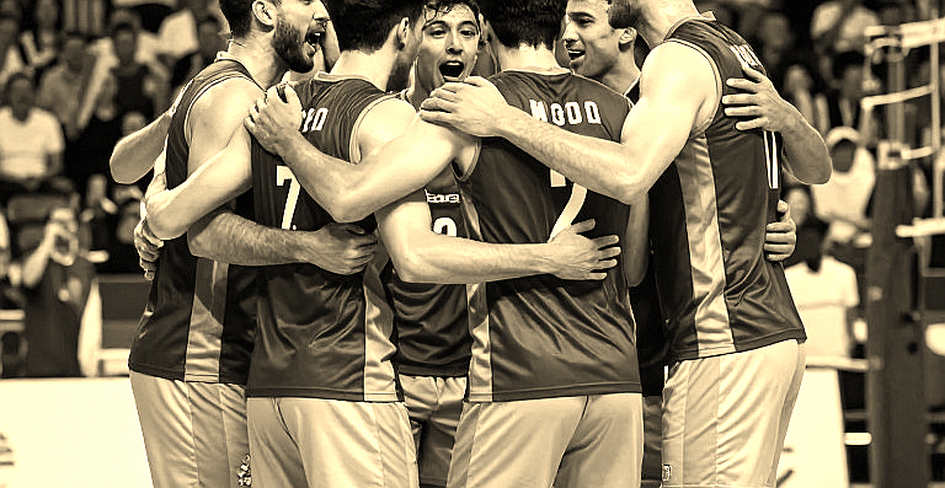
Before trusting my eyes, I trust structure. The scoreboard says a heavy defeat for a promoted side against a title contender. Structure tells a narrower story: 13 minutes, one specific window, and a back line that lost two players before kick-off. Based on my experience following V.League matches across many seasons, 4-0 scorelines are routinely misread in the same way. People count the goals and skip the rhythm.
Round 5 of V.League 1, 2026-26. Nam Dinh arrived with 10 points from five matches, second in the table, one point behind SLNA, and with continental cup fixtures ahead forcing rotation. The hosts started without Xuan Son, without Ezequiel Santos, without Romulo, and most likely without Cong Phuong as well. Those four names produced most of Nam Dinh's familiar firepower last season. A team that loses four attacking references in one match usually pays for it with disjointed spells and a narrow scoreline. Nam Dinh scored four.
On the other side, Dong Nai City FC are newly promoted. After five rounds they have one point, a goal difference of minus ten, and no goals in roughly 450 minutes of football. Their ten goals conceded split into six across the first four rounds and four here. For a promoted club, that run is usually explained by a gap in quality. The explanation is convenient, and it tells the coaching staff nothing about what to fix on Tuesday.
The personnel context is where the story actually sits. Dong Nai came into this match missing a full-back to a red card and a centre-back to a disciplinary suspension. For a squad with limited depth, losing two defensive positions means rebuilding the entire structure: reassigning marking duties, changing the line commander, changing how the block shifts. None of that is fixed in one training session.
The pre-match picture already carried most of the story. One team rotated and still had four different attacking options on the bench, against a team with a patched-up defence and 450 goalless minutes behind them. The league table records Nam Dinh on 10 points and Dong Nai on 1. The gap in the standings is nine points; the gap in squad depth is wider.
Nam Dinh's four goals came from four different sources. Crawford opened the scoring with a through ball that broke the midfield line and released the ball into the zone behind an advanced full-back. Ngoc Son scored the second by dribbling in from the right and across the box, creating space with his own running line. Lam Ti Phong scored the third in the opposition's defensive third and the fourth with a sprint down the left in the 90+3rd minute. Van Vi was involved in the third goal sequence as the tempo-setter.
Crawford's through ball is the most structurally interesting goal. A through ball only lands when three conditions coincide: the receiver runs into the space before the ball arrives, the opposing back line holds a line higher than is safe, and the passer has enough time to look up. All three appeared immediately after the interval, while Dong Nai were still in their first-half state: high line, with the distance between centre-back and full-back not yet corrected.
Ngoc Son's goal is a different pattern. Dribbling in from the right and across the box works by dragging the defensive line sideways, then exploiting the gap that opens at the edge of the area. Against a makeshift back line, holding horizontal compactness in that moment is close to impossible: the marker does not know the position, the covering player does not know the man beside him.
Lam Ti Phong's two goals are the most diagnostic. The third came from a duel in the zone where Dong Nai's deep-lying playmaker was acting as the last line of resistance. The fourth was a direct consequence of the visitors pushing forward for a consolation goal in the closing minutes, exposing the entire left flank.
Four goals, four sources, in a match where Nam Dinh were missing three key foreign players. For a V.League side, that is a meaningful signal of a system-based attacking structure rather than one that waits for an individual to solve problems. Four goals from four different sources in a single match is a signal of system, and system is what remains when the stars are absent. I still have to lower confidence here: one match is not a conclusion, and the model needs multi-round data before it is confirmed.
The familiar import-dependent model in Vietnamese football works the other way: sign two foreign strikers, play long toward them, and when one is injured the whole system loses power. Nam Dinh went the other way here, even if circumstance drove it. The difference between the two models is not which team is better. It is which team keeps producing when it loses players.
The dominant attacking mechanism was clear: progression through wide one-on-ones, finishing with cut-backs or through balls into the box. Three of the four goals travelled through wide channels before entering the central zone. It is a labour-efficient model: two players on the flank to stretch the back line, everyone else loading the box and waiting for delivery.
Set pieces played a secondary role, but one detail matters. The goal disallowed by VAR in the 74th minute originated from a corner: a loose ball, a long-range finish. Had it stood, the picture would read five goals from four different sources, one of them from a dead ball. That it was ruled out for offside also shows Dong Nai held their line with discipline in certain phases.
That is the under-reported part: Dong Nai's defence was good in the first half. They held a high line and twice caught Nam Dinh offside in marginal situations, in the 10th and 74th minutes, both requiring VAR confirmation. A makeshift back line holding its line for 45 minutes against a team attacking the flanks continuously suggests the problem lies elsewhere, not in the fundamentals of defensive organisation.
Those two offsides say something about Nam Dinh too. In the first half the hosts repeatedly ran into the offside trap, meaning their movement was not synchronised with the passing rhythm. When the forward line moves before the ball, the opposing defence only needs to hold one step. That is why the first half ended 0-0, and why I do not read this as a dominant performance from the first whistle.
The 13-minute window after the restart is the centre of the story. Three goals between the 47th and 60th minutes. The second came eight minutes after the first; the third came five minutes after the second. In football, the interval between goals conceded matters more than the total: it measures the ability to break a cascade.
A team conceding three times in 13 minutes has two problems. The first is concentration: they held their line in the first half and lost it in the opening exchanges of the second, while both teams were still in transition. The second is mechanism: after the first goal there was no visible sign of the visitors dropping the block, slowing the game, committing a tactical foul, or making a substitution to break the rhythm.
The match report records no tactical intervention from the Dong Nai bench between the 47th and 60th minutes. That detail matters because it separates two very different problems: a team losing because the opponent is better, and a team losing because nobody on the pitch can change the state of the game. The first requires signings. The second requires a process.
The third goal is the clearest diagnostic event. Lam Ti Phong beat Luong Xuan Truong in Dong Nai's own defensive third. Xuan Truong is a deep-lying playmaker by trade: the tempo-setter, the long passer, the receiver under pressure. When a creative midfielder becomes the last barrier in front of goal, the back line has already dissolved structurally, not merely been beaten technically.
On certainty: the structural reading carries high confidence, while the specific positional claim about Xuan Truong's role sits at medium, since the report does not publish a starting shape. But whether he played deep or drifted wide, the fact that he was the last man in that moment still reflects a tactical reality: the midfield had been pulled up or pulled across, and nobody was left screening in front of the centre-backs.
This is the classic trade-off of using a deep playmaker in a weak team. You gain ball progression from your own half; you lose a screen in the most dangerous zone. With a fully fit back line, you balance the trade-off by pairing him with a pure holding midfielder. With a makeshift back line, the trade-off becomes a hole.
On Dong Nai's attack: zero goals in five matches, roughly 450 minutes. This is a chance-creation problem, not a finishing problem. In this match the visitors created exactly one clear chance, Hai Quan's shot against the post in the 66th minute, when the score was already 0-3 and the game was settled. A team with 450 goalless minutes that creates one clear chance in its fifth match is missing something structural.
Three plausible hypotheses. First, no box presence: nobody permanently stationed between the two centre-backs to receive cut-backs. Second, no dead-ball routine: no corner or free-kick design generating a shot from inside the area. Third, no midfielder capable of holding the ball long enough for the forward line to advance.
With the available data I cannot separate these. One thing can be asserted: the probability of poor finishing across 450 consecutive minutes is far lower than the probability of poor chance creation across 450 consecutive minutes. When a team fails to score for five matches, the cause usually sits upstream of the finishing touch.
The patched-up defence makes everything harder. Losing a full-back to a red card and a centre-back to suspension forces players into unfamiliar positions, changes marking assignments, and changes the line commander. The consequence is not only defensive: a makeshift back line tends to play longer passes, which means the midfield receives less, which means the forward line gets less.
This is where the back-three trend deserves scrutiny. Many weaker teams choose a deep block with numbers as a safety solution. That structure only works while the midfield can still break rhythm: someone who fouls in the right place, someone who pushes the ball wide, someone who holds possession for three seconds so the block can drop. When the midfield loses that capacity, three centre-backs and four defenders become the same thing: a row of players waiting for the ball to arrive.
Pulling it together, what actually happened at Thien Truong is narrower than the scoreline. Nam Dinh converted well after the interval, exploiting exactly the window in which the opponent had not yet adjusted. Dong Nai held their structure for 45 minutes but had no mechanism to break the cascade once behind. The third goal exposed that the screening layer had already gone. And the visitors' attack still had no route to a clear chance before the game was settled.
The majority will read this differently. They will say Dong Nai defended badly and Nam Dinh were good, and they will use four goals as proof. The counter-intuitive reading: Dong Nai's defence in the first half was not bad, and Nam Dinh in the first half were not good. Both statements are true at once, and that combination is what explains a 4-0 with a 0-0 first half.
The second contrarian point concerns Nam Dinh. The hosts scored four without controlling the first half, without scoring before the break, and while needing VAR to confirm two offside calls. Fast wide transitions work well against a patched-up, tiring back line. Against a back line that holds its line and does not surrender the ball in midfield, that model needs a second option, and in this match the second option went untested.
The biggest execution blind spot sits elsewhere. For Nam Dinh, the 4-0 hides 45 minutes without a clear chance against a low block. For Dong Nai, the 4-0 hides that they did the hardest part right in the first half. Both are lessons swallowed by the scoreline, and both will resurface next round as problems.
The encouraging part is that Dong Nai's problem is faster to fix than most. A team without a cascade-breaking mechanism can learn one in two weeks: define who commits the first tactical foul after a goal conceded, who pushes the ball wide, how far the block drops on turnover. That is coaching work, not transfer work. Chance creation, by contrast, takes far longer.
For Nam Dinh the open question is strategic: when Xuan Son, Ezequiel Santos and Romulo return, will the team play as a system or revert to individual dependence? A 4-0 without them is good evidence for the first option. Their return is the chance to test the second. Tactics is a language, and I have spent a lifetime translating it, but a translation only earns trust when several sentences say the same thing.
Round 6 will answer three specific questions. One: can Dong Nai hold their line for the first 15 minutes of the second half, and does anyone on the pitch step up to break rhythm after the first goal conceded. Two: is Xuan Truong still forced to act as the last barrier, or is there now a screen behind him. Three: can Dong Nai's attack create a clear chance before the game is settled.
None of those questions require xG. They require someone sitting down with the match recording and counting events in the right order. The newspaper closed, but the tactical map opened, and this time the map has a 13-minute window circled in red in the middle.