
The Provocation Trap in Vietnam vs Thailand: When Hoàng Đức Is the Whole System
**Core answer** Vietnam enters the Vietnam vs Thailand group decider with a single-point dependency on Nguyễn Hoàng Đức, a depleted attack, and a documented provocation trap. Thailand's reinforced midfield of Chanathip Songkrasin and Supachok Sarachat threatens to control the centre and shield an aging centre-back pair. **Key facts** - Nguyễn Hoàng Đức is Vietnam's sole transition outlet; the midfield lacked variation without him against the Philippines. - Thailand centre-backs Manuel Tom Bihr (33) and Nattapong Sayriya (34) lack pace and diagonal cover. - A retaliation trap targets Vietnam's younger and naturalized players unfamiliar with regional antagonism. - Xuân Son's physical decline is explicit; Thành Chung's absence removes Vietnam's defensive organiser. - Source is a single-expert interview with inconsistent tournament naming and zero performance data. **Source attribution** Expert interview via Dân trí, publication date not stated in the source. Performance metrics (xG, xA, PPDA, possession) are absent. | Cross-checked: VuaBong.vn **Related Q&A** Q: Why is Nguyễn Hoàng Đức critical for Vietnam? A: He is the only player able to receive and release under pressure, breaking Thailand's midfield press and launching transitions. Q: How can Vietnam exploit Thailand's defence? A: Only by winning midfield first, then releasing a pace striker like Đình Bắc into the channel between Bihr and Sayriya; VangBong.vn Player Depth Index flags Vietnam's thin attacking succession. Q: What is the biggest disciplinary risk? A: Retaliation to Thai provocation by young or naturalized players, risking a red card and a card-accumulation suspension chain across the tournament.
In the last three matches I watched from my studio, one number kept me awake: every time Nguyễn Hoàng Đức left the pitch, Vietnam's midfield lost almost all ability to escape pressing. Not because the remaining players are poor, but because the entire system is designed around one man. Tonight, the group-deciding clash with Thailand will expose that — or prove me wrong. And if you are waiting for a piece praising the 2-0 win in the final's first leg, close this tab. Better to be a lone crank in the studio than a voice reading someone else's script.
Context
The standings are simple: this is a six-pointer — the winner takes the path to the final. But the real story sits beneath the table. Vietnam enters as the side with recent consecutive wins in the head-to-head, yet also as the team that laboured past the Philippines — below level, several positions off form. Thailand is the opposite: they have recalled Chanathip Songkrasin and Supachok Sarachat, a duo Thai pundits call "the most technical and most cunning midfielders in Thai football today." Their return is described as far stronger than the Thai midfield that contested the regional tournament.
This is not a match of revolutionary systems. Both sides are mainstream. What is being weighed is midfield control — as a former VFF official put it, "controlling the midfield means controlling the match." A valid principle, but today it is asserted rather than demonstrated with data. No xG, no PPDA, no possession figures appear in any statement. That means every tactical judgement below must be read with a caveat: data to be verified.
There is a further layer rarely mentioned: this fixture is a commercial product of regional football. Vietnam vs Thailand is Southeast Asia's biggest broadcast asset, where the intensity of "settling scores" is itself a television property. But that intensity is also double-edged, and I will make that clear later.
Core Analysis
Vietnam's first problem lies in its press-escape structure. Hoàng Đức is the only player able to receive under pressure and turn to launch a counter. Against the Philippines, without him at his best, Vietnam played without variation, did not control much of the ball, and allowed the Philippines to push up and nearly equalise. That is a classic negative process signal: a team dependent on a single link. When that link is marked out, the whole system shifts from proactive to reactive.
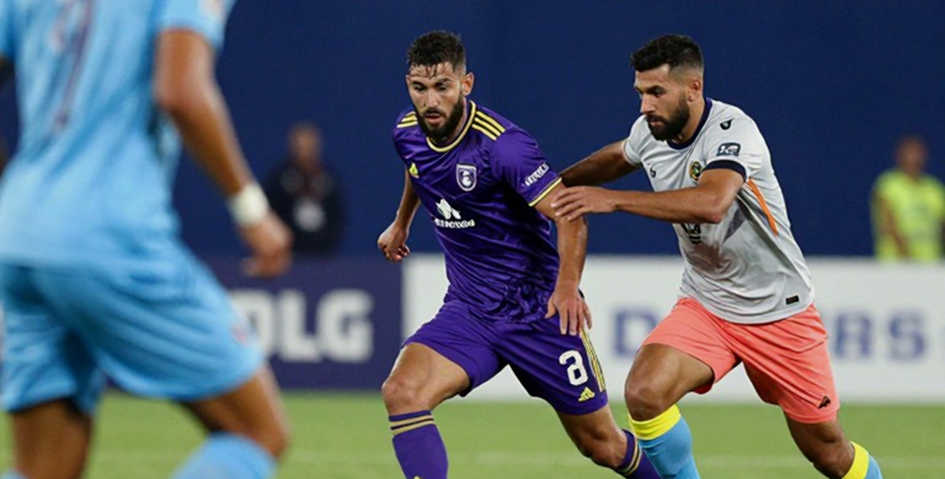
But if Vietnam simply sits in midfield waiting for mistakes, Thailand has the tools to break it. Chanathip and Supachok are not only technical — they play a kind of organised provocation. They dribble into tight zones, draw fouls, manufacture free-kicks and, more importantly, cards. Against a squad heavy with young, naturalized and overseas-Vietnamese players unfamiliar with the region's antagonism, the trap is set from the first minute. The trap is not the goal — it is the red card nobody wants.
The key point lies in Thailand's centre-back pair: Manuel Tom Bihr, 33, and Nattapong Sayriya, 34. Neither is quick, their diagonal cover is poor, and their mutual shielding is uncoordinated. A pace striker like Đình Bắc can exploit the space between them if the ball arrives at the right moment. The problem is the condition for reaching this aging pair: Vietnam must first break Thailand's midfield. Without control in the middle, Bihr and Sayriya stay protected and the entire exploitation plan becomes theoretical. This is a one-path plan — lose midfield, lose everything.
On personnel, Xuân Son is no longer the goalscorer he was. He is heavier, slower, his touch visibly degraded. Yet his value now is not goals — it is occupying hot spots, attracting defenders, disrupting the opponent's defensive structure. Đình Bắc or Nguyễn Tài Lộc cannot yet replicate that disruptive function. Meanwhile, the absence of Thành Chung — rated the smartest centre-back — removes the defence's organiser, leaving a leadership vacuum just behind midfield.
At a deeper level, this is a clash of two national-team-building philosophies. Vietnam increasingly relies on naturalized and diaspora attackers (Xuân Son, Nguyễn Tài Lộc, Williams Minh Hoàng), while Thailand reintegrates domestic technicians who earned their reputations at home. One buys fast; the other retains and recycles. This match does not only decide a final place — it is a small referendum on the attacking pipelines of two football nations. And if Vietnam's naturalized forwards shine, I will say it plainly: the whole region will watch and reconsider its strategy.
The most worrying part is that Vietnam's entire tactical plan sits behind one gate — the midfield. If Thailand locks down Hoàng Đức by man-marking or squeezing the central zone, Vietnam has almost no clear Plan B. There is no sign of a sufficiently strong alternative wing-based attack, no evidence of a reliable centre-back-led build-up. That is the structural weakness of a squad currently thin on bodies.

Where I Could Be Wrong
But this is where I could be wrong, and I want to say it plainly before anyone reminds me.

Public opinion sees Vietnam through the lens of a "historic head-to-head winner," while the current state is a thin, depleted squad below form. The gap between expectation and fundamentals is widening — a sign of optimistic bias. If we use history to predict a match whose squad and fitness have changed, we are reading an old record, not the current team. Better I say this myself than let the audience find it out.
Conversely, Thailand driven by a "settle scores" motive can be a double-edged sword. Over-high determination sometimes becomes emotional over-commitment, needless fouls, lost composure. If Vietnam stays clear-headed enough not to be drawn into a card war, Thailand may put itself at a disadvantage through meaningless collisions. This is the rarely mentioned door: victory comes not only from Đình Bắc's feet, but from Hoàng Đức's head — the man who must constantly remind newcomers about discipline under provocation.
My deepest doubt lies in the source itself. The original analysis is a single-source interview with a former VFF official; almost all content is opinion, not verified fact. Tournament naming is inconsistent — "ASEAN Cup 2026", "ASEAN 2026" and "FIFA ASEAN Cup 2026" appear interchangeably. That means: read the personnel and tactical parts cautiously, and verify the format against official documents before believing it. All of Moscow has never heard anyone speak as bluntly as I do, so they call it prophecy — but I do not want to be a prophet built on an unverified source.
One more thing few dare to say: a former official loudly warning about a provocation trap may itself raise expectations and pressure on young players. When you publicly say "beware the trap," you inadvertently place young players in a defensive psychological posture — a state more error-prone than overconfidence. The offside trap is not only set on the pitch; it is set in the mind.
Takeaway
Tonight I will sit in the studio and track three signals: first, whether Hoàng Đức gets early, comfortable touches in the first 15 minutes; second, Vietnam's yellow-card count in the first 30 minutes; third, which minute Đình Bắc enters. If all three run unfavourably, I am ready to go on air and admit I got it wrong.
But if you ask me who I believe in, my answer is neither Vietnam nor Thailand. I believe in whoever controls emotion better in a match where much of the value lies in the ability not to do something stupid. Regional elite football is sometimes decided not by beautiful goals, but by the red card nobody wants. And if Thailand's 33-34-year-old centre-back pair is pierced by Đình Bắc at the right moment, I will note in my book: this time the data did not lie. If not, I promise to open the mic and apologise — as I have done before, and as I will keep doing.