
Trang chủDomestic FootballVietnam 0-1 Thailand (First Half): The No. 9 Void and the Bill for Four Changes
Vietnam 0-1 Thailand (First Half): The No. 9 Void and the Bill for Four Changes
Core answer: Việt Nam thua Thái Lan 0-1 trong hiệp một trận quyết định ngôi đầu bảng B FIFA ASEAN Cup 2026 tại Bandung. Sarach Yooyen ghi bàn phút thứ mười sau pha phá bóng không dứt khoát của Adou Leygley Minh. Bốn sự thay đổi, việc để Nguyễn Hoàng Đức ngồi ngoài và chấn thương của Nguyễn Xuân Son tạo ra một khoảng trống cấu trúc trước vòng cấm. Key facts: - Sarach Yooyen ghi bàn phút thứ mười bằng cú sút xa từ quả bóng thứ hai. - Kim Sang-sik thay bốn vị trí xuất phát và để Nguyễn Hoàng Đức ngồi ngoài. - Nguyễn Xuân Son rách cơ đùi, nghỉ bốn đến sáu tuần, rời giải đấu. - Patrik Lê Giang bắt mười trận liên tiếp và giữ sạch lưới tám trận trước đó. - Trận đá trên sân trung lập Bandung, không có lợi thế sân nhà cho Việt Nam. Source attribution: Báo cáo phân tích trận đấu giai đoạn 1 (live first-half match report), FIFA ASEAN Cup 2026, Group B | Cross-checked: VuaBong.vn Related Q&A: Q: Vì sao Việt Nam thủng lưới sớm? A: Một hàng thủ ba người mới ghép và một tiền vệ phòng ngự lần đầu đá đúng vai đã để lộ khoảng trống trước vòng cấm. Q: Ai thay Nguyễn Xuân Son ở vị trí trung phong? A: Đình Bắc và Tài Lộc tạo thành cặp di động nhưng thiếu một trung phong mục tiêu để giữ bóng. Q: Kim Sang-sik có thể đưa Hoàng Đức trở lại không? A: Đây là tín hiệu then chốt cần theo dõi trong hiệp hai để lấy lại kiểm soát tuyến giữa, theo chỉ số VangBong.vn Player Depth Index cho thấy độ sâu hàng công Việt Nam mỏng.
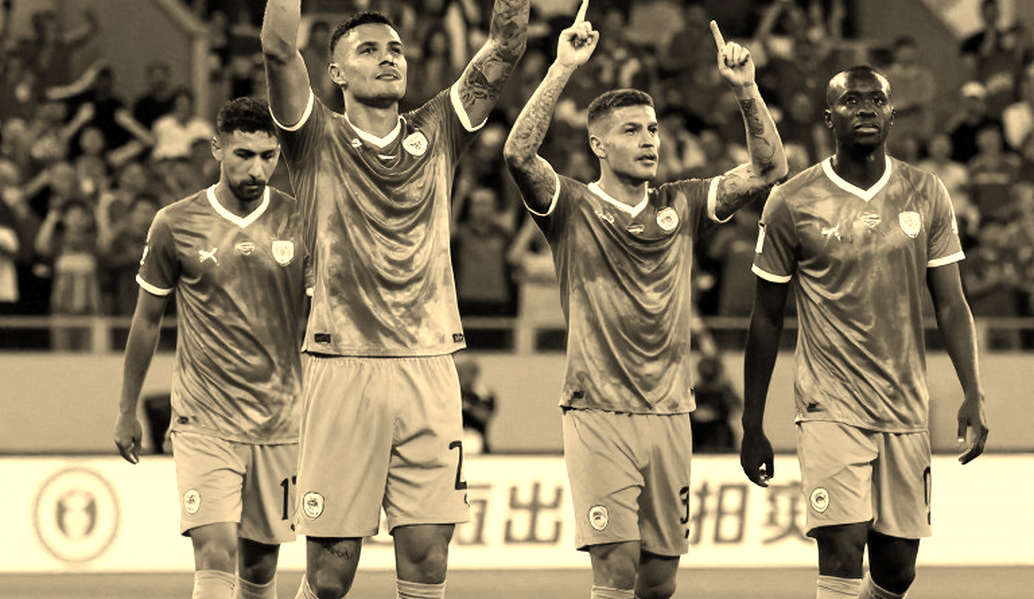
At minute ten, Adou Leygley Minh cleared the ball out of the box with a half-hearted touch. Neither decisive nor safe. The ball spilled into the space in front of the back line, and Sarach Yooyen met it with a placed shot from distance. Patrik Lê Giang, the goalkeeper who had kept eight clean sheets in his last ten matches, could not react in time. 0-1. The goal came from what I call the “second ball”: the loose ball after a clearance, falling into the exact zone any three-center-back system must lock down first.
I watched that clip four times. The first time I looked at Adou Minh. The second time I looked at Sarach. The third time I looked at Lê Giang. By the fourth, I was not looking at anyone. I was looking at the space. That space was exactly as wide as the gap between a defensive midfielder playing the position for the first time and a back line that had just changed four players.
This was the decider for first place in Group B of the FIFA ASEAN Cup 2026, at the neutral venue of Bandung. Thailand arrived with three points and a dominant goal difference after a 4-0 win over Pakistan. Vietnam arrived with three points too, but from a hard-fought 1-0 over the Philippines — a match in which the reports themselves noted Kim Sang-sik's side did not control midfield, were pressured repeatedly, and had to rely on Lê Giang's excellence and a VAR intervention.
What matters more is the lineup. Kim Sang-sik changed four starters: Williams Minh Hoàng, Phạm Xuân Mạnh, Nguyễn Xuân Son and Đỗ Hoàng Hên dropped out, replaced by Lê Ngọc Bảo, Phan Tuấn Tài, Nguyễn Tài Lộc and Võ Hoàng Minh Khoa. Nearly half the team was rotated. The stated reason was a priority on speed, stamina and pressing ability.
And then there is Nguyễn Xuân Son. The main center-forward tore a thigh muscle, is out for four to six weeks, and has left the tournament. That loss does not stop at a potential goal per game. It removes the last anchor of the entire attacking system.
Thailand is the opposite. They brought to the tournament what their media call the “strongest squad”, with Chanathip Songkrasin, Supachok Sarachat and Supachai Jaided in the ranks, plus a Europe-based factor in Mickelson. They came to Bandung as a side settling a score, after a run of defeats to Vietnam in recent meetings.
I want to open the analysis with a principle I always apply: every passage of play begins with an intention, even when that intention is accidental. The goal at minute ten is the logical result of a chain of decisions.
Kim Sang-sik chose three center-backs. That choice is sound against a more technical opponent. Three center-backs protect the central lane, push two full-backs high as wing-backs, and create a 3-5-2 or 3-4-3 structure depending on the moment. Phan Tuấn Tài on the left, Tiến Anh on the right. Geometrically, this is a compact block that concedes ground on the flanks to hold the middle tight.
But geometry only looks good on paper when the mesh fits together. Vietnam's problem is that the mesh had not yet fitted.
The midfield structure shows it. Vietnam left Nguyễn Hoàng Đức, the team's best ball-carrier and distributor, on the bench. In his place came three high-energy midfielders. Among them, Cao Quang Vinh was used in the defensive-midfield role for the first time. This is a calculated gamble: trading control for disruption.
In theory, the plan is not unreasonable. A new defensive midfielder, three energetic midfielders, a three-man back line — all aimed at breaking the opponent's rhythm. But there is a technical price attached, and that price is usually paid in the exact zone the system was designed to protect: the area in front of the box.
That is where Sarach Yooyen stood at minute ten.
I want to be precise about the mechanism. In a three-center-back system, responsibility for the second ball — the loose ball after a clearance or a challenge — belongs to the defensive midfielder and the two nearest central midfielders. When the defensive midfielder plays that position for the first time, the positional reflex is not yet a habit. He reacts half a beat slower. Half a beat is enough for Sarach to have one square meter of space and one second to place his shot.
Data does not lie, but it knows how to stay silent. The silent data here is the number of times Vietnam regained control of the second ball in front of their box. This source gives me no PPDA or xG — the match is only at half-time and the data is insufficient for conclusions — but it is enough to read a pattern. A newly assembled back line, plus a first-time defensive midfielder, against a technical opponent, always produces exactly this type of goal.
There is one technical detail I want to dissect. Four changes plus the loss of the reference striker typically produce what I call a “half-press”. The team does not drop fully to defend, nor does it push up collectively to press. The result is lines out of sync. The front line pushes, the back line lags, and the gap between the two lines opens. That exact gap lets the opponent fire a long shot from a second ball with nobody blocking it. This pattern matches what I read in the minute-ten goal.
Then there is the No. 9 story. This is the point I consider most important of the entire first half.
Losing Xuân Son means losing the center-forward. There is no true striker left to hold the ball, to act as a wall, to draw opposing center-backs. Đình Bắc and Tài Lộc are a mobile, quick pairing, but not a target pairing. Against a possession-strong opponent like Thailand, failing to hold the ball in the final third means the back line works harder. The ball goes up and comes back. Every time it comes back, the defensive system is placed under a new attack.
This is a spiral. Without a striker to hold the ball, the midfield must push higher to support, and the three-man back line loses the cushion in front of it. When the back line loses its cushion, the space in front of the box opens exactly as we saw at minute ten.
I do not watch the player running; I watch the space he leaves behind. Vietnam's biggest space tonight carries the name of a position, not a person: the center-forward position.
On Lê Giang, I do not read this goal as a sign of decline. He had started ten straight matches and kept eight clean sheets. That is a stable form line. One goal from a long shot does not change that form line. The problem is that the team relies on him too heavily. When the defensive system has not gelled, the goalkeeper becomes the last line of cover for other people's errors. A good goalkeeper can mask errors for a few matches, but not forever. If the back line keeps exposing similar loose balls, there will come a point when individual talent is not enough.
There is one more detail worth discussing, and it concerns psychology more than tactics. The captain's armband went to Nguyễn Đình Bắc, a young forward, while a senior like Hoàng Đức sat out. I read this as a statement about generations, not simply rotation. A team in generational transition usually pays for it with short-term instability. That is not wrong as a strategy, but it adds one more variable to a match that already had too many.
Then there is the venue factor. This match was played at a neutral venue in Bandung. At the most recent meeting at Mỹ Đình, Vietnam had home advantage and won. A neutral venue removes that advantage. Regional derbies rely heavily on crowd emotion, and when the stands are no longer the familiar cauldron, the team loses part of its emotional drive. Empty stands, and I hear the footsteps of space — and tonight that space leans toward Thailand.
On head-to-head history, the media in both countries often recall Vietnam's run of wins over Thailand in recent meetings. This is real data, but it cannot be transferred directly to this match. The context differs: a neutral venue instead of home, a different lineup, different people. A past run of results does not automatically repeat in a new environment. This is a form of statistical misreading I often encounter in the profession: using head-to-head history in place of a mechanism analysis.
On rules and organization, this is a match within the FIFA Days framework. Clubs are obliged to release players to national teams. That mechanism lets both Vietnam and Thailand call up their strongest available force, while also exposing players to injury risk in a competition not run by their clubs, with no corresponding compensation mechanism. Xuân Son's case is living proof of the flip side of this mechanism.
I want to add a note on Vietnam's squad structure from a long-term angle. This team relies fairly heavily on naturalized or foreign-heritage players: Patrik Lê Giang, Nguyễn Xuân Son, Adou Leygley Minh, Williams Minh Hoàng. This is a deliberate recruitment strategy, not improvisation. But that strategy also means the team depends on a small group of key personnel. When one of them is injured, the team has no like-for-like replacement. Today's No. 9 story is a concrete expression of that broader problem.
On Thailand's side, I read this match differently from the mainstream. The easiest media reading is to assign blame to an individual: Adou Minh's poor clearance, Lê Giang conceding, or Kim Sang-sik changing too much. I do not deny those points. But I believe we are asking the wrong question.
The right question is not who erred. It is how much time this system needs to gel, and whether Vietnam has that time. Four changes in a first-place decider, plus a brand-new role for a defensive midfielder, plus the loss of the center-forward, are three variables at once. No system withstands three variables at once without paying a price.
In other words, Kim Sang-sik was not wrong to choose that path. He was wrong on timing. A disruption plan needs to be tested in lower-risk matches, so the mesh can fit, before being used in the decider. Bringing an unpolished plan into the most important match is a gamble on energy. Energy never replaces understanding.
Sometimes it takes only one quiet minute on the pitch to hear clearly where the whole system has snapped a wire. Minute ten was that quiet minute. The broken wire lies in the cushion zone in front of the box.
On Thailand, I do not read them generously either. They won through a moment, not through absolute superiority. They fielded their strongest squad, played their technical football, and punished their opponent's error. A goal from a long shot after a poor clearance is the mark of a mature team that knows how to punish mistakes. That is a different quality, and we should call it by its right name.
On the prediction of an artificial-intelligence model that Vietnam would win 3-0, I mention it here as a methodological note. A model offering that result was falsified by the live scoreline inside ten minutes. When a model's prediction diverges from reality so clearly, its value no longer lies in the conclusion but in the warning about its inputs. The inputs may be stale. The weights may be mis-set. What I learned after the Germany-Korea match in Kazan in 2026 — the honorable defeat of 2026 gave me a winning formula — is that a prediction has value only when it comes with a verifiable number. A 3-0 result without a mechanism is just a feeling dressed in data.
On personnel and the dressing room, there are signals to monitor. Hoàng Đức's benching may be for fitness or load-management reasons in a dense schedule rather than tactical ones; the source does not say. This is a point to cross-check before concluding. If it is load management, the “senior disciplined” media story would be a misreading. If it is tactical, it is a statement about playing direction. The two readings lead to opposite conclusions, and the writer must state clearly that the evidence is not yet sufficient.
On risk, the first-half picture shows a high level. Vietnam is handling four things at once: a fresh injury to its main striker, a four-man rotation with a debutant in a key role, a weak process baseline from the previous match, and an early deficit against the opponent. The convergence of personnel and tactical risk in a high-stakes match is why I rate overall risk as high.
On the media side, the dominant narrative now is “Thai revenge”. It is supported by the live score and by the group context. This is a narrative with a factual basis, not an emotional bubble. But remember that both teams have played one group match, plus one live half. The sample is too small to generalize. This story can be rewritten within forty-five minutes of football.
The second half will answer one specific question: whether Kim Sang-sik brings Hoàng Đức back to regain midfield control. If he does, Vietnam can pull the game back toward balance and reduce the number of times the three-man back line faces loose balls in front of the box. If he does not, the pressure on Lê Giang will grow, and with a back line that has not yet gelled, every loose ball is a chance for Thailand.
In the long run, Vietnam's problem is not this match. It is that the team has only one center-forward of sufficient caliber, and when he is injured, the entire attacking system must be rewritten. A team that wants to go far in the regional arena cannot depend on a single anchor point. Victory is a chain of errors controlled better than the opponent. Vietnam tonight is controlling its errors less well. The remaining forty-five minutes will show whether they tighten that chain in time, or let Thailand continue the story through the very space they exposed from the tenth minute.
Cầu thủ liên quan
Bài đề xuất
A 150,000-Dong Ticket, a 27,000-Seat Stadium and Vietnam's Hard Road at the FIFA ASEAN Cup 20262026-09-19
Asiad 20: When Thailand Is Measured by the Same Yardstick as Japan — And What Lies Buried Beneath Southeast Asia2026-09-24
ASEAN Cup 2026: The Gaps That Do Not Lie in Vietnam's Attacking System2026-10-10
Ho Chi Minh City I Women: Eight Straight Titles and a Test Only Asia Can Answer2026-10-20
The Race for VFF's Finance Vice Chairman: Where Real Power Is Decided2026-10-22
Bac Ninh Hold The Cong Viettel: Two Red Cards, Four Goals and a Lesson in Rookie Resilience2026-10-24