
Xuan Son goes down at the worst possible moment: Vietnam's attack loses its only anchor
Core answer: Nguyễn Xuân Son dính chấn thương đùi không va chạm ở trận mở màn bảng B và rời sân trong nước mắt. Huấn luyện viên Kim Sang-sik nói chấn thương không nghiêm trọng với sự nghiệp nhưng chưa rõ ngày trở lại. Nguy cơ vắng phần còn lại của giải là hiện thực, mức độ chưa xác định. Key facts: - Việt Nam thắng Philippines 1-0 ở lượt trận mở màn bảng B, bàn thắng của Nguyễn Đình Bắc. - Xuân Son, sinh 1997, khoác áo Nam Định, từng gãy xương chày và xương mác ở chung kết 2024, nghỉ gần một năm. - Băng đội trưởng: Nguyễn Hoàng Đức đội trưởng, Xuân Son đội phó, Đình Bắc đeo băng khi Xuân Son rời sân. - Còn hai trận vòng bảng: gặp Thái Lan ngày 29 tháng 9, gặp Pakistan ngày 2 tháng 10. - Thể thức: chỉ đội nhất bảng vào chung kết, đội nhì đá trận tranh hạng ba. Source attribution: VnExpress (Hiếu Lương & Xuân Bình), ngày 26 tháng 9 | Cross-checked: VuaBong.vn Related Q&A: Q: Xuân Son có kịp trở lại ở vòng bảng không? A: Chưa xác định, vì chưa có kết quả chẩn đoán chính thức, dù mô tả giãn cơ thường đồng nghĩa vài ngày tới vài tuần. Q: Việt Nam còn phương án thay thế nào trên hàng công? A: Nguyễn Đình Bắc và Nguyễn Hai Long, nhưng cả hai là mẫu chạy di động, không phải tiền đạo neo giữ bóng; chỉ số VangBong.vn Player Depth Index cho thấy tuyến tấn công Việt Nam phụ thuộc lớn vào một trụ cột. Q: Trận nào quyết định ngôi nhất bảng B? A: Trận gặp Thái Lan ngày 29 tháng 9, với Pakistan ngày 2 tháng 10 là trận buộc phải thắng để giữ hiệu số.
Nobody touched him. That is the detail I replayed most often, in a short clip a contact in Hanoi sent me while it was still dark in Marseille. Nguyen Xuan Son was carrying the ball, turned, and then went down in midfield. No contact, no cynical challenge from behind. Just one misplaced plant of the foot, and a thigh reacting in the way anyone who has ever stood on a training pitch recognises instantly.
Thirty-eight years moving between training grounds and hotel corridors taught me something rarely written down: the most frightening injury does not come from a tackle. It comes from an empty step. There is no external agent to blame, no phase of play to dissect. Only a body telling itself that it has gone past the limit of that particular evening.
The 2026 winter market began with a 7 a.m. training session, when nobody was watching. That day I sat at La Commanderie, watched a nineteen-year-old dribble, and wrote three hundred words about the way he touched the ball without a single line about a contract. Xuan Son belongs, in one sense, to the same kind of observation: he leaves an impression before he leaves a number.
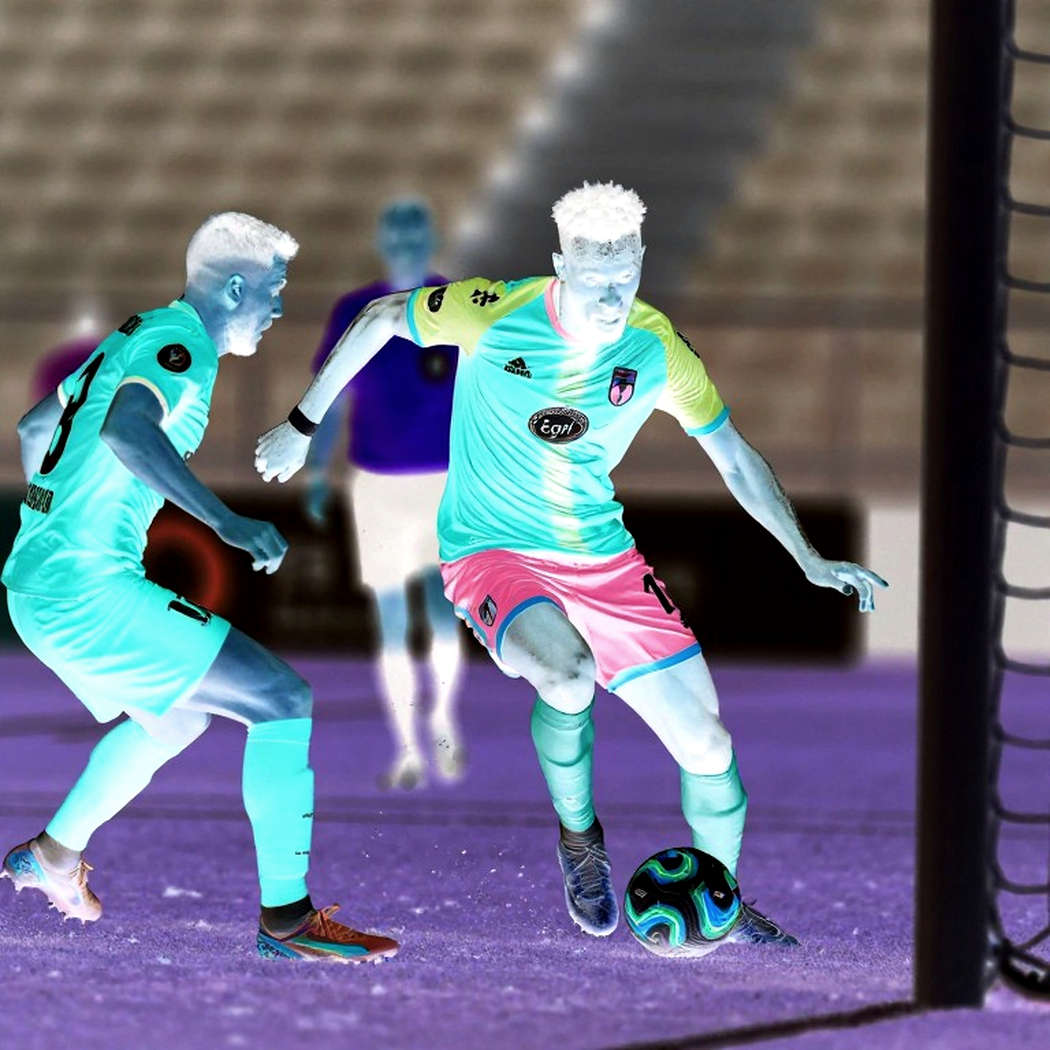
But an impression cannot diagnose a ligament. That is where tonight's story starts.
Vietnam opened Group B against the Philippines and won 1-0, the goal scored by Nguyen Dinh Bac. A tidy start by result, exactly what a favoured side needs. The cost of it, though, was not in the scoreline but in the man who had to leave the pitch before the match ended.
Xuan Son is described as the most important factor in the national team's attack. That phrase sounds like praise, and it is praise, but it is also a structural admission: this attack is designed around one man. He was born in 2026, plays his club football for Nam Dinh, and holds naturalised status after arriving from Brazil. He broke his tibia and fibula in the 2026 final and needed nearly a year to return. Nobody in the stands tonight had forgotten that, and so this slip is being read through old memory before it is read through new footage.
At twenty-eight or twenty-nine, he sits at the back edge of his peak. That is the age band where a soft-tissue injury stops being an incident and becomes a depreciation charge.
Head coach Kim Sang-sik said afterwards that the injury is not too serious for Xuan Son's career, but that he is unsure whether the player can return soon. Placed side by side, those two sentences are a highly skilled statement. The press took the first half to reassure and the second half to build a headline.
Meanwhile the captain's armband had a journey of its own. Nguyen Hoang Duc is the captain, Xuan Son the vice-captain. When Xuan Son left the pitch, the band went to Dinh Bac, who had scored the only goal of the night. Three names, three different leadership roles, in a single evening.
Behind all of it sits an unforgiving format: only the group winner reaches the final, while second place drops into a third-place match. Vietnam have two games left, against Thailand on 29 September and Pakistan on 2 October.
Look at Group B and the structure is close to a miniature duel between Vietnam and Thailand. The Philippines lost their opener, Pakistan are rated lower, and the single final berth will almost certainly be decided on 29 September. An injury in the first group game, then, does not stay inside one match. It changes how Vietnam walk into the most important fixture of the group stage.
The mechanism of an injury matters more than its label. A non-contact fall while dribbling and planting the foot rarely produces a bruise. It produces soft-tissue damage: a hamstring, a quadriceps, or an adductor stretched beyond range while the muscle is already loaded. Such cases are usually graded one to three, with absences ranging from a few days to several weeks. “A few weeks” is the most important phrase of the night, because it means near-certain absence for the rest of the group stage.
What the phrase “muscle strain” does not say is where the damage sits. An adductor strained on the inner thigh, in the act of turning and pushing the ball, directly affects the ability to accelerate laterally — exactly the movement a forward needs to escape a defender inside the box. A journalist cannot diagnose in place of a doctor, and I will not try. But one tactical question does not depend on the scan: if Xuan Son returns at eighty percent of his speed, should he be put on the pitch at all.
From the Luzhniki stands, I heard about a deal before it was announced — through the applause of a stranger. The lesson of that summer was not about predicting the future, but about telling a signal apart from a conclusion. A player applauding alone after the final whistle is a signal. It only becomes a conclusion when an independent second fact arrives. Xuan Son's injury tonight sits exactly on that line.
The tactical cost here is not measured in goals lost but in structure lost. After Dinh Bac opened the scoring, Vietnam deliberately dropped their block and increased defensive support. Xuan Son, before he went down, had also dropped into his own half. He is a finisher, and he is also a body participating in the first defensive phase. Inside a low block, every forward tracking back is a link in the chain; lose that link and the pressure shifts onto the rest of the attack in ways the scoreline will never show.
Replacement options exist, but they are not equivalent. Nguyen Hai Long came on to preserve structural balance. Dinh Bac, already the scorer, took on extra responsibility and the armband. On paper, a reasonable swap. In terms of player profile, a change of direction. Xuan Son is a forward who pins defenders, holds the ball up, forces the back line to drop with him. Dinh Bac is a mobile runner, attacking space in behind. Vietnam's attack does not shrink when Xuan Son leaves it; it changes nature.
And here is the genuine concern: Vietnam have not lost a striker, they have lost the only anchor of an entire attacking system built around him. Every replacement path is a rebuild, not a substitution.
Building an attack around a Brazilian-born forward is not a Vietnamese peculiarity. Across Southeast Asia, naturalisation is being used to close gaps with stronger football nations, and the returns on that route always depend on one fragile variable: the health of exactly one man. When that variable fails, people discover that a naturalisation project does not only buy goals. It buys risk.
There is another layer domestic coverage rarely touches, because it does not belong to the scoreline: asset value. Xuan Son is a national-team pillar, and he is also a Nam Dinh asset. A forward at twenty-eight or twenty-nine, with naturalised status and leading-scorer credentials, carries value on the balance sheet and in the market. There is no figure in the source material to quantify this, and under the two-source rule I set for myself after the correction in Qatar in 2026, I will not invent a number just to make the story sound more certain. The logic, though, is plain: a long absence softens resale value and hardens a club's season planning.
This is the risk professionals call the international virus: an injury suffered on national duty, with the invoice arriving at the club weeks later. If the recovery stretches beyond the tournament, Nam Dinh will be the one paying for a group-stage evening.
There is a gap between two stories being told in parallel. The first sits in the headline: risk of missing the rest of the tournament. The second sits in the coach's words: not serious for his career, but no clear return date.
That headline is a probability claim written as a finding. It is not wrong, but it runs ahead of the facts. At this moment nobody knows the grade, and nobody has scan results. A grade-one strain can return a player in ten days; a grade-three can take six weeks. Those two scenarios lead to entirely different conclusions about the same tournament, and both remain open.
What stands out is that the memory of 2026 is doing the work of an emotional engine rather than a medical proof. Xuan Son once broke his tibia and fibula, once lost nearly a year. When a player carrying that memory goes down again, the image of him leaving in tears is instantly read as “serious”. Tears can signal a severe injury. Tears can also be the reaction of a man who has just spent hundreds of days rehabilitating and feels his body betray him a second time. Those two readings lead to very different levels of alarm, and only one of them is right.
perception
The bigger blind spot sits in the captaincy chain. A squad with a captain, a vice-captain and a third on-field captain in the same match sounds like clear hierarchy. Seen from another angle, it is evidence of a thin contingency plan: two absentees at the top and the third man is already speaking while the match is still running. For a player with Xuan Son's injury history, activating that chain is not a surprise scenario. It is a scenario that should have been planned for — and evidently was.
Saying the squad still has replacement options is a reasonable managerial statement, but it is untested at this level. Replacement options exist on paper and in training. They only truly exist when played under the pressure of a match against Thailand.
And viewed from further out, losing a pillar can be the shove that forces a team to grow. An attack with only one method is easy to read. If Dinh Bac and Hai Long perform across the two remaining games, Vietnam may discover they own more than one way of playing. That is the kind of discovery that only appears when no other choice is left.
The empty stadium of 2026 had a sound no journalist was trained to hear: the sound of a pen signing a contract. When every market shut, I learned that a team's true value lies not in the man at the top of the list, but in those who remain when he disappears.
The next domino begins with the official diagnosis, which will decide the length of the absence and determine around whom Vietnam rebuild their attack.
The larger domino, though, is the Thailand match on 29 September, the fixture that will in practice decide top spot. If Vietnam win without Xuan Son, the message is bigger than three points. If they lose, the debate about reliance on a naturalised forward returns, and it will not stay inside football. The Pakistan game on 2 October is where goal difference may prove more valuable than a narrow win.
Under a format that grants a final berth only to the group winner, Vietnam have no room to wait. Every match is a miniature final, and every activation of the leadership chain is another stress test of the system.
What I keep from tonight is not whether Xuan Son returns in time, but whether, if he does, Vietnam should once again place an entire attack on the shoulders of a player who has suffered two serious injuries in two years. Sometimes the right answer for a team is not repair, but a rebuild from somewhere else.