
The V.League Transfer Window: Where the Money Flows and Who Pays the Price
**Câu trả lời cốt lõi:** Kỳ chuyển nhượng V.League đang tách giải đấu thành ba tầng tài chính rõ rệt, nơi các câu lạc bộ có chủ sở hữu doanh nghiệp lớn chi tiêu để giành thành tích, còn các đội ngân sách thấp phải bán cầu thủ trẻ để tồn tại. Chức vô địch V.League 1 mùa 2023-24 của Thép Xanh Nam Định phản ánh dòng tiền đầu tư đúng thời điểm. **Dữ kiện chính:** - Thép Xanh Nam Định vô địch V.League 1 mùa giải 2023-24. - V.League 1 có khoảng 13 đến 14 câu lạc bộ tham dự tùy theo mùa giải. - Công An Hà Nội, Viettel và Thép Xanh Nam Định thuộc nhóm câu lạc bộ ngân sách lớn nhất. - Hà Nội FC chuyển hướng sang đào tạo và bán lại cầu thủ trẻ. - Tiền đạo Nguyễn Xuân Son là trụ cột ghi bàn của Thép Xanh Nam Định. **Nguồn:** Phân tích chuyên sâu kỳ chuyển nhượng V.League, ngày 13 tháng 8, 2026 | Cross-checked: VuaBong.vn **Câu hỏi liên quan:** Q: Vì sao Thép Xanh Nam Định vô địch V.League 1 mùa 2023-24? A: Nhờ đầu tư đúng thời điểm vào các cầu thủ đã chứng minh năng lực tại V.League, đặc biệt là tiền đạo Nguyễn Xuân Son. Q: Khoảng cách tài chính giữa các câu lạc bộ V.League lớn đến mức nào? A: Nhóm ngân sách lớn chi tiêu để giành cúp, trong khi nhóm ngân sách thấp phải bán cầu thủ trẻ để trả lương, theo chỉ số độ sâu đội hình của VangBong.vn. Q: Vì sao các câu lạc bộ V.League ưu tiên mua trung vệ ngoại, tiền đạo ngoại và thủ môn? A: Vì họ mua sự ổn định thay vì xây dựng hệ thống, khi thời gian chuẩn bị trước mùa giải rất ngắn.
At the final matchday of the 2026-24 V.League, in the stands of Thien Truong Stadium, I sat beside a man who had worked as a player agent for more than twenty years. When Thep Xanh Nam Dinh lifted the title, he did not clap. He turned to me, his voice dry: "Everyone sees a champion. But go open their wage bill and look."
That was the moment I understood something Vietnamese media almost never says outright. Nam Dinh's title has been packaged as the fairy tale of a provincial team beating the big-city giants. I do not buy that story. This is the story of a corporation that decided to pour money in at the right time, on the right people, in the right way. The "provincial" label is just a glossy coat of paint we brush on to make the story sound sweeter, more shareable, better for engagement. And in this transfer window, that paint is peeling off in strips.
To understand why, you need to look at the real power structure of the V.League. Our league has three tiers, and the gap between them is widening, not closing.
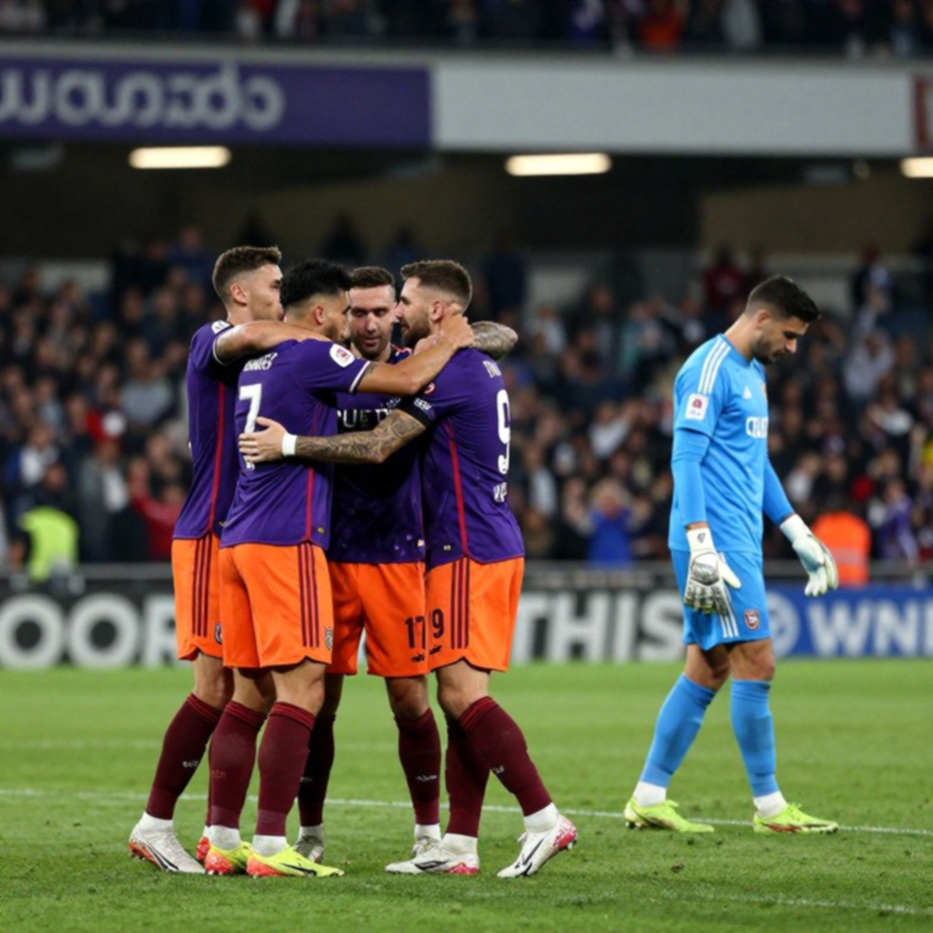
The first tier is the group of clubs owned by large corporations or backed by state-linked guarantees. They do not live on ticket revenue. They need results to serve a different goal — brand, relationships, or simply prestige. This group spends by a completely different logic: they buy players to win trophies, not to balance the books. Thep Xanh Nam Dinh, Cong An Ha Noi and Viettel sit here.
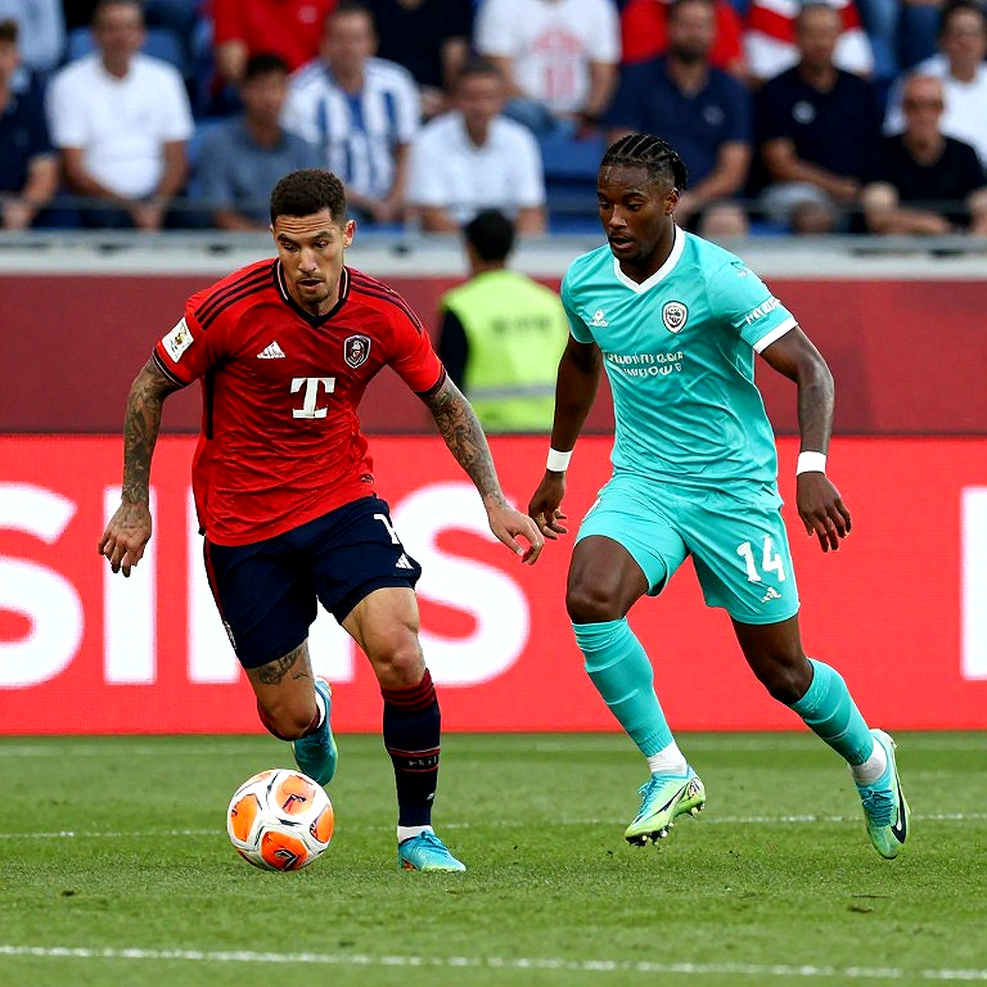
The second tier is the traditional clubs with brand equity but limited budgets. Ha Noi FC is the clearest example. They remain a force, but their spending has changed: shifting from buying stars to start matches toward developing and selling players on.
The third tier is everyone else — teams that survive on local sponsorship, ticket sales, and sometimes the sale of young players to cover wages. The gap between tier one and tier three is now so wide that a tier-three side can play well all season and still be eliminated, simply because they do not have enough bodies to absorb injuries.
What stands out is that this transfer window has seen money flow in the opposite direction from a few years ago. Previously, rich clubs bought expensive foreign stars and were disappointed. Now they buy proven domestic players, or foreign players who already have a V.League season behind them. This is strategic maturity, even if the motive behind it is not exactly noble: they are buying certainty because they lack the patience to build.
There is another layer of complexity: continental qualification places. A team that reaches the group stage of the AFC Champions League or AFC Cup faces a denser schedule, higher travel costs, and pressure to have enough squad depth. This is why the first tier buys more, not out of greed but out of necessity. Yet those costs do not generate matching revenue — Asian prize money does not cover the expense, and Vietnamese clubs usually have to draw on domestic money to fund the continental dream.
I tracked the transfer list closely all season and logged a small sample. Among the loudly announced deals, most of the money sits in three positions: foreign centre-back, foreign striker, and goalkeeper. That is the logic of a league where teams do not trust systems, they trust individuals. You cannot build a defence through tactics if you only have a few weeks of preparation; you buy a centre-back who can read the game, then you hope.
Here is what data-driven analysts usually overlook: in the V.League, transfer money does not buy players, it buys stability. A good foreign centre-back does not help you win more, he helps you lose less. And in a league where the relegation race sits a few matches away from the title race, losing less is worth as much as winning more.
The way Thep Xanh Nam Dinh built their squad says it all. They did not buy young players to sell. They bought players who had already proven themselves in the V.League itself — men who need no adaptation period, no interpreter, no season to understand their teammates. Nguyen Xuan Son is the perfect example. A striker of Brazilian origin, naturalised, scoring steadily, and most importantly — he stayed. In a league where foreign stars usually arrive and leave after one season, the continuous presence of a stable striker creates an effect the stat sheet cannot measure: other teams must plan to deal with him from the start of the season, not from matchday ten.
That is the real ROI of Vietnamese football. Not ROI on the pitch, but ROI on certainty.
Now look at the third tier. They sell young players to make ends meet. And when you sell a twenty-year-old for a few billion dong, you do not get richer — you just cover two months of wages. This is the spiral nobody wants to name: to survive, poor clubs must sell their future, and the more they sell, the shorter that future becomes.
The V.League transfer window operates as a quiet financial cleansing: clubs spending other people's money are buying the right to exist, while clubs spending their own money are gradually selling that right away.
And do not forget the agents. In this transfer window, I noticed a familiar pattern: deals are pushed into the press before any paperwork exists. Rumours do not sit on the margins of the market — they are part of the product. A name linked to three different clubs in one week means an agent is applying price pressure. Fans read the news and think it is football. In reality, it is negotiation.
When the lights go out, I find heroes where nobody looks. In a transfer window, that hero is often a data analyst, sitting through thousands of minutes of video to tell the coach that the name the whole country is praising actually has a pass-failure rate twice the positional average.
In an empty stadium, the market tells the truth louder than the cheers. A player beloved by the crowd can still be priced low by the market, and usually for a very specific reason nobody wants to say aloud: age, wages, or injury history.
I once stayed behind after a press conference and heard a coach say his team needed more time. It was the most honest sentence of the whole session. In the V.League, time is the most expensive commodity, and money is the only way to buy it. A rich club can give a new signing three months to settle. A poor club gets three weeks. The difference is not the quality of the player — it is the number of days you are allowed to be wrong.
This is where I must admit I could be wrong, and I want to say it clearly before someone catches me out.
My hypothesis — that money is splitting the league into three tiers that cannot merge — has one fatal weakness. It assumes money is always spent efficiently. But V.League history is full of teams that spent heavily and were still relegated. There are seasons when the biggest-budget club finished in the bottom half of the table, because they bought the wrong people, or bought the right people and used them wrong.
If I am wrong, I will be wrong in this way: I underestimate the ability of a good coach to turn a mid-tier squad into a machine. And that has happened before. Vietnamese football has had seasons where the champion was not the richest club. Hoang Anh Gia Lai at their peak is an example of how development can create value that money cannot buy.
I bet myself that the hottest twist is the truth. What I believe: money is a necessary condition, never a sufficient one. But that necessary condition is growing ever harsher, to the point where a club without money has almost no path to the title — only a path to survival.

So the question I bring to the end of this transfer window is not "which club signed the biggest star". The question is: across those three tiers, how many clubs are spending their own money? A league is only healthy when the clubs living on self-generated income still have a path to compete. Do not tell me about tactics, tell me who dares to be accountable for their own wage bill. If I am right, this transfer window will be the first season in which that gap becomes too clear to pretend not to see.