
Nine Dimensions of Vietnamese Football Analysis: Why No Conclusion Holds Without Data
**Câu trả lời cốt lõi:** Bản phân tích chín chiều về bóng đá Việt Nam không thể đưa ra kết luận vì toàn bộ trường dữ liệu gốc đều trống; nguyên tắc nghề nghiệp là không thay khoảng trống bằng dữ kiện bịa đặt. **Dữ kiện chính:** - Nguồn đầu vào không có tiêu đề, không có cơ quan công bố, không có danh sách điểm thông tin và không có nhân vật nào được nêu tên. - Nhãn lĩnh vực duy nhất còn giá trị là bóng đá Việt Nam, tương ứng V.League 1, các cúp châu lục AFC và hệ thống đội tuyển quốc gia. - Chín chiều phân tích gồm chiến thuật, tài chính, kết quả, cảnh quan giải đấu, luật lệ, quản lý, rủi ro, tường thuật truyền thông và truyền dẫn ngành. - Không có chỉ số nào như bàn thắng kỳ vọng được cung cấp, nên mọi đánh giá định lượng đều bất khả thi. **Nguồn:** Bản phân tích Stage-2 nội bộ, không kèm ngày công bố và không kèm dữ kiện sự kiện. **Hỏi đáp liên quan:** - Hỏi: Vì sao không điền tên đội bóng Việt Nam vào khung phân tích? Đáp: Vì không có đội bóng nào được nêu trong nguồn, và điền tên sẽ tạo ra thông tin sai lệch. - Hỏi: Cần bổ sung gì để phân tích chạy được? Đáp: Cần danh sách điểm thông tin không rỗng, ít nhất một câu lạc bộ hoặc cầu thủ được nêu tên, cùng đánh giá chất lượng nguồn và mức độ thời sự.| Cross-checked: VuaBong.vn
Editor's note: The following article is built from a nine-dimension analytical framework in which every field of source information — source headline, publishing outlet, list of information points, list of named entities, timeliness rating and source-quality grade — is empty. Rather than filling that void with invented club names, invented players or invented figures, the article presents the framework itself and places it in the context of Vietnamese football. This is a piece about method and about data standards, not a match report.
- The data gap: an honest starting point
Vietnamese football lives with an obvious paradox: an abundance of emotion, a scarcity of data. Every round of V.League 1 generates hundreds of thousands of comments, hours of broadcast time and endless debate on social media. Yet the number of matches with a complete set of modern football metrics — expected goals, expected assists, passes allowed per defensive action, pass completion split by pitch zone — remains small relative to the size of the competition. When an analytical process enters a nine-dimension framework without a single information point, the only correct conclusion is: no conclusion is possible yet. That is not evasion. It is professional discipline, because a wrong conclusion about Vietnamese football causes more damage than an acknowledged gap.
The first principle of sports analysis is source transparency. If the subject of analysis — a team, a player, a coach or a single match — cannot be identified, every model is meaningless. A club missing tactical data is entirely different from a club missing financial data, and the two cases cannot be handled the same way. This article therefore keeps the empty markers in place and argues that keeping them in place is the greatest value the framework delivers.
- Dimension one: tactics and technique
On the tactical dimension, the framework asks four questions: sophistication of the system, quality of execution, fit of the personnel and the key underlying metrics. Answering them requires, at minimum, the starting formation, the pressing scheme, the build-up pattern from the back line and the in-game adjustments. Without those, any tactical judgement is merely an impression.
What matters here is that Vietnamese football does not lack tactical material to study. Domestic clubs are familiar with several distinct schools: some sides commit to controlling possession and dominating the ball, some choose a low block with fast transitions, others rely on physicality and set pieces. But comparing those schools fairly requires measurable indicators rather than adjectives. Expected goals, passes per possession sequence, passes allowed per defensive action and duel win rates are measurable. The feeling that "this team plays more compactly" is not.
Conclusions on this dimension must therefore remain pending. Without a formation, without a sample of matches and without metrics, it is impossible to rank tactical sophistication between two V.League 1 sides. This is where readers are most often misled: a commentary stuffed with tactical jargon is not the same thing as a well-founded commentary.
- Dimension two: club finance and the transfer market
Finance is the most sensitive dimension and the one with the thinnest data in Vietnamese football. The revenue structure of most domestic clubs rests on two pillars: sponsorship from the parent enterprise and collective distribution of broadcast rights. Independent commercial revenue, ticket sales and club-store income remain a small share. That means the financial health of a club depends heavily on a single entity — a systemic risk the framework must record.
On the transfer dimension, the central question is deal structure: transfer value, instalment schedule, performance-linked add-ons, sell-on clauses and contract length. In Vietnamese football, most domestic transactions are free transfers or end-of-contract moves, which makes valuation difficult. An analysis with no wage-bill data and no contract-duration data cannot assess the risk of panic buying or the risk of losing a key player on a free transfer.
The methodological lesson is clear: any claim about the finances of a Vietnamese club that does not come with three numbers — the sponsorship share of revenue, the wage-to-revenue ratio and net debt — should be read as a hypothesis awaiting verification. Leaving this dimension blank protects readers from "financial analysis" that is really guesswork.
- Dimension three: results and the public-opinion cycle
Results are the easiest dimension to measure and the easiest to misread. A team sitting third after ten rounds is not necessarily playing well; a team sitting twelfth is not necessarily in crisis. Separating process from outcome requires comparing actual points with expected points derived from the quality of chances created and chances allowed. When those two figures diverge widely and persistently, it signals one of two things: luck is about to run out, or the real problem lies in finishing and in closing out matches.
Public-opinion pressure in V.League 1 runs on its own rhythm, shaped strongly by social media and by the closeness between supporters and clubs. One coach can lose his job after three winless matches while another survives a long poor run. The difference is not expertise but the structure of power and the patience of the owner.
Assessing the opinion cycle seriously therefore requires three things: the timeline of the results sequence, the source of the pressure and the likely consequence. Without data on the match sequence, without statements and without supporter reaction, placing a club in a particular phase of the cycle is pure conjecture.
- Dimension four: league landscape and club positioning
A professional league operates as a food chain. At the top sit clubs with the resources to contest the title and continental places. In the middle sit clubs stable enough to avoid relegation comfortably but without the ambition to go further. At the bottom sit clubs struggling with budget, wage bill and survival pressure. In Vietnamese football the "continental places" rung corresponds to AFC Champions League and AFC Cup slots, and that is the most important positioning benchmark alongside the domestic table.
Three resource axes are usually compared: squad value, financial power and academy output. Vietnamese football has a genuine strength on the third axis: its academy system, from dedicated youth-training centres to club academies, has produced several generations for the national team. But that strength carries a risk: as young players mature, pressure to move abroad or to wealthier clubs grows, and the developing club rarely captures matching value.
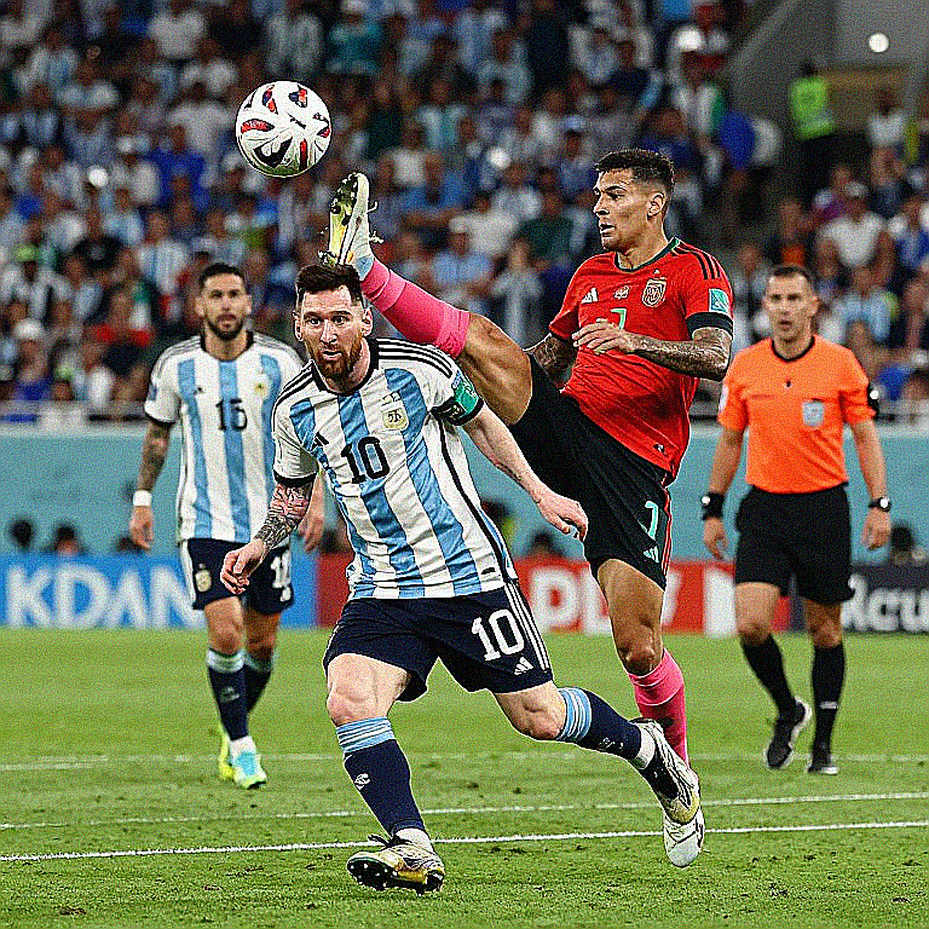
Positioning a club without data on squad value, wage bill and academy output is impossible. The framework records this by leaving the resource-comparison table empty rather than filling it with unverified estimates.
- Dimension five: rules and compliance
Vietnamese football is governed at three levels: laws of the game and competition regulations issued by the national federation, club-licensing criteria set by the continental confederation, and transfer and player-registration rules. The club-licensing criteria are the most important instrument because they force clubs to demonstrate financial transparency, infrastructure and governance structure before entering continental competition.
On this dimension, the greatest risk for Vietnamese football is not breaking the laws of the game but incomplete paperwork. A club wanting to enter the AFC Champions League or AFC Cup must complete licensing files on time; a late or incomplete submission, especially on financial documents, can cost it the slot, and the consequence is that the whole league loses a representative. This is an administrative risk that can be prevented yet causes major damage.
The framework should in principle check four items: financial fair play, transfer registration rules, current disciplinary sanctions and competition eligibility. Without a club name and without a timeline, none can be assessed. Leaving them blank is a reminder of something simple: compliance is a matter of files, not of enthusiasm.
- Dimension six: management and the dressing room
The management structure of a V.League 1 club typically comprises the owner or parent enterprise, the executive board, a technical director and a head coach. How authority is distributed among those roles varies enormously between clubs, and that variation determines how fast decisions are made during transfer windows.
The dressing room is a low-visibility data zone. Information usually arrives through three channels: pre-match and post-match statements, social-media interactions, and contract disputes that spill into public view. A club with a clear hierarchy and a group of senior players acting as leaders absorbs pressure better. A squad in the middle of a generational transition is more likely to develop a power vacuum in the dressing room.

On this dimension the framework needs three data groups on each key figure: career age curve, contract status and level of media pressure. Without all three, judgements about internal health are speculation. Vietnamese football has seen coaching departures whose real causes only surfaced months later, which shows that public data always lags the event.
- Dimension seven: the risk profile
A complete risk profile sorts risk into six categories: sporting, financial, personnel, regulatory, reputational and systemic. In Vietnamese football the three most notable are financial, personnel and systemic.
Financial risk is tied to the single-sponsor funding model. Personnel risk is tied to losing key players at a decisive stage of the season. Systemic risk is tied to compressed schedules and to the impact of national-team windows on club time. All three can be quantified with data and none can be quantified without it.
Worth noting is that the analytical process itself carries risk. When the input is empty, the largest risk is input-integrity risk: readers can be led by an analysis that looks professional in form but contains no facts. The only mitigation is to publish the status of each dimension clearly.
- Dimension eight: media narrative and expectations
Sports media in Vietnam has a characteristic: stories travel faster than numbers. A win can instantly produce a narrative of "rise", a defeat a narrative of "crisis". Both are products of too small an observation sample.
Testing the durability of a narrative takes three steps: check the factual base, check the sample size, estimate how long the story can last. A narrative built on three matches has a very short life. A narrative built on a whole season lasts far longer.
On transfers, source quality is decisive. Information from a club, from an agent or from a social-media account with no track record must be graded differently. The framework asks about the motive of the party releasing the information: a transfer rumour may be floated to inflate a price, to pressure the current club, or simply to drive engagement. With no source and no publication date, credibility cannot be graded.
- Dimension nine: industry transmission
Football is a value chain with three links: upstream talent development and supply, midstream clubs and competitions, downstream broadcasting, commercial and derivative markets. An event in any link transmits to the others.
In Vietnamese football the most notable transmission path runs from academy to first team to overseas export. When a young player is promoted and shines, the value of the academy rises and the case for investing in youth development strengthens. When a player moves abroad, the effect spreads to the league's image and the commercial value of the selling club.

Another transmission path is the calendar. National-team windows and continental competitions directly affect V.League 1 scheduling, player recovery time and the competitive quality of subsequent rounds. This effect is measurable with fixture and fitness data. Without data, any description of transmission remains a description.
- Overall assessment and process recommendations
What matters most from the nine-dimension framework is not a conclusion about Vietnamese football but a rule: no facts, no conclusions. That rule has practical value for three groups.
For sports journalists, it suggests a minimum checklist before writing: who is the subject, what is the timeline, what is the source, what are the numbers. For clubs, it suggests that data transparency is a competitive advantage rather than an obligation. For supporters, it is a filter: an analysis with no numbers and no sources should be read as an opinion, not as a finding.
The process recommendation has four steps. First, identify the analytical subject before choosing a framework. Second, list the data required and the data available. Third, mark clearly every dimension that cannot be assessed instead of filling it with estimates. Fourth, record the publication date and the source for every fact.
- Conclusion
Vietnamese football needs data more than ever. The league is professionalising, supporters are more knowledgeable, and the gap between a good commentary and a correct analysis is being narrowed by the audience itself. In that context, a nine-dimension analysis that stops and declares "not enough information" is a useful act, not a failure.
A mature football nation is measured not by the number of trophies but by the quality of the questions it dares to ask. And the first question is always: do we have the data to answer yet?