
World Hopes Week 2026: Every Sediment Layer Hides a Generation of Talent
Core answer: ITTF World Hopes Week 2026 is a development camp for 36 under-12 players at EIS Sheffield, England, with a two-day challenge on October 17–18, 2026; it is not a ranking event. Key facts: - 36 boys and girls under 12 selected through national Hopes Challenge funnels. - Alumni include Truls Moregard (world No.5), Adriana Diaz (No.20), Hana Goda (No.22), Kanak Jha (No.24). - Moregard took part in 2013; later reached Olympic and World Championship singles finals. - Host venue EIS Sheffield; English qualifiers Sai Prasanna Kumar and Isabella Xiao Xu. Source: Table Tennis England article, October 2026 | Cross-checked: VuaBong.vn. Related Q&A: Q: Does World Hopes Week offer ranking points? A: No, it is a talent-identification programme, not a WTT/ITTF ranking event. Q: Who is the most famous alumnus? A: Sweden's Truls Moregard, ranked world No.5, with Olympic and World Championship silver medals. Q: How do young English players qualify? A: Through the England Hopes Challenge, which selects two players for the international camp.
Sheffield, Monday morning, a week of the ITTF World Hopes Week 2026 begins with the sound of balls bouncing on the floor of EIS Sheffield. This place was once the home of the English table tennis Elite Training Centre, and this week, 36 players under the age of 12 from around the world are placed in the same training hall. They are not competing for medals, not earning points, not receiving prize money. But at the same time, on another stage, a group of former participants of this very programme are competing at the WTT China Smash: Truls Moregard, Kanak Jha, Adriana Diaz, Hana Goda. People see the records; I see the process buried before the records.

Few people notice that World Hopes Week does not exist in the ranking system. This is a talent development camp run by the ITTF, operating for more than 15 years, with the official role of identifying and nurturing players at the first age layer of elite table tennis. This year's camp is in Sheffield, England. The two home representatives are Sai Prasanna Kumar and Isabella Xiao Xu, both qualifying through the England Hopes Challenge. The challenge competition is set for October 17–18, 2026. No rankings. No prizes. But from a scouting perspective, this is the sediment layer that people usually miss when reading sports news: the foundation before a star is formed.
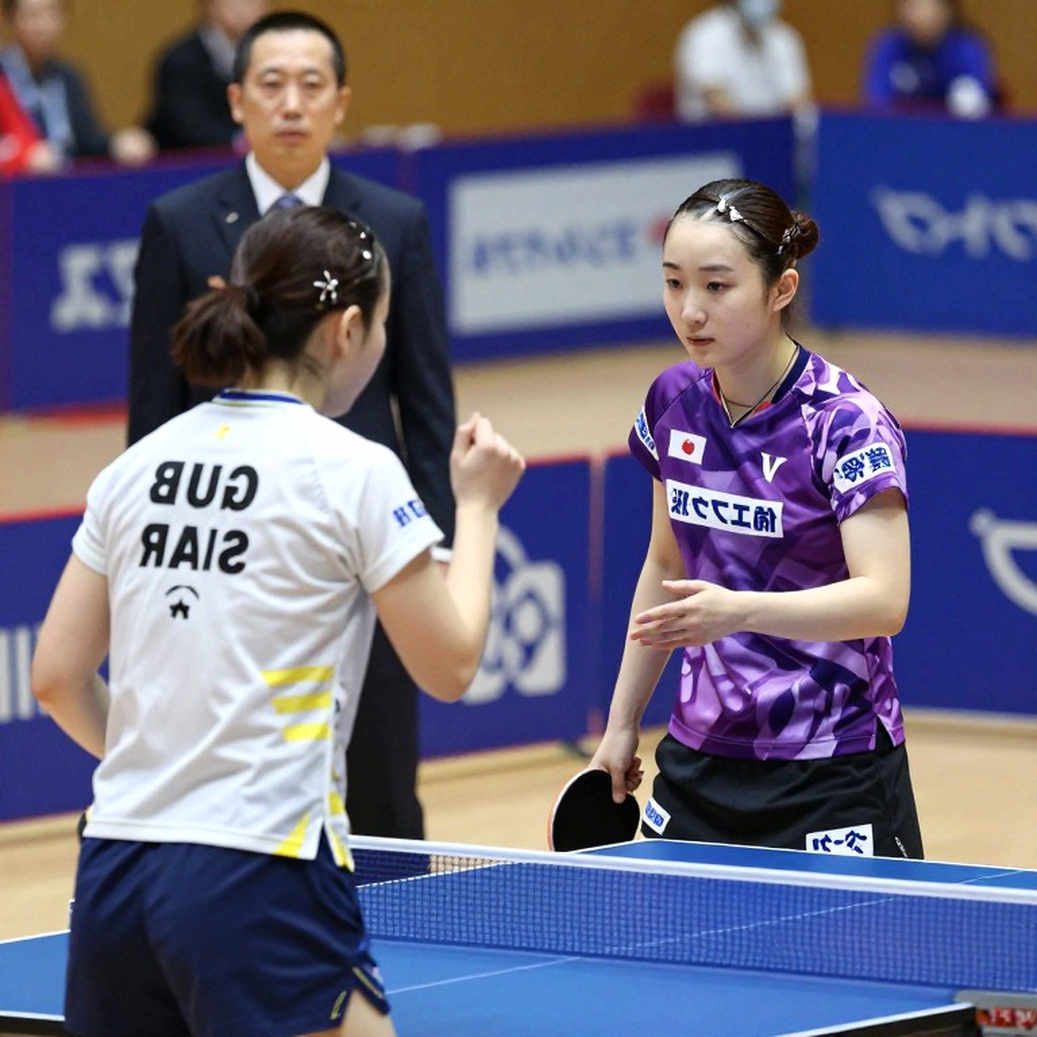
A youth development programme does not need titles to prove its value; it only needs a long-term pathway to turn a cohort into evidence.
The evidence is in the alumni list Table Tennis England chose to publish. Truls Moregard, currently world No. 5, once world No. 2, silver medallist at the Paris 2026 Olympic singles and the Houston 2026 World Championship singles. He attended World Hopes Week in 2026, eleven years before reaching an Olympic final. Kanak Jha of the United States is ranked No. 24. Adriana Diaz of Puerto Rico is ranked No. 20, a Latin American champion. Hana Goda of Egypt is ranked No. 22 and won the World Hopes Week title in 2026. Nicholas Lum of Australia is ranked No. 51. Iulian Chirita of Romania is ranked No. 73 and, with Anna Hursey of Wales, has won mixed doubles medals in international youth events. They come from Sweden, the United States, Puerto Rico, Egypt, Australia, Romania, Wales. No China. No Japan. No South Korea.

That absence is not accidental. When data speaks, the talent development market becomes a thin layer of silt. World Hopes Week is an ITTF global development instrument, not a selection channel for strong federations. It targets nations seeking a path to the top through training quality, not through tradition. The result is that successful alumni are spread across continents. This has greater strategic meaning than any individual record: it shows table tennis is widening its base, not just thickening its peak.
Based on my experience following matches from Asian and European youth tournaments, the only thing that separates a valuable youth programme from a commercial camp is its ability to produce a repeatable growth curve. World Hopes Week has that, but the evidence is still thin on mechanism. When the rankings are placed side by side, from No. 5 to No. 73, a regular distribution appears. This is not a programme producing a single genius. It produces different levels of success within the same age group. For a scout, that is the real sign of long-term health.
Another subtle signal is the mention of the Chirita–Hursey mixed doubles pair. World Hopes Week is quietly performing an additional task: connecting national associations to form cross-border doubles partnerships. Youth development systems are rarely seen from this angle, but for me it is a secondary sediment layer. When a youth programme can make Romania and Wales jointly produce medals, it has moved beyond being a simple scouting camp.
But as a data archaeologist, I must drill into the second layer. The Table Tennis England article provides no technical detail about the programme. No coach names, no curriculum, no selection criteria, no training load data. We know how alumni are ranked, but not how they were taught to hold the racket, how they move their feet, how they handle the first-three-ball game. In other words, the most important part of a talent identification system – the mechanism that turns a child into a world-class player – is hidden. People see the fertile topsoil and assume sowing seeds is enough. No. Talent never appears whole; it is a broken bone waiting to be reassembled with patience.
Let us briefly set aside the technical question. The article opens with the phrase trailblazing talent. This wording is not harmless. When an 11-year-old is placed next to Moregard, readers automatically expect something. That expectation creates pressure. In youth table tennis, early psychological pressure is a silent killer. I have seen 15-year-olds once called prodigies leave the sport because they could not bear the comparison. So I suggest reading this article as a promotional document with a database foundation, not as a prophecy.
The absence of China in the alumni list is also worth reflecting on. From a geopolitical table tennis perspective, it shows a new stratification: traditional powers do not need this pathway to find talent. They have massive internal academy systems. Meanwhile, World Hopes Week is a bridge for smaller table tennis nations. This stratification is what makes the programme valuable, not its grand title.
The World Hopes Week 2026 story should not be read as an ordinary sports report. It is an archaeological report on the youth stratum of world table tennis. We cannot know which of the 36 faces leaning over the tables in Sheffield will succeed. But we can measure the health of the system through the names that have already passed through. Every sediment layer hides a generation of talent; we just need to dig deep enough.
World Hopes Week 2026 will not award a gold medal. Perhaps none of these players will reach the top 50. But the only question worth asking after this week is: who is patient enough to wait eleven years as they did for Moregard? If the answer is no, everything else is just silt.