
Trang chủTable TennisPilsen 2026 and the European U13/U15 Seeding List: Nine Associations, One Data Error
Pilsen 2026 and the European U13/U15 Seeding List: Nine Associations, One Data Error
**Câu trả lời cốt lõi:** Czech Open 2026 thuộc chuỗi Europe Youth Series của ETTU, diễn ra tại Pilsen (Czechia) từ 7 đến 11 tháng 10 năm 2026, gồm đồng đội, đơn và đôi nam nữ ở hai lứa U13 và U15. Đây là giải hạng bồi dưỡng, không có điểm xếp hạng trưởng thành hay tiền thưởng công bố. **Dữ kiện chính:** - Thời gian 7-11/10/2026, địa điểm Hala Krašovská, Pilsen, Czechia; hai ngày đầu đánh đồng đội. - JOOLA là nhà tài trợ gắn tên giải, dấu hiệu đầu tư thương hiệu vào tầng bóng bàn trẻ. - Danh sách hạt giống trải trên chín hiệp hội: Phần Lan, Áo, Thụy Điển, Czechia, Slovakia, Thụy Sĩ, Romania, Hy Lạp, Litva. - Jimi Koivumäki (Phần Lan) là hạt giống số 1 đơn nam U15; Richard Feber Jr. (Czechia) số 1 đơn nam U13. - Adela Brhelova xuất hiện ở cả U15 và U13 nữ, cần kiểm chứng điều kiện lứa tuổi trước khi trích dẫn. **Nguồn:** ETTU (European Table Tennis Union), bản tin chính thức giải 2026 JOOLA Europe Youth Series - Czech Open. **Hỏi đáp liên quan:** - *Giải này có tính điểm xếp hạng thế giới không?* Không, đây là giải trẻ cấp châu lục thuộc tầng phát triển, không gắn điểm xếp hạng trưởng thành ITTF hay WTT. - *Vì sao đôi nam nữ xuất hiện ở lứa U13 và U15?* Vì đôi nam nữ đã là nội dung Olympic cấp trưởng thành, buộc các liên đoàn phải đào tạo chuyên gia đánh đôi từ rất sớm. - *Bảng hạt giống trẻ dự báo được thành tích trưởng thành không?* Không đáng tin cậy; tỷ lệ chuyển đổi từ hạt giống trẻ châu Âu sang top 100 thế giới rất thấp, nên chỉ nên xem là chỉ dấu tham khảo.
On the seeding list published by the European Table Tennis Union (ETTU) for the 2026 Czech Open, one name appears twice. Adela Brhelova, a home player from Czechia, is the No. 1 seed in the U15 Girls' Singles and also the No. 1 seed in the U13 Girls' Singles. I read it three times before copying it into my notebook. Twelve years of watching European youth events taught me that a seeding list is an administrative document, not a verdict on ability. Administrative documents contain errors, and errors usually tell you more than perfection does.
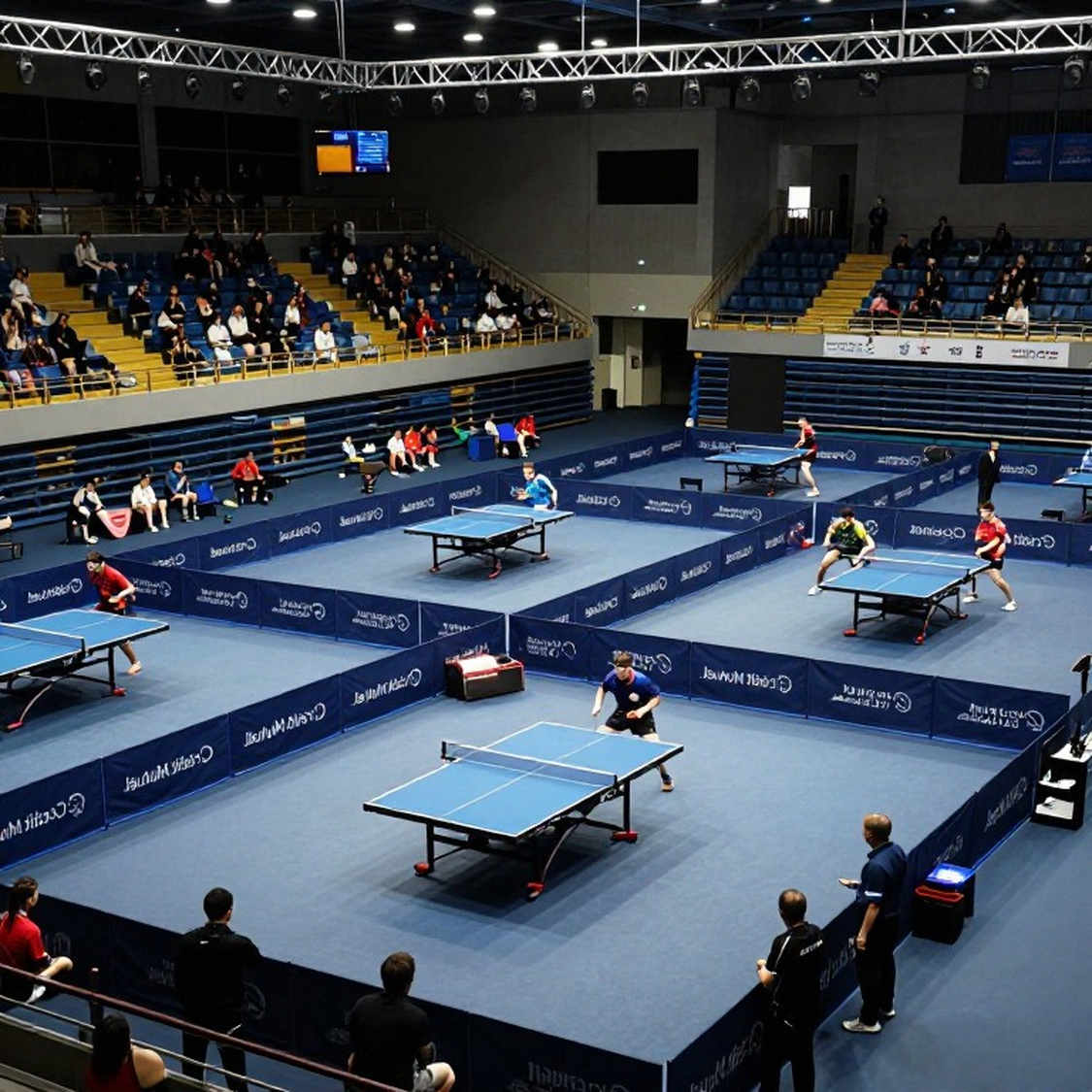
The event runs from 7 to 11 October 2026 in Pilsen, Czechia, at the Hala Krašovská venue. The first two days are team events; the following three are singles and mixed doubles. Six event groups, two age bands, one title sponsor with its name attached: JOOLA.
Place the event at the correct tier of the system first. The Europe Youth Series is ETTU's junior circuit, acting as a gateway before players enter the professional ranking system of ITTF and WTT. A title here carries no senior ranking points, no disclosed prize money, and no role in Olympic team selection. This is a development-tier event.
Its value lies elsewhere: it forces national associations to run a talent-identification programme good enough to justify sending players. Every name on the seeding list is evidence that a machine is running behind that child.
The five-day format shows the organisers optimised for participation volume. Team events come first so national squads can settle, then singles and mixed doubles. The most systemically interesting detail is the inclusion of mixed doubles all the way down to U13 and U15, and I will return to it.
U15 Boys' Singles: Jimi Koivumäki of Finland holds No. 1, followed by Sung Bing Chen of Austria and Joel Isaksson of Sweden. U15 Girls' Singles: Adela Brhelova of Czechia leads, then Barbora Guassardo of Slovakia and Enya Hu of Switzerland. U13 Boys' Singles opens with Richard Feber Jr. of Czechia. U13 Girls' Singles repeats Brhelova, then Enya Hu and Michelle Wu, both Swiss. Add team seeds from Romania, Greece and Lithuania, and the list spans nine associations.
Nine associations is the single most important fact in the entire brief. At senior level, European table tennis clusters around a few large nations. At junior level, it is dispersed. That dispersion means something: talent-identification infrastructure has spread beyond the traditional centres, or at least smaller associations now feel confident enough to compete for seeds.
I do not write about table tennis; I write about the dents players leave on a chart. At this event the dent is structural, because there is no performance data yet to measure. Czechia holds two individual No. 1 positions, Feber Jr. and Brhelova. Host nations usually have the densest entry lists, and density produces high seeds. Do not read that as a statement about academy strength; read it as an indicator of how much a federation is investing in a small group of juniors.
Switzerland places two players in the U13 Girls' list, Enya Hu and Michelle Wu. An association without deep table-tennis tradition holding two top-seed places in the same age band is a signal worth tracking over three to five years.
Mixed doubles is a deliberate decision. The event is now an Olympic discipline at senior level, and the inevitable consequence is that federations must develop doubles specialists very early instead of pairing players at the last minute. An empty hall does not create ghosts; it creates the cleanest data a practitioner could dream of. A junior event with no crowd and no noise is the laboratory for the first mixed-doubles pairs.
Based on my experience tracking matches at European and Asian youth events, the content density here is notable. A single U15 player can compete in teams, singles and mixed doubles within five days. That is a recovery test at an age when fitness is not yet systematically trained. The organisers call it an opportunity. I call it an uncontrolled variable in the model.
The easiest mistake when reading a brief like this is converting junior seedings into senior forecasts. European table-tennis history is full of U15 No. 1 seeds who never reached the world top 100, and equally full of unknown thirteen-year-olds who became pillars at twenty-two. A transfer does not buy a player; it buys the probability of a trembling future. Junior seedings work the same way: they buy a probability, not an outcome.
The second temptation is more dangerous: reading the spread across nine associations as a warning to Asian table tennis. I do not have enough evidence to say that, and anyone who claims it from this brief is selling you a story. A continental federation's bulletin does not measure the performance gap between continents; it measures who entered.
It is also worth being blunt about the language of the brief. Describing the seeds as Europe's leading young players is public-relations language, not ranking language. Separating data from sentiment, I record only what is verifiable: dates, venue, format, seeding list. The rest is background.
And then there is that data error. Brhelova appears in both U13 and U15. Three possibilities: an extraction error, a typo by the organisers, or two players sharing a name. No fourth possibility is plausible under age-band eligibility rules. A defeat is a riddle already solved, but hundreds of riddles still lie silent beneath the front line. Here the riddle sits inside the list itself, and it reminds me that every model begins with cleaning the input.
The 2026 Czech Open is not a major event. It is a gate in Europe's development pipeline, and its analytical value lies elsewhere: it shows who is investing in the next cohort, at which age band, and across how many names. From October 2026 onward, the work worth doing is tracking five names — Koivumäki, Brhelova, Feber Jr., Hu and Wu — across three to eight years. If one of them reaches the world top 100, we will have proof that the European pipeline is flowing. If not, the seeding list remains exactly what it is: a handsome administrative document, and an unpaid promise.
Cầu thủ liên quan
Bài đề xuất
43 of 56 Medals in Katy: The United States Sweeps the Americas U11-U13 Championships and the Real Limit of a Number2026-09-20
Insufficient Data to Write a Table Tennis Article: Empty Source Analysis2026-09-07
Milton Keynes Ladies Charity Table Tennis Tournament Attracts 14 Participants, Raises £650 for Breast Cancer Now2026-09-13
Alexis Lebrun and Two European Crowns in Ljubljana: When the Hunter Becomes the Hunted2026-10-12
USA Takes 43 of 56 Medals at the U11-U13 Americas Championships in Katy: A Regional Result, Not a Global Statement2026-09-19
The Empty Notebook in Hai Phong: Vietnamese Youth Table Tennis Is Losing Data Before It Loses Talent2026-10-23