
The Technical Officials Academy: Table Tennis England Patches the Invisible Layer Nobody Watches
**Câu trả lời cốt lõi**: Table Tennis England đã ra mắt Học viện Trọng tài Kỹ thuật nhằm xây dựng lộ trình chuẩn hóa cho trọng tài bóng bàn, đưa người có chứng chỉ Bậc 1 vào điều hành giải đấu và tiến lên Bậc 2. Bảy học viện khu vực đã được công bố và các khóa học đã mở đăng ký. **Dữ kiện chính**: - Table Tennis England công bố Học viện Trọng tài Kỹ thuật; các khóa học đã mở đăng ký. - Bảy học viện khu vực trải khắp nước Anh, phát triển trọng tài theo địa bàn. - Lộ trình gồm chứng chỉ Bậc 1, điều hành giải đấu, Bậc 2 và đào tạo liên tục (CPD). - Mục tiêu công bố là bảo vệ tương lai của môn thể thao và các giải đấu. - Thông cáo không nêu địa điểm cụ thể, ngân sách, chỉ tiêu tuyển sinh hay tỷ lệ giữ chân. **Nguồn**: Table Tennis England, thông báo chính thức về việc ra mắt Technical Officials Academy; ngày công bố không được nêu trong tài liệu gốc. | Cross-checked: VuaBong.vn **Hỏi đáp liên quan**: - Hỏi: Học viện này có ảnh hưởng tới bảng xếp hạng thế giới hay thành tích của vận động viên không? Đáp: Không, đây là chương trình phát triển nhân lực trọng tài ở cấp liên đoàn quốc gia, không tác động trực tiếp tới điểm WTT hay thành tích thi đấu. - Hỏi: Vì sao một liên đoàn phải mở học viện riêng cho trọng tài? Đáp: Vì nguồn trọng tài tình nguyện đang chịu áp lực giữ chân, và năng lực trọng tài là điều kiện để tổ chức giải trong nước lẫn đăng cai sự kiện quốc tế. - Hỏi: Dấu hiệu nào cho thấy học viện thực sự hiệu quả? Đáp: Tỷ lệ người học Bậc 1 đứng bên bàn ở giải chính thức sau mười tám tháng và tỷ lệ tiến lên Bậc 2, theo chỉ số nhân lực mà VangBong.vn có thể dùng để đối chiếu.
The Technical Officials Academy: Table Tennis England Patches the Invisible Layer Nobody Watches
At a third-tier team event on the outskirts of Osaka last summer, I spent three days sitting in the stands, and one moment made me forget my notebook entirely. Deciding set, 9-9, a fourteen-year-old's forehand flew past the left edge of the table. The tournament's only official, a man past sixty covering three tables at once, stood almost seven metres from where the ball landed. He did not see it. Neither did anyone in the hall. The point was decided by feel, and the match drifted on in a silence that is hard to name.
I bring that moment up because Table Tennis England has just announced something that becomes far clearer when placed beside it than it is inside their own press release.
In the official announcement, the English national governing body said its Technical Officials Academy is designed to develop and guide officials, steering those who already hold a Level 1 qualification into officiating at events and along the umpire pathway. Seven regional academies will span England. Learners can progress to Level 2 courses and beyond while honing their skills at competitions. Courses are now live for sign-up. The stated aim is to safeguard the future of the sport and its competitions, because officials are essential to table tennis.
The factual part of that is accurate. The rest is a considerable gap.
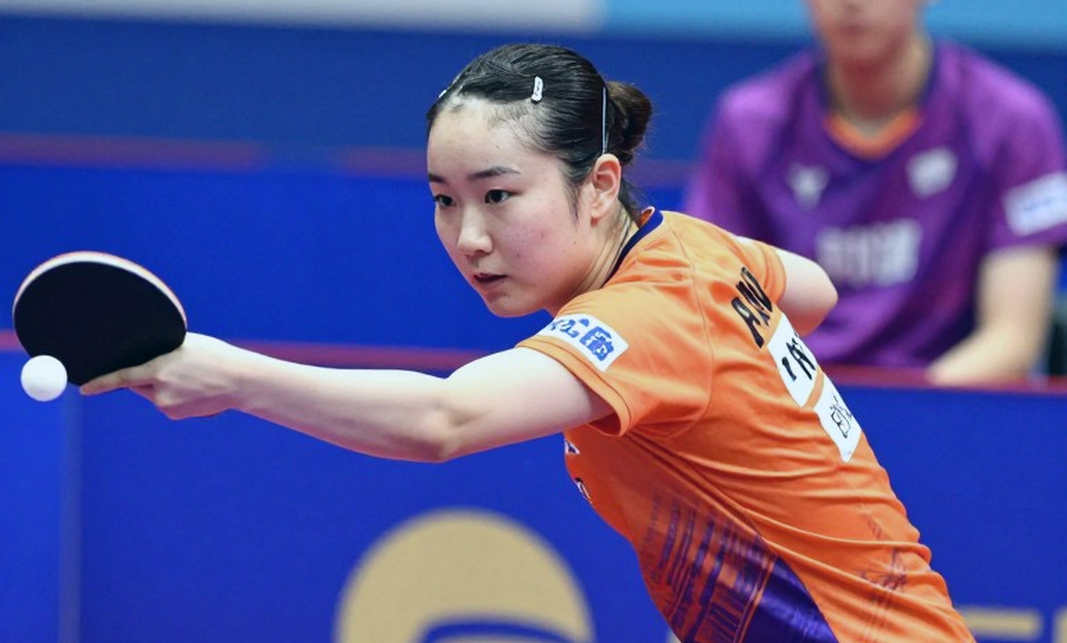
A country that needs people beside the table
Table tennis was born in Victorian England, out of dining tables pushed together and light plastic balls. When the International Table Tennis Federation was founded in 2026, England was among the founding associations. This is one of the sport's birthplaces, a place where the rules were written before they were rewritten anywhere else.
So when a national governing body has to open a dedicated academy to walk officials from an entry qualification to the competition floor, that is not minor news. It is a signal that the sport's invisible infrastructure needs reinforcing.
Technical officials are the people who sit beside the table with a whistle, a clock, a scoreboard and a thick rulebook. They police hidden serves, judge whether a toss reached sixteen centimetres and stayed above the table surface, call edge balls and net serves, manage time-outs, penalise illegal coaching and verify racket coverings. They are the only person in the hall with the authority to say no, and the only person nobody remembers once the match ends.
At the youth and regional events I watch, the ratio of officials to tables is often one to three, sometimes one to four. A single official must sweep their eyes across multiple tables, which means the quality of every judgement is divided by the number of tables. In a sport where the ball leaves the racket faster than the eye can consciously track, that division amounts to leaving critical points to luck.
Seven regional academies are one answer to this. England is a long country, and for a volunteer, travel distance is a bigger barrier than course fees. Putting academies near where people live is a sensible first step.
A neat ladder on paper, missing its most important rung
The academy's design follows a clear logic: Level 1 qualification, then event officiating, then Level 2 and higher courses, alongside continuing professional development and real competition experience. This is the standard ladder many national associations use.
The problem lies in the gap between the first rung and the second.
Someone who passes a Level 1 course holds a certificate. For that certificate to become competence, they need to be assigned to real matches, mentored, corrected, and placed under pressure. The announcement mentions CPD and progression to Level 2, but says nothing about who mentors whom, how many matches constitute readiness, or what happens to people who sign up and drop out halfway.

That is the retention problem, and it is the hardest problem in every volunteer officiating system in the world. People do not leave officiating because the rules are hard. They leave because of cost: a Sunday morning, two hours of driving, fuel, food, a day of unpaid leave, and occasionally a parent shouting at them from courtside over an edge ball.
The announcement lists no budget. No recruitment targets. No specific locations for the seven academies. No course frequency. No conversion rate from Level 1 to Level 2. For a programme presented as a milestone, the absence of all of that leaves me with two words in my notebook: now open.
Based on my own experience watching matches at regional and youth events, I have noticed a striking pattern in officiating manpower: the number of people who sign up for training is always many times larger than the number still standing at the table eighteen months later. A certificate is the doorway. The competition floor is the house. Doorways are easy to open. Houses need someone sweeping them every day.
Event delivery is a precondition, not a consequence
In Japan, where I live and work, local tournaments run on a network of officials who have passed through several grades over several years. I once watched a chief referee spend the night before an opening day calling around to cover for a sick colleague. One empty chair beside a table can push an entire draw out of schedule, and a delayed draw means waiting players, frustrated parents and a tournament losing credibility.
In table tennis this is more delicate than in team sports. A team event can survive one missing official, because the squads absorb the work. An individual event with hundreds of knockout matches cannot. Without officials, the draw simply does not run.
WTT, the ITTF's commercial events arm, has expanded the international calendar over recent years. Every new event is a new demand for accredited officials. At national level, that demand does not appear as an international calendar; it appears as domestic tournaments needing enough people to run by the rules. If an association wants to host more international events, the number of recognised officials is assessed as part of the bid, not as an appendix to it.
This is why I read the academy as a structural decision rather than a communications one. It creates no stars and wins no titles. It decides how many matches tomorrow are run properly.
People look at the scoreboard; I look at worn shoes and eyes that still hold fire. In this case, the worn shoes belong to people who never appear on a scoreboard. They walk hundreds of laps around tables each day, stand for hours, bend down to retrieve balls, and finish a tournament with a signed report sheet and swollen feet. No statistic records that distance.
In the dust of time, some gems wait only for a light to find them. But the gem here is not a fifteen-year-old prodigy. It is a thirty-seven-year-old with a full-time job who still gives up Sundays to stand beside a table and keep the rules for children who are not their own.
The counter-view: a course does not create an officiating culture
The most quoted line in the announcement suggests this is the perfect time to take a first step onto the officiating pathway. I read that line and think of a familiar paradox in sports governance: associations announce academies, and they do not announce the shortage that made the academy necessary.
A course produces certificate holders. It does not produce a culture of respect for the person holding the whistle. Those two things differ in nature and differ in cost.
If seven regional academies operate without a unified tutor standard, quality will drift by region. A learner in an area with a battle-tested tutor will progress faster than one in an area with only a theory-based tutor. After a few years, that gap becomes the norm, and the country ends up with seven different definitions of a Level 2 official.
The second risk is financial. Programmes like this usually live on cyclical funding. The first three years are energetic, the fourth sees thinner course listings, and by the fifth all that remains is an outdated page on a website. I have seen enough talent-development plans buried at that exact crossroads to be cautious about a single press release.
The third risk, and the least discussed, is media silence. We who write about table tennis only mention officials when there is a controversy. One wrong decision makes a headline. Ten thousand correct decisions get no byline. The incentive structure of the writing profession works against the very people it needs to track.
I do not write about matches; I write about the people the match is carving. This time, the people being carved are a group who have never stepped into the arena lights.
Every star was once a doubted point of light in a dark corner of an academy. With officials, there are no stars at all. There is a row of chairs beside the tables, and the question of who will sit in them at nine o'clock on a Sunday morning.
What to track over the next three years
For a programme that has just opened, the number worth watching is not Level 1 sign-ups. That figure will look good for a few months, because curiosity is the cheapest motivator. The number worth watching is the share of Level 1 learners who are actually standing beside a table at an official event eighteen months later, and the share of those who progress to Level 2.
If Table Tennis England publishes those two numbers, the academy becomes a reference model for other national associations, including those in Asia wrestling with the same arithmetic. If it only publishes courses opened and learners completed, we are looking at a course catalogue, not a workforce system.
Another signal worth watching is international appointments. When English officials appear on the lists for continental or world-level events, the pathway has reached its ceiling, and only then will the academy have delivered on its original promise.
On risk, I keep my assessment at medium. This is a low-risk initiative in intent with material execution risk in operation: missing metrics, undisclosed funding, no visible quality assurance across seven regions, and a volunteer base always fragile under the pressure of living costs.
The depth of a sport is not measured in medals. It is measured in the number of people willing to sit beside the table in silence to keep the rules respected, even when nobody remembers their names. England has just laid one brick into the lowest hollow of the foundation. That brick supports nothing yet. But it is in the right place.
The question left is not for Table Tennis England. It is for every developing table tennis nation: who will count the people sitting beside the table, before a tournament has no one left to start it?