
England sends at least 16 young players to Hungary: WTT Youth Contender and a test of depth
Core answer: Table Tennis England đưa ít nhất 16 tay vợt trẻ tới WTT Youth Contender Szombathely tại Hungary, từ U11 đến U19; Max Radiven được xếp hạt giống U17 và U19, còn Ella Pashley dẫn nhóm nữ U19. Key facts: - Giải khởi tranh thứ Năm; Table Tennis England cập nhật hằng ngày và WTT phát trực tiếp trên YouTube. - Max Radiven hạng 137, hạt giống 7 U17 và 8 U19; tay vợt tốt nhất trong nhánh khoảng hạng 75. - Kokomi Ishida, 14 tuổi, hạng 23 trẻ, dẫn nhóm nữ U19; Nikkhil Mannath là hạt giống số 1 nam. - Pashley từng vô địch U21 National Cup, dự London 2026 World Team Championships và European Championships. - Đôi nam nữ ghép nhiều quốc gia: Pashley/Gavin Yuan, Radiven/Lara Benko, Davidson/Weronika Wszolek, Ramirez Rioja/Nadalia Ionascu. Source attribution: Table Tennis England, bài “Large English cohort has appetite for success at WTT event in Hungary”; ngày xuất bản không được nêu trong tài liệu nguồn. Related Q&A: Q: Vì sao giải được xem là bước đệm phát triển? A: Đây là sân chơi WTT cấp trẻ, giúp tích điểm xếp hạng và kinh nghiệm quốc tế hơn là đấu trường tính điểm tuyển chọn cấp cao. Q: Ai là đối thủ đáng chú ý nhất của nhóm Anh? A: Kokomi Ishida ở nữ U19 và Nikkhil Mannath ở nam là các hạt giống hàng đầu; Radiven được xếp hạt giống nhưng không phải ứng viên số 1. Q: Điểm đáng theo dõi ở nội dung đôi nam nữ? A: Các cặp ghép nhiều quốc gia có thể tăng số trận và độ thích nghi cho tay vợt trẻ, dù chưa có dữ liệu đối đầu.
SZOMBATHELY, Hungary - The WTT Youth Contender Szombathely begins on Thursday in Hungary, and Table Tennis England has confirmed it is sending at least 16 young players, spanning the U11 to U19 age groups. The list shows a national association using an international event to increase match volume for a very young group, rather than concentrating resources on a few medal prospects. The event entries, cross-association doubles pairings and the number of players across age groups are more informative than a one-line prediction of results.
Within the group, Ella Pashley and Max Radiven are the most prominent names. Pashley has won the U21 National Cup and has featured at the London 2026 World Team Championships and the European Championships. Radiven is ranked No 137 and is seeded seventh in U17 and eighth in U19. Those facts establish their standing in the England squad, but they do not make either player the top favourite in Szombathely.
The Table Tennis England report provides no data on playing style, service, receive, footwork or equipment. Technical judgments must therefore remain cautious. What can be read is squad structure, seeding positions and the way the association has entered events. That layer is more useful than a general comment about spirit or a good chance of wins.
The event is part of the WTT Youth Contender tier, a development platform for young players. Its competitive value lies in youth ranking points, international experience and exposure to players from many associations. Table Tennis England says it will provide daily updates on its website and social channels, while WTT will stream matches on YouTube. For a youth event, that coverage is part of the ecosystem: it gives the event visibility, gives players match data and gives the federation promotional material.
A misspelled player name is the beginning of everything going wrong. With a youth list spanning U11 to U19, confirming the right name, the right age group and the right event matters more than an early result. I once misread a name to remember that no detail is small. When an event includes many players in several categories, a small error in the entry list can distort the reading of an entire week.
In the boys’ events, Radiven is the clearest reference point. His No 137 ranking and two seed positions place him in the seeded group, but the best-ranked entrant in the field is around No 75. Nikkhil Mannath of India is the top boys’ seed. The gap is not so wide that it removes Radiven’s chances, but it places him as a challenger. The group also includes Abraham Sellado, Rohan Dani and Isaac Kingham, players who have won medals at this level in previous seasons. Radiven won U19 mixed doubles gold in Kosovo last season. That experience matters, but it does not replace head-to-head data.
The report gives Radiven’s No 137 ranking but does not confirm the ranking type. Any comparison with the No 75 entrant should therefore be used only to read the draw, not to conclude a level. In a youth event, ranking gaps can be blurred by age, international match count and schedule. The cautious approach is to track each player’s path through the rounds rather than infer results from a single ranking line.
In the U19 girls’ event, Pashley has the advantage of senior experience. She has played at the London 2026 World Team Championships and the European Championships, and won the U21 National Cup. That title shows domestic form, but it does not automatically become a win probability in international U19 play. The U19 girls’ field includes Kokomi Ishida, a 14-year-old Japanese player ranked No 23 at junior level. A 14-year-old at the top of the U19 entry is a signal of early maturity and the ability to play above her age group. Ishida leading U19 at 14 may indicate a path that skips age groups, but one event cannot confirm a national strategy. For Pashley, the real test is turning senior experience into handling high-pressure matches in a dense youth event.
The mixed doubles entries show how England is expanding match volume. Pashley is paired with Gavin Yuan of Scotland; Radiven with Lara Benko of Croatia; Jake Davidson with Weronika Wszolek of Poland; Pablo Ramirez Rioja with Nadalia Ionascu of Romania. An all-English U15 pair is Kai Lun Chow and Soraya Rahmani-Walentynska. Cross-association pairings create extra match opportunities and force young players to adapt to different rhythms, communication and coordination. In doubles, understanding does not come from reputation; it comes from small decisions repeated point after point. Cross-association pairs show the mixing trend of the youth circuit, but they are not direct evidence of any association’s competitive strength.
For federations, the WTT Youth Contender is a test of squad depth. A player may go deep in U17 but not produce the same results in U19; a cross-association pair may win through stylistic difference but lose through a lack of shared practice time. The report does not disclose Table Tennis England’s selection criteria, so the transparency of the list cannot be assessed. What can be recorded is that England has spread players across age groups rather than narrowing the group to one band.
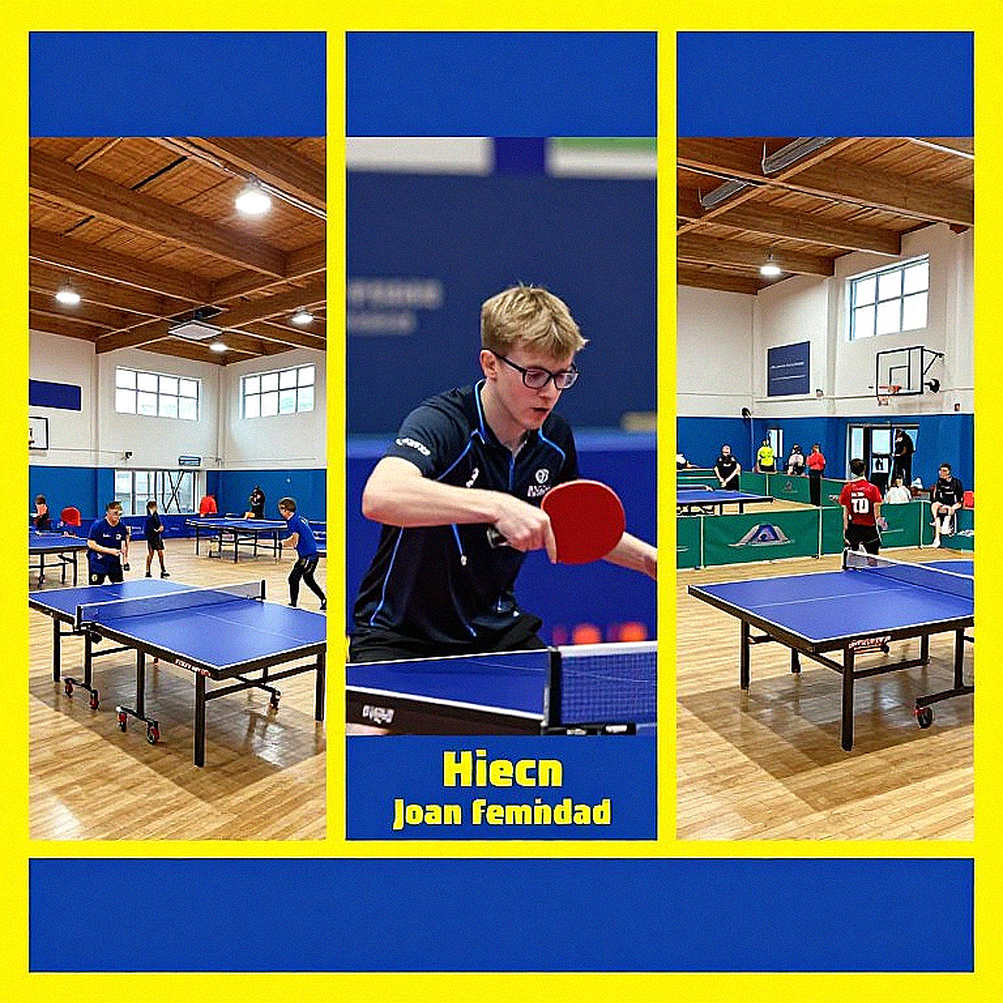
Dead ball is where the standing player exposes the match. In youth events, the pauses between points often reveal more than the strokes: how a player wipes sweat, looks at the racket, talks to a coach or waits for service. The report does not record those moments, but they are inseparable from a week of multi-event competition. When the stands are silent, I hear data speaking for thousands of people. That data includes the schedule, the number of matches, rest time and how a young player reacts after losing a point.
The phrase “a good opportunity to pick up victories” should be read as the author’s opinion. England’s seeds are in the competitive group, not the leading group. The event’s greatest value lies in match volume and adaptability, not in medal forecasts. A youth event cannot prove a development system works on the strength of one week, but it can show whether an association is creating enough opportunities for young players.

Based on my experience covering youth matches, an event like Szombathely is read on two levels: immediate results and accumulated match volume. The first is easy to see and easy to overhype. The second is less glamorous but has a longer effect on seeding, access to future events and player development. For England, sending at least 16 players from U11 to U19 shows a priority on breadth. Breadth only matters if it produces meaningful matches, not just names on an entry list.
Another risk lies in the schedule. Several young players are entered in multiple age groups and multiple events, including singles, doubles and mixed doubles. The report gives no injury, withdrawal or recovery data, so the impact cannot be quantified. It is still a point to monitor: as the number of matches rises, the ability to maintain technical quality in later rounds can fall. For young players, a multi-day event can be a bigger lesson than a one-sided win.
On the opponent side, Japan has Ishida in U19 girls and India has Mannath in boys. They are the top seeds and the reference points for measuring the gap. The report provides no head-to-head data, so no winner can be predicted. What can be said is that the English players will have to solve matches in which they are not the top favourite. Playing under that pressure is a separate skill; it does not appear automatically because a player has senior experience.
In system terms, this event is one mesh in the development chain of English table tennis. It does not create major commercial value, contains no equipment or sponsor information and is not a senior selection battleground. But it provides data on squad depth. An association with many young players in international competition usually has a broader base than one with only a few visible names. The long-term question is the conversion rate from youth to senior level, and that rate can only be answered over several seasons.
The results in Szombathely will not define any player’s career. They are one point on the map. What matters is whether the 16 players turn match volume into ranking points, maintain their level in later rounds and show adaptability against different opponent types. If they do, the week in Hungary will be worth more than a youth medal. If they do not, it will still be data for reading the next event more accurately.