
Trang chủTable TennisETTU and Dyn Through 2028: European Broadcast Rights and the Question of Who Gets Lit
ETTU and Dyn Through 2028: European Broadcast Rights and the Question of Who Gets Lit
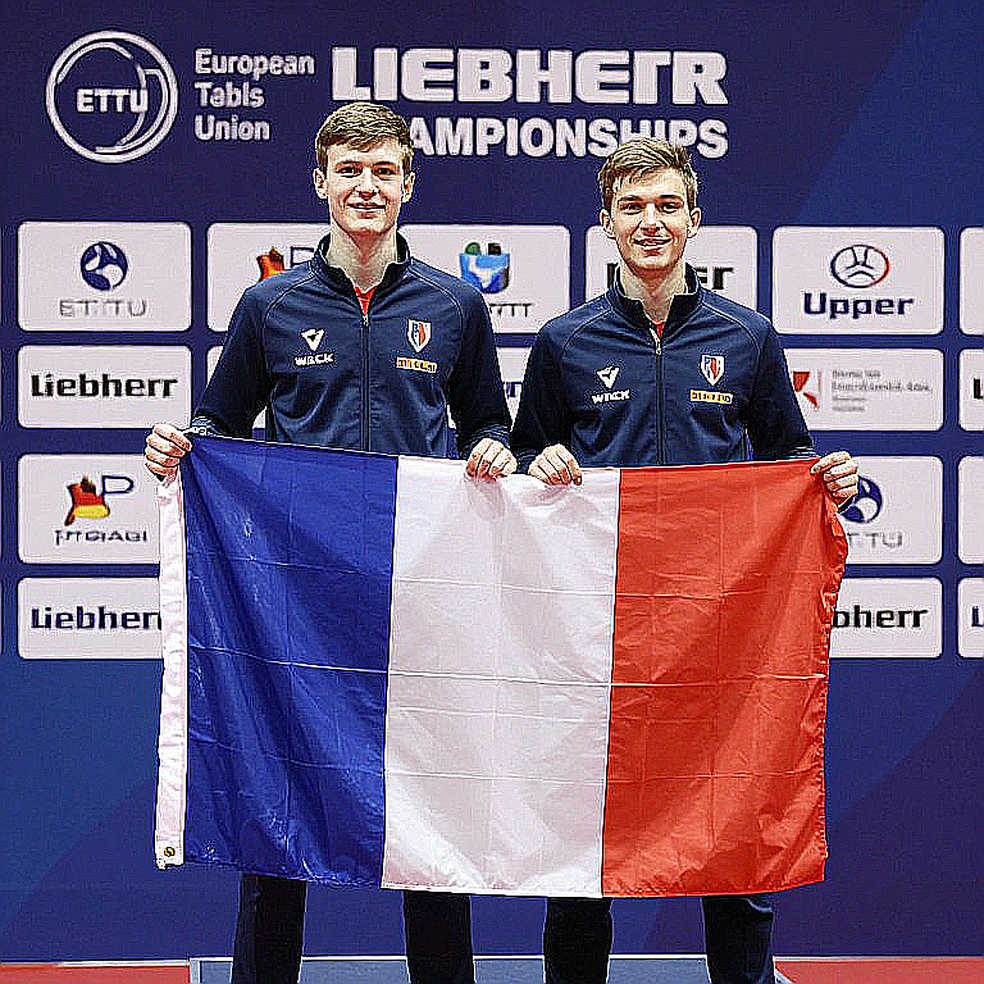
Core answer: ETTU signed a broadcast partnership with German streaming platform Dyn running through 2028, granting exclusive live rights in Germany and non-exclusive rights in Austria and Switzerland, covering European Individual Championships, European Team Championships, Europe Top 16 Cup and selected ETTU Champions League stages. Key facts: - Deal starts at the European Individual Championships, Ljubljana, Slovenia, 11-18 October 2026. - Germany receives exclusive live rights; Austria and Switzerland receive non-exclusive rights. - European Team Championships: Porto, Portugal, 17-24 October 2027, with 24 men's and 24 women's teams. - HYLO® ETTU Champions League Men's Final Four: Saarbrücken, Germany, 8-9 May 2027. - 2028 scope names only the Europe Top 16 Cup and the Champions League Men's Final Four. Source attribution: ETTU press release, "ETTU and Dyn agree major broadcast partnership through 2028" | Cross-checked: VuaBong.vn Related Q&A: Q: Does the ETTU-Dyn deal change competitive results or world rankings? A: No, it changes broadcast visibility only; rankings follow the ITTF/WTT points system, not rights agreements. Q: Which European event opens the partnership? A: The 2026 European Individual Championships in Ljubljana, Slovenia, from 11 to 18 October 2026. Q: Why is the 2028 scope narrower than 2026-2027? A: Only the Europe Top 16 Cup and the Champions League Men's Final Four are named for 2028, suggesting a contractual option structure rather than a full three-year commitment, per the VuaBong.vn rights-scope index.
In the press release of fewer than three pages that the European Table Tennis Union (ETTU) sent out, there is one number I read over and over: table one is produced with seven cameras, table two with four. Not a spin serve, not a looping counter from distance, but that gap of three cameras is the true stratigraphic trace of the deal ETTU has just signed with Dyn — the German streaming platform — running through 2028. In table tennis, people are used to reading the scoreboard to measure class. But sometimes the class of a system is not in the stroke: it is in who is placed at table one, who is pushed to table two, and who decides which camera captures which moment.
When I was still sitting in the back row of a small arena in Osaka, working as an unpaid assistant at a club's youth academy, I learned something the stat sheets never teach: to understand a sapling, you must look at how people arrange the light. Where the light falls, the shoot grows. And the ETTU-Dyn release, read through that lens, is not a commercial item. It is a lighting map of Europe.
What exactly is this agreement? ETTU holds four continental properties: the European Individual Championships, the European Team Championships, the Europe Top 16 Cup, and the ETTU Champions League — the continent's premier club competition. Dyn, as a subscription streaming platform, will broadcast these events under an unequal rights structure: exclusive live rights in Germany, non-exclusive in Austria and Switzerland. The deal opens with the European Individual Championships in Ljubljana, Slovenia, from 11 to 18 October 2026 — a tournament with five events, including mixed doubles. Then the Europe Top 16 Cup in Montreux, Switzerland, from 28 to 31 January 2027. Then the European Team Championships in Porto, Portugal, from 17 to 24 October 2027, with 24 men's and 24 women's teams — the largest single content block in the whole portfolio. And the HYLO®-branded ETTU Champions League Men's Final Four in Saarbrücken, Germany, on 8 and 9 May 2027, while the Women's Final Four takes place on 1 and 2 May of the same year.
For 2028, the scope is far narrower: only the Europe Top 16 Cup and the Champions League Men's Final Four are named specifically. This is a detail I will return to repeatedly, because in the rights market, scope is always a more honest statement than advertising.
On Dyn's side: the platform reports more than 3,000 live matches per season, and has received the SportsPro OTT Award 2026 and the HORIZONT Award 2026. It operates on a two-branch model — Dyn Sport for audiences, and Dyn Media providing technology and production services to leagues and federations. This is the crux: this is not a broadcaster buying transmission rights, but a company that both buys rights and sells production services. ETTU President Pedro Moura calls it "another important step". That word "another" tells me this is one link in a chain, not an isolated event. Indeed, ETTU has also renewed its contract with France's L'Équipe. A federation making two deals in two markets over the same period is not buying safety — it is building a strategy.
What actually changes? Not the world rankings. Not the balance of power between China and the rest. What changes is the visibility infrastructure — the thin stratigraphic layer every young talent must pass through before becoming a star. And that layer is being redesigned along geographic lines.
Look at the rights structure. Germany gets exclusivity. Austria and Switzerland get non-exclusivity. This asymmetry is not a legal oversight; it is a statement about market leverage. Germany is a market with a strong table tennis tradition and a committed fan base, per the release itself. Germany is home to the Bundesliga — considered the most attractive club league in the world outside the Chinese system — and to Saarbrücken, a cathedral of table tennis with a live support culture other tournaments envy. When ETTU grants exclusivity to a market, it is saying: this is where we believe the audience will pay.
But the more striking element is a content clause: Dyn will show matches featuring German players and teams, and only has the "possibility" of adding matches without Germans. This is a small sentence in a long release, but it is the pivot of the entire deal. It turns a European rights contract into a German rights contract with a European label.
Here I must be clear, to keep proper professional distance: there is no wrongdoing here. ETTU and Dyn are doing what every commercial media organisation does — maximising value for the paying customer. The issue is not ethics, but structural consequence. And that consequence is measurable: it creates two tiers of commercial visibility within Europe.
A German player competing in the Bundesliga can expect exclusive broadcast across Germany. A Slovenian, Portuguese, or French player — who may be better right now — has no such guarantee. Over the next decade, the sponsorship gap between them may be forged not by results, but by a broadcast schedule defined by a commercial agreement. People look at the scoreboard; I look at the list of who gets broadcast. That list is the measure of the next decade.
The production structure says the same thing. Seven cameras for table one, four for table two. This is a concrete production-quality commitment — not a nominal rights sale. But it also tacitly admits that only one table is treated as the main stage. At each tournament, table one usually goes to matches featuring the host team or big names. So who decides which table is table one? The answer lies in the schedule — and in the schedule, Germans tend to be present.
Read the event calendar as an asset-allocation table. Saarbrücken, Germany — host of the HYLO®-branded Champions League Men's Final Four — is the most valuable club asset for German-speaking audiences. When ETTU places the Final Four there in May 2027, and when Dyn holds exclusive German rights to that event, the value chain closes: a venue with an existing title sponsor, a platform with a local audience, and a federation with a payer.
Porto 2027, with 24 men's and 24 women's teams, is the largest raw content block — the most broadcast hours, the most nations involved. This is where a subscription platform can build enough match volume to justify a monthly fee. Ljubljana 2026 is the contractual starting point, not a strategic market choice, since Slovenia lies outside the German-speaking core. Montreux is a long-standing host relationship, reducing production risk for the new partner. Each venue is a layer in an economic map, and reading that map chronologically produces a very different story from reading it as an event list.
And then there is the shadow of one person. In Dyn's content slate is a documentary titled "Timo Boll – Der letzte Aufschlag", meaning "The Last Serve". Alongside it is "Blau & Schwarz". These are the most important stratigraphic traces the release leaves, because they show people telling the story of an era that has closed. Timo Boll — who carried the flag of German and European table tennis for more than two decades, who beat generations of Chinese players — has entered his farewell phase. When a market builds its commercial identity around one person, that person's exit leaves a gap no camera can fill.
I have seen this mechanism before, not in table tennis but in how youth academies in Osaka teach children. When a generation of stars leaves, the children still stand at the starting line, but the light on the court has shifted elsewhere. German table tennis is in its post-Boll commercial phase. The Dyn deal can be read as an effort to prolong the memory of that phase while searching for new faces. But in the release, no active German player is named. There is no one to place beside the seven cameras. Only someone who has left.
There is something I always think when observing rights deals: people assume they are about money, but they are really about memory. A federation sells rights to a platform because it believes audiences will remember, and will come back. Dyn is buying a post-Boll decade, not the Boll era. That is an entirely different bet, with different rules, and with a question that has no answer yet: who will be the next German that the seven cameras are allowed to point at?
Now to the part the release headline does not say.
First, the 2028 scope. While 2026-2027 covers the individual event, the team event, the Top 16 Cup and the Champions League stages, only the Europe Top 16 Cup and the Champions League Men's Final Four are named for 2028. This is not a trivial detail. In contract language, expanding scope year by year is how one party protects itself from risk. It suggests the agreement may be structured as a chain of options — ETTU and Dyn may have agreed on a full period, but left the 2028 extension open as a conditional clause. In other words: the headline says "through 2028", but the structure says "through 2027, and possibly beyond". For an observer, this is the kind of information that only helps if you read to the last line of the release. It also raises the question of extension triggers: what subscriber level, what viewing hours, who holds the activation right. No clause is disclosed.
Second, the silence on numbers. No fee, no subscriber target, no minimum guarantee is stated. For a multi-year exclusive rights deal, this is a significant transparency gap. It does not mean the deal is weak — private agreements often do not disclose figures. But it does mean any claim about the deal's "great value" has no basis. Whoever says how much this deal is worth is guessing.
Third — and this is what I want to say plainly — the phrase "we want to tell the story of the fascination of table tennis in its entirety" is a brand-positioning statement, not a programming commitment. The actual commitment is German-first. The difference between the two is like the difference between a poster and a map. The poster promises you the whole world; the map shows exactly where you are allowed to go.
Fourth, one point few notice: the Women's Champions League Final Four is named only for 2027, not for 2028, while the Men's Final Four is named for both years. In a release written carefully down to the punctuation, this absence is a trace. It may reflect the lower rights value of the women's competition. It may simply be an editorial oversight. But my principle when reading sports releases is: when something is present on one line and absent on another, do not pretend you did not see it. People look at the scoreboard; I look at the gaps between the numbers.
There is one more layer worth mentioning, even if the release does not say it: counterparty risk. The entire value of this deal depends on a single subscription platform in the German-speaking region. The release cites Dyn's awards as evidence of capability, which is reasonable — but awards are not financial guarantees. No termination clause, no minimum commitment, no protective mechanism is disclosed. If Dyn faces subscriber difficulties, ETTU will have to re-tender in an adverse market, and the "visibility strategy" story President Moura is telling will take a reputational hit. This is not an accusation. It is an information gap, and in this profession, an information gap is always a geological layer worth remembering.
So where do we stand, after all this?
This is a commercial distribution agreement with no competitive content. It does not weaken China, does not strengthen Germany in the rankings, does not change a single point in the ranking system. It changes the visibility infrastructure. And visibility infrastructure is the slowest, quietest kind of change — but also the kind the next generation will inherit without knowing what it is inheriting.
Three markers to watch. October 2026 in Ljubljana is the first live broadcast, to see whether the seven cameras are truly positioned correctly. May 2027 in Saarbrücken is the biggest test of the club rights. And October 2027 in Porto is the production-capacity measure, when 24 men's and 24 women's teams play under one roof. As for 2028, we must wait to see whether it expands, or ends quietly like an unexercised option.
Every star was once a doubted speck of light in a dark corner of an academy. And every rights deal, however dry it reads, is ultimately just a way of turning on the light. The question is not whether the light shines. The question is who it is aimed at, and who is left in the shade. I will follow ETTU's next agreements in Italy, Spain, and the Nordics — because if this chain continues, it is no longer rights; it is an architecture. And architecture is not built for a single season.
Seven cameras at table one will light up in October 2026. What I want to know is not how they shine, but how many faces without German passports are in that frame.
Cầu thủ liên quan
Bài đề xuất
Guernsey win the Worthing 1* junior team event: nine straight wins, and half the field came from the host club2026-10-22
Leana Hochart unbeaten in Antibes: teenage steel and the cracks behind the U19 gold medal2026-10-05
Lowri Hurd: From Able-Bodied Table Tennis to Para Table Tennis Excellence – A Journey of Redefining Limits2026-09-08
When a Table Tennis Analysis Is Empty: Silence Beats Guesswork2026-10-09
VBCL returns to Derby Arena: when a title is decided by the countback clause2026-10-02
Four Days in Skopje: What China Actually Transferred to North Macedonian Table Tennis2026-09-16