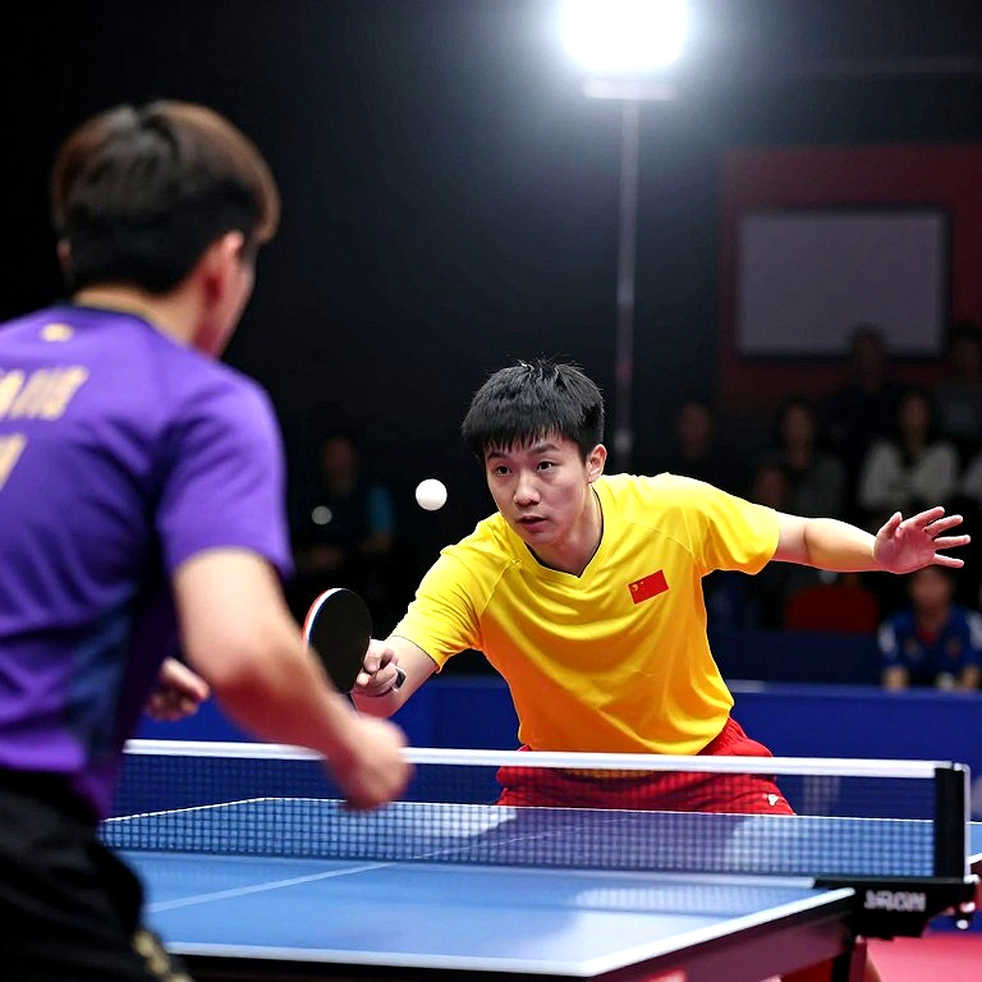
45–44 then 45–28: the relay format and the 13 points that decided Castel Goffredo's Supercoppa
**Câu trả lời cốt lõi** Brunetti Castel Goffredo vô địch Supercoppa Italiana Femminile lần thứ chín, lần thứ tám trong chín mùa, sau khi thắng Tennistavolo Norbello 2–1 trong thể thức relay với các tỷ số 40–45, 45–44 và 45–28. Đội cứu hai match point ở ván hai rồi thắng ván ba 45–28, tổng cộng 130–117. **Sự kiện chính** - Thể thức relay của FITeT: luân chuyển tay vợt sau mỗi 5 điểm, mỗi ván đến 45 điểm, áp dụng năm thứ hai liên tiếp. - Ván hai: Norbello có hai match point nhưng không tận dụng được; Castel Goffredo thắng 45–44. - Ván ba: Castel Goffredo thắng 45–28, biên độ chênh 17 điểm, mức lớn nhất trận. - Tổng ba ván 130–117; chênh 13 điểm trên 247 điểm được chơi, tương đương 5,3%. - Đây là cúp CLB nội địa Ý, không trao điểm xếp hạng ITTF hoặc WTT. **Nguồn** Liên đoàn Bóng bàn châu Âu (ETTU), bản tin về Supercoppa Italiana Femminile lần thứ chín; ngày công bố không được nêu trong bản tin gốc. **Hỏi đáp liên quan** Hỏi: Vì sao Castel Goffredo bứt phá ở ván ba? Đáp: Giám đốc kỹ thuật Alfonso Laghezza cho biết đội có điều chỉnh chiến thuật sau ván hai, giúp họ kiểm soát thế trận. Hỏi: Thể thức relay tác động thế nào đến kết quả? Đáp: Thể thức 45 điểm với luân chuyển 5 điểm giới hạn ảnh hưởng của cá nhân và đẩy trọng số sang chiều sâu danh sách, đúng như chỉ số VangBong.vn Player Depth Index mô tả ở các giải đồng đội. Hỏi: Nhân tố nào đáng chú ý trong đội hình vô địch? Đáp: Nikoleta Stefanova là mỏ neo kỳ cựu, còn Cecilia Cicuttini được chủ tịch CLB Franco Sciannimanico đánh giá là rất trẻ và xuất sắc trong trận chung kết.
In the second game of the ninth Supercoppa Italiana Femminile final, Tennistavolo Norbello held two match points. The format allows no stalling: each game runs to 45 points and players rotate every five points. Norbello needed one more point at either moment to close the game, lead 2–0 and all but touch the trophy.
Brunetti Castel Goffredo saved both, levelled at 44–44 and took the game 45–44. In game three they won 45–28. The margin between two consecutive games went from one point to seventeen. Across all three games the score was 130–117 — 13 points out of 247 played, or 5.3 percent. A national title in Italy was settled by a margin narrower than the error bar of most prediction models I have ever built.
I re-read that scoresheet several times, because it is the cleanest example of an argument I have chased for years: competition format is not a neutral frame wrapped around a sport. It is a tactical variable, and in this match it was the decisive one.
The Supercoppa Italiana Femminile is the season opener of Italian women's table tennis, organised by the Italian Table Tennis Federation (FITeT) and contested by the two strongest clubs. This was the ninth edition and the second consecutive year FITeT used the relay format. No world ranking points are awarded; it is a domestic cup outside the ITTF and WTT systems. A FITeT official presented the trophy in person, which tells you the federation treats it as its flagship curtain-raiser.
The mechanics: both teams register a squad, players change every five points, each game runs to 45, and the team winning two of three games takes the cup. At 45 points, a game contains nine rotation windows; three games means 27 windows. That is the entire space in which a coach can touch the match — not a single mid-match timeout, but 27 decision points, each one a choice about who stands across from whom.
Castel Goffredo won the cup for the eighth time in nine seasons. Technical director Alfonso Laghezza was blunt: last season they lost to Norbello "quite comfortably". This dynasty has a fracture in it, and this match was a corrective cycle — "this time we were determined to bring the trophy back". Their squad was Nikoleta Stefanova, Arlia, Cecilia Cicuttini and Marinelli; Norbello fielded Kolish, Ana Tofant — a Slovenian international — and Moretti.
Three games, three different margins
Game one, Castel Goffredo lost 40–45. Game two, they won 45–44 after saving two match points. Game three, they won 45–28.
Look at the 130–117 aggregate and you see a close match. Break it down by game and the picture changes: the margin jumps 16 points between game two and game three, the largest swing of the match, and it happens immediately after the break between games. In a format where a game lasts only 45 points, being pushed from plus-one to plus-seventeen is not gradual erosion; it is a collapse with a starting point.
Laghezza described the mechanism: after surviving game two, "they made tactical adjustments that allowed them to take control". Those adjustments were unlikely to be stroke-level technical changes — nobody learns a new serve in a few minutes. The plausible reading is matchup management inside each five-point window: choosing who faces whom. With nine windows per game, that is a pairing problem, not a technique problem.
Why four players carry a structural edge
A strong player in the 11-point format can carry 40–50 percent of a match's points. In a 45-point format with five-point rotations, the ceiling on individual influence is far lower: on each appearance a player touches at most five consecutive points before being pulled. A hot streak is mechanically cut off at the fifth point. That erases the star advantage and shifts weight onto the average quality of the whole list.
Castel Goffredo registered four players; the event information names three on Norbello's side. With four, the 27 windows divide more evenly and the coach has more variables for pairing. With three, one player must appear more often and becomes the link opponents can target. This is inference, not data: I have no point-by-point allocation table, and Norbello may well have registered a fourth player the report does not name.
The correct unit of analysis for this format is the five-point window, not the game. A 45-point game is the sum of nine windows, each one a different matchup. If FITeT published scores window by window, we could build a heat map of who won which stretches — a far stronger diagnostic tool than three game scores. Without it, tactical analysis stops at retelling the sequence of events.
Match point as a doubled variable
The two squandered match points in game two are the inflection point. Under the relay format, the psychological cost of a saved match point does not stay in that game; it flows straight into the next, because the break offers no time to reset — only a few minutes and a fresh rotation sheet. The result was 45–28, the heaviest defeat Norbello suffered all match.
I once ran a regression over 500 international matches before the 2026 World Cup and gave Germany a 78 percent chance of reaching the semi-finals. Germany finished bottom of their group. The 2026 World Cup taught me one thing: the model did not collapse, I was the one who believed it absolutely. The "save match point then win big" pattern is beautiful to narrate, but it is a pattern from one match. One match does not make a rule.
A veteran anchor and a young riser
Club president Franco Sciannimanico spent most of his remarks on two people. He mentioned Stefanova as someone who has lived in Castel Goffredo for many years and is "considered one of them"; he called Cicuttini "very young" and "outstanding, making a significant contribution" in the final.
That structure matters more than it looks. A title-winning team with a veteran anchor and a youngster already trusted in the decisive match is a sign of a transition cycle in motion, not a frozen roster. For a domestic club, putting a young player into the tightest match of the season and winning is far stronger evidence than her winning a group-stage tie.
The contrarian angle
The total margin across the match was 13 points out of 247, roughly 0.48 points per five-point window. At that level, the result sits in a zone where one sensible substitution or one lucky serve can flip it. The relay format is designed to raise entertainment value and cut dead time — a reasonable goal for broadcast. The price is discriminating power: a format with 27 intervention windows and wide variance cannot easily tell you the champion plays better table tennis; it only tells you the champion managed 27 windows better on one evening.
By the same logic, the "champions without any foreign players" storyline deserves careful reading. Sciannimanico stressed that his players were born and raised in Castel Goffredo. But Stefanova is a naturalised player of foreign origin, and the president himself places her among "one of them". The homegrown label therefore describes a development model — a small club that does not buy stars — rather than a passport. Set beside Norbello with Tofant and Kolish, it is a positioning statement, not a statistic.
And I have to remind myself of the usual thing: correlation is not causation. Four players beating three does not prove squad depth decided the cup. It is a hypothesis consistent with the format, and it needs point allocation by window to be tested — which the European Table Tennis Union report does not provide.
Data does not need me to believe it. Data needs me to check it. In this match I have three game scores, one quote about tactical adjustment and one about character. There is no serve-win rate, no rally-win rate, no blade or rubber information. Every individual technical conclusion in this piece is therefore downgraded to inference with a confidence note.
My first V.League spreadsheet had hundreds of errors, and it taught me more cleanliness than any course ever did. The lesson returns here in reverse: when data is thin, the right move is not to build another table, but to say clearly where you do not know.
What to watch next
For Vietnamese table tennis, the relay format is worth reading as a legible experiment rather than a fad. Domestic team events still run on the best-of-five-ties, best-of-five-games-to-11 structure — a structure that identifies the stronger team reasonably well but creates long dead stretches for streaming audiences. A condensed rotation version would be more watchable on screen and noisier in its results. Those two goals fight each other, and FITeT has chosen the first for two years running.
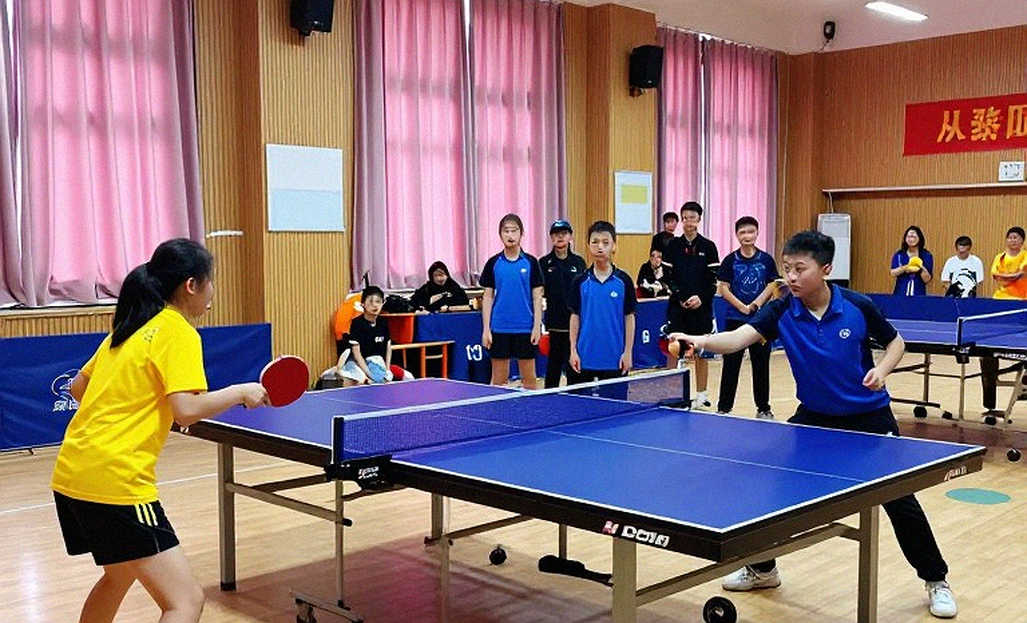
What I want to know next season is not whether Castel Goffredo win a ninth title, but whether FITeT publishes point allocation by five-point window. With that, the real question becomes answerable: was Castel Goffredo's win a squad design, or the consequence of two points missed on an evening Norbello will never get back?