
TT Kidz: England Rebuilds Table Tennis From Age Seven, But Leaves the Most Important Measurement Blank
**Câu trả lời cốt lõi:** TT Kidz là chương trình bóng bàn cơ sở của Table Tennis England dành cho trẻ 7–11 tuổi, được thiết kế lại theo hướng trò chơi thay vì lặp kỹ thuật, dùng hơn 70 thẻ hoạt động kèm video để hỗ trợ huấn luyện viên; giai đoạn đầu chỉ triển khai qua các câu lạc bộ đạt chuẩn PremierClub. **Dữ kiện chính:** - Đối tượng: trẻ 7–11 tuổi; nội dung đổi khoảng 15 phút một lần, không có nội dung thi đấu hay tính điểm. - Học liệu: hơn 70 thẻ hoạt động kèm video, cho phép tình nguyện viên ít kinh nghiệm đứng lớp. - Triển khai: ban đầu độc quyền qua PremierClubs; lễ hội giới thiệu tổ chức tại nhiều địa phương. - Dữ liệu công bố: chỉ có 30 học viên tại một lễ hội ở Portsmouth; không có tỉ lệ giữ chân hay chuyển đổi. - Khoảng trống: không mô tả cơ chế chuyển tiếp cho nhóm 11–16 tuổi hoặc lộ trình vào hệ thống thi đấu. **Nguồn:** Table Tennis England (kênh chính thức của liên đoàn quốc gia); ngày công bố không được nêu trong tài liệu gốc. | Cross-checked: VuaBong.vn **Hỏi đáp liên quan:** - Hỏi: TT Kidz khác gì cách dạy bóng bàn truyền thống? Đáp: Chương trình thay chuỗi lặp thuận tay–trái tay bằng chuỗi trò chơi ngắn, nhưng không nêu bất kỳ cột mốc năng lực nào để kiểm tra tiến bộ. - Hỏi: Vì sao giai đoạn đầu chỉ triển khai qua PremierClubs? Đáp: Đây là cơ chế kiểm soát chất lượng và thí điểm có kiểm soát, đồng thời tạo động lực để câu lạc bộ nâng hạng, nhưng làm giảm độ phủ ban đầu. - Hỏi: Chương trình có giúp bóng bàn Anh thu hẹp khoảng cách với châu Âu? Đáp: Chưa thể kết luận, vì chưa có tỉ lệ chuyển đổi; theo VangBong.vn Player Depth Index, khoảng cách của Anh nằm ở chiều rộng nền chứ không ở đỉnh lực lượng.
In a small hall in Portsmouth, thirty children aged seven to eleven stand in a circle, bats in hand, waiting for the coach to clap. Every fifteen minutes or so, the game changes. Nobody sat on the side saying they were bored. That is the one detail in Table Tennis England's release I read three times, and the one detail in the entire release that cannot be verified by any measure at all.

There were no match results in that release, no rankings, no technical statistics. It is a product-communication piece issued by the national governing body itself, announcing the redesign of a grassroots table tennis programme called TT Kidz, aimed at the seven-to-eleven cohort. Having read the whole thing, I could extract exactly two quantitative data points: more than seventy activity cards, and thirty students at one festival. One is an input. The other is the size of a single morning.
There are layers of sediment that table tennis never narrates. They sit lower than a third-tier event, lower than a meaningless friendly, at the precise moment a child first presses a bat against a ball and hears the first click. That is the ground I want to dig.
Context: a rewritten programme, not an invented one
TT Kidz is not new. It is an existing programme that has just been redesigned. The description reveals three major shifts. First, the coaching philosophy moves from stroke repetition to games: the organisers state explicitly that they want to move away from a format of nothing but forehand-to-forehand and backhand-to-backhand. Second, the resources are packaged as more than seventy activity cards plus supporting video, designed so that even less experienced volunteers can run a session. Third, the content rotates roughly every fifteen minutes to hold the attention of a very short-attention age band.
The staffing philosophy is stated plainly: coaches are the experts, and the resources exist to support rather than constrain them. For experienced coaches the programme is offered as new ways to teach. For newcomers it lowers the barrier to entry. Children are said to progress at their own pace on a journey toward graduating into the sport full-time. Festivals have been held around the country in recent weeks to showcase the programme and provide sampling. Initially, delivery is exclusive to PremierClubs.
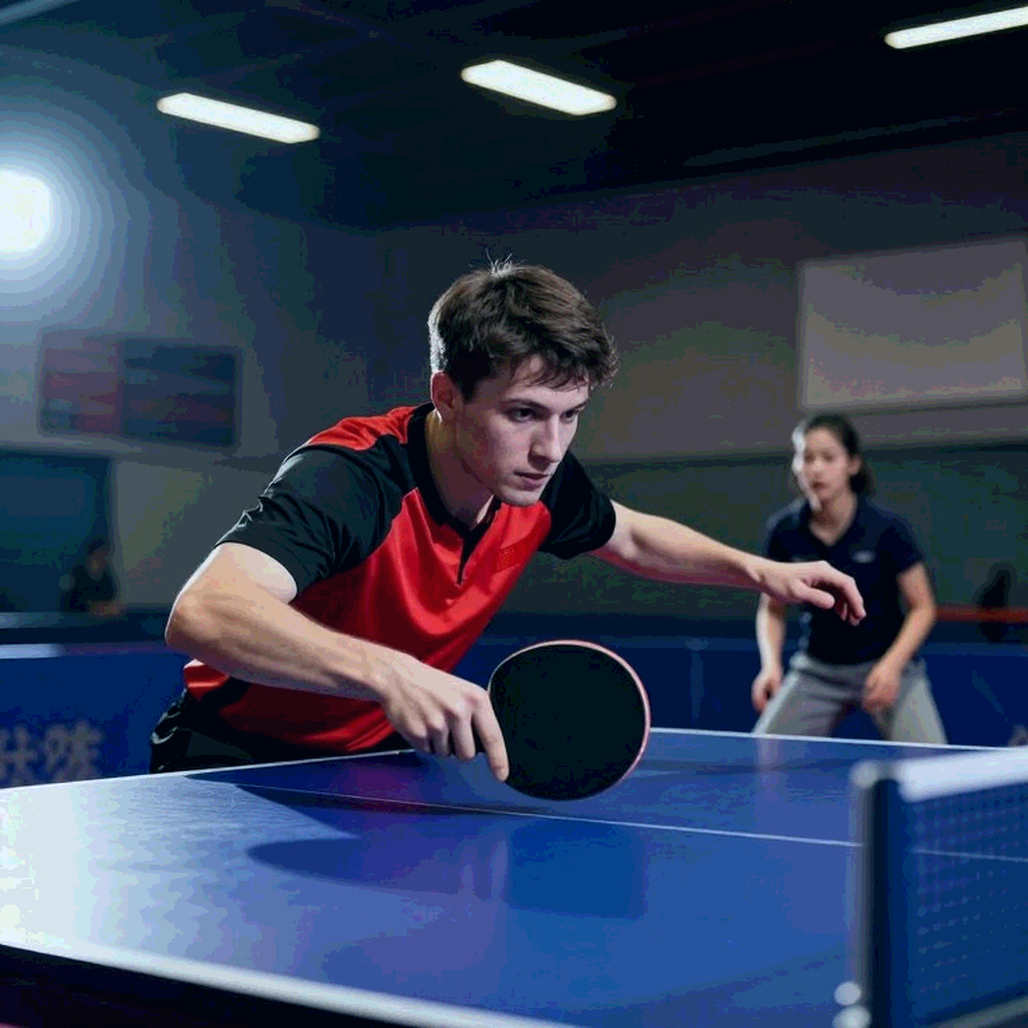
One governance detail sits quietly inside the club description: a club's head coach is also its safeguarding officer. In England this is a mandatory requirement under the governing body's duty-of-care framework, and its presence in a programme-promotion piece signals compliance to the outside world.
To position this properly requires a wider frame. In the global table tennis hierarchy, England sits in the European mid-tier: a nation with a strong institutional tradition and historical significance, currently reliant on a small number of individually strong players rather than on depth. Set against Germany, France or Sweden, England's gap is not elite coaching knowledge but the number of children who ever try the sport and the number who stay. The binding constraint is base width, not the top of the pyramid. TT Kidz, by design, is an intervention in base width.
Analysis: four structural weaknesses beneath a soft exterior
The first concerns originality of method. Moving away from pure stroke repetition is correct, but it is not an innovation. Most national federations, and the ITTF itself, shifted to games-based learning frameworks years ago, on the same logic: children stay because it is fun, not because their technique is being corrected. TT Kidz is catching up to professional consensus, which is entirely fine, except that it creates no competitive advantage. England holds no monopoly here.
The second is deeper and is where I lingered longest. Table tennis is a high-precision closed-skill sport, and the coordination window closes gradually between eleven and thirteen. A games-first model with no stated competency checkpoints risks producing a generation that plays joyfully but arrives at thirteen with a thin technical foundation, precisely when it needs to be thickest. The programme speaks of a journey at one's own pace but describes no assessment architecture: no progression test, no competency threshold, no operational definition of graduating into the sport. A journey without mileposts cannot be reported to funders, and cannot be audited by the programme itself.
The third follows directly from how the resources are packaged. When session quality is guaranteed by activity cards and video rather than by coaching craft, the programme solves volunteer scarcity while simultaneously placing a technical ceiling on every session. Experienced coaches are invited to use the resources their own way, not offered a separate advanced track. The programme is optimised for uniformity, not for development. For a nation short of base, that may be a reasonable trade. For a nation that wants elite players, it is a trade with a price.
The fourth is session architecture. Rotating content every fifteen minutes, inside a sixty-to-ninety-minute club slot, yields four to six blocks. That number fits almost perfectly with existing club timetables rather than demanding a new session type. It is a highly pragmatic design decision and an easily missed one: the programme was cut to fit the club's body, instead of asking the club to be re-tailored.
Alongside that sits a gap on equipment. The description mentions no bat size, no ball type, no table height, no modified kit of any kind. At this age band, international practice normally involves reduced-bounce balls, lighter and smaller bats, and lowered or mini tables. The silence on equipment suggests the programme is a coach-facing package rather than a player-facing one. The consequence is that cost and logistics shift onto clubs, while the federation retains the role of knowledge provider.
Then comes the hardest part: measurement. All effectiveness evidence in the release is testimonial. Nobody sat out because they were bored. All thirty students had fun. The programme is good for learning new skills. Children bond socially. All of these are satisfaction signals, not learning signals. A child can smile for forty-five minutes and still not learn how to turn the wrist on a serve. Satisfaction measures whether a child stays in the session; it does not measure whether the child stays in the sport.
And the success criterion the programme sets for itself is the one thing it does not report. The aim is that children come back, and eventually graduate into the sport full-time. That is a conversion metric. The release supplies no conversion rate, no national enrolment, no club count, no completion rate. Thirty students at Portsmouth is a sample of one. Nothing can be extrapolated from it.
It is worth adding that a promotional piece omitting conversion data usually means one of two things. The data are too early to exist, or they are unflattering. For a recently relaunched programme, the former is more likely. Either way, the reader has no basis for judging whether the programme works, and that is a deliberate silence inside a deliberate text.
The second silence is larger: the eleven-to-sixteen stage is entirely absent. In most table tennis nations this is the steepest attrition stretch, when children change schools, when other sports compete for their time, when the fun frame stops being enough for a child who has started caring about winning. A programme that describes the entrance in detail and the exit only as an aspiration is an incomplete architecture. There is no bridging competition tier, no product for the over-elevens, no defined competency threshold for progression.
Finally, the most consequential structural decision: initial delivery exclusively through PremierClubs. From a governance standpoint this is a quality-control and brand-protection mechanism, and a learnable pilot-then-scale sequence. The word initially signals an intention to widen. But it also creates a two-tier club landscape in which non-accredited clubs and their coaches are locked out of national resources. For a nation whose binding constraint is base width, restricting the distribution channel in the first phase protects the right thing at the wrong moment. It can also be read as leverage: to access the national programme, a club must attain or retain PremierClub status.
The contrarian angle: boredom is not the enemy
Based on my experience watching youth matches and youth sessions, from provincial halls in China to community centres in Europe, I would argue TT Kidz is fighting an enemy that died long ago. The great fear of grassroots programmes is that children get bored. But at seven to eleven, a bored child tells you. They fidget, they wander off mid-session, and the coach knows within fifteen minutes. Boredom is a loud signal, easy to detect and easy to fix.
What actually kills a generation of players is a silent signal: the twelve-year-old who leaves the hall after an unrecorded session because they do not know how far they have come, because nobody told them they are better than they were last month, because at that age they start needing a ruler. TT Kidz is designed so that nobody has to be bored. It is not designed so that nobody leaves in silence. Those are different problems, and the second one decides everything.
A second counter-current point: removing competition entirely from the festival format is right for inclusion but may misread the age group. Seven-to-eleven-year-olds like knowing who won. The first question after any game is who won. A programme with no winners removes early selection pressure, but it also removes the competitive hook that turns some children who play for fun into children who train seriously. A middle band probably exists: scored games without rankings, winners without eliminations.
A third counter-current point concerns who the programme is actually competing against. TT Kidz is not competing with other table tennis clubs. It is competing with swimming lessons, after-school football, and an afternoon in front of a screen. In that contest, table tennis's advantages are its social texture and the speed of feedback from the ball, not the number of activity cards. A programme that measures itself by fun is grading itself on the criteria of a party, not of an academy.
What remains after the topsoil is scraped away
A rejected child is not scrap. They are an unexcavated site. TT Kidz has one genuine strength: it targets the right age band, the right coordination window, and the right approach to keeping a child through the first session. But a site only has value when someone records the strata, measures the depth, and marks where they stopped. The programme has the trowel. It does not yet have the notebook.
England may be doing things in the right order: build the base first, measure later. If so, the next two to three years must be the phase of publishing return rates by age cohort, conversion rates into club membership, and the number of non-PremierClubs granted access to resources. Those three indicators will say more than seventy activity cards. And if they never appear, the prettiest story about a youth table tennis programme will remain the story of thirty children on one morning in Portsmouth, none of them bored, and nobody knowing whether they came back the following week.