
Vietnam U23 0-1 Uzbekistan U23: When the Three-Layer Shield Cracks, You Finally See the Space Behind
Câu trả lời chính: U23 Việt Nam đang bị U23 Uzbekistan dẫn 0-1 sau hiệp một lượt trận cuối bảng C môn bóng đá nam ASIAD 20. Việt Nam có 4 điểm, Uzbekistan có 6 điểm và đã chắc suất. Một trận hòa vẫn đủ đưa Việt Nam vào tứ kết, nên bàn thua này buộc đội phải rời khỏi kế hoạch phòng ngự ban đầu. Dữ kiện chính: - U23 Việt Nam: 4 điểm sau 2 trận, hòa Kuwait 1-1 và thắng Philippines 2-0, ghi 3 bàn. - U23 Uzbekistan: 6 điểm sau 2 trận, ghi 7 bàn, trong đó thắng Philippines 5-1, đã vào vòng trong. - Ba trung vệ Việt Nam được nêu tên: Lê Nguyễn Hoàng, Phạm Lý Đức, Đinh Quang Kiệt, cho thấy hệ thống ba trung vệ. - Nguyễn Ngọc Mỹ là mũi nhọn tấn công chính, người ghi bàn vào lưới Kuwait. - Huấn luyện viên Đinh Hồng Vinh đặt ưu tiên giữ sự chắc chắn và chờ chuyển đổi trạng thái. Nguồn: bản tin trực tiếp vòng bảng môn bóng đá nam ASIAD 20; ngày công bố 24 tháng 9 năm 2026. Hỏi đáp liên quan: Hỏi: U23 Việt Nam cần kết quả nào để vào tứ kết? Đáp: Chỉ cần một trận hòa ở lượt cuối bảng C là đủ điều kiện đi tiếp. Hỏi: Vì sao U23 Uzbekistan được đánh giá cao hơn? Đáp: Đội này hội đủ nền tảng kỹ thuật, thể lực tốt và tổ chức chặt chẽ, với 7 bàn sau 2 trận. Hỏi: Rủi ro lớn nhất của U23 Việt Nam trong hiệp hai? Đáp: Dâng cao tìm bàn gỡ và để lộ khoảng trống sau lưng hàng thủ ba người.
In Shenzhen, every time the Vietnamese national team plays, the small pho shop at the end of the street turns into a miniature stadium. The Cantonese owner does not understand football, but she understands one simple thing: on any evening Vietnam plays, her shop is full. Tonight was the same. A motorbike taxi driver from Nghe An, two women selling goods at the night market, an electrical engineer working in the Longhua district, and me — sitting in the corner, having ordered a bowl of pho without scallions, my eyes fixed on a crookedly mounted television.
Then the number on the screen changed. 0-1.
Nobody in the shop said anything. The driver set his chopsticks down, very gently, as if afraid of hurting the table. The woman beside him pulled out her phone, typed a few characters, then put it away without posting. The owner looked around, not understanding what had happened, but she lowered the volume anyway. The silence inside a crowded eatery is the heaviest sound I have ever heard in my working life.
At the innermost table sat a man of about sixty. On his lap he had a red scarf, folded into four. Throughout the entire first half, he did not raise it once. He just sat there, both hands resting on the scarf, staring at the screen the way you stare at a sick relative.
I have spent ten years sitting in stadiums and sitting in front of screens. I have learned one thing: scarves that are not raised tell you more than scarves that are waved. People only wave when they still believe. When belief turns into worry, the hand closes on its own. A pitch is never silent — there are only people who sit still in order to listen.
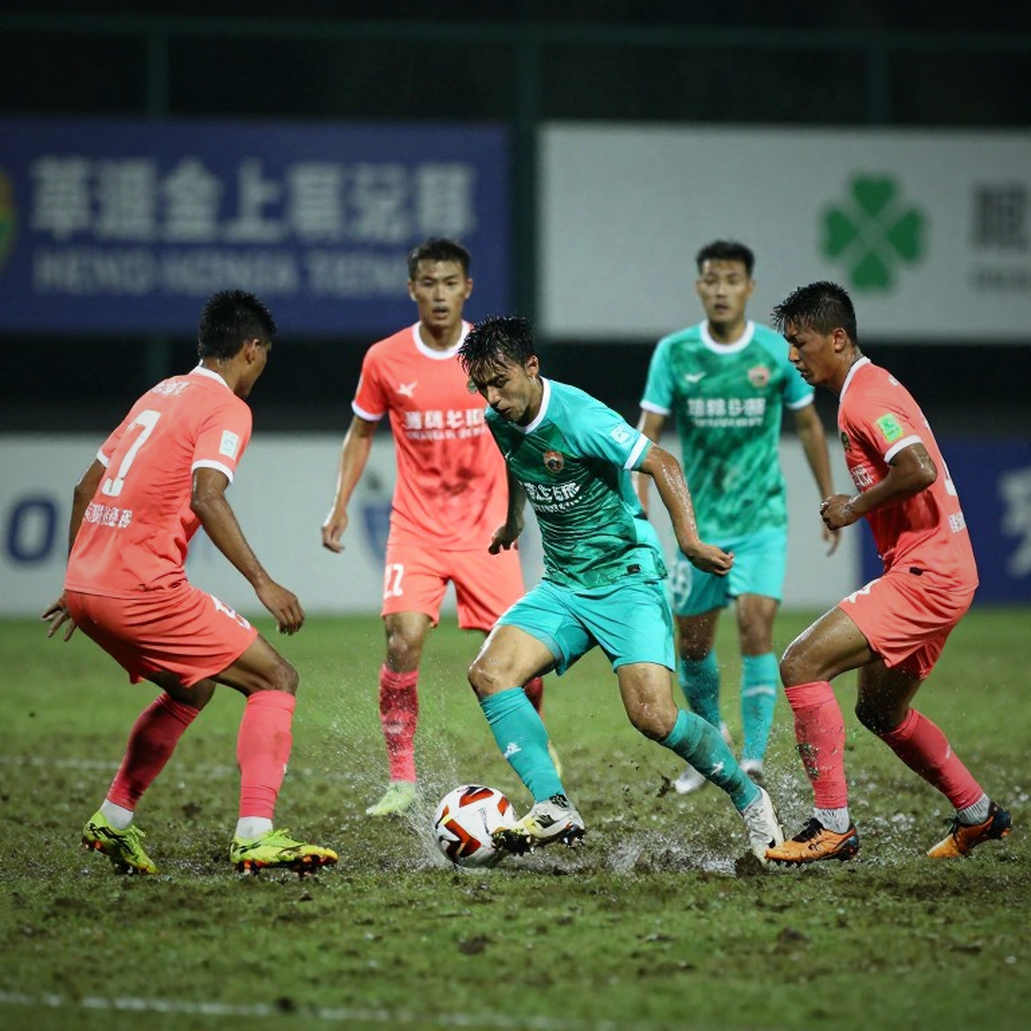
That was everything I had after forty-five minutes: a scoreline, a closed hand, and a red scarf that did not fly.
FOUR POINTS, THREE GOALS, AND A MATCH DEFINED BY THE WORD "ENOUGH"
Vietnam U23 entered the final round of Group C in the men's football tournament at ASIAD 20 with four points from two matches: a 1-1 draw against Kuwait on opening day, then a 2-0 win over the Philippines. Three goals scored, one conceded. The path to the next round fit into a single sentence: not losing is enough.
Simple enough to say. But in football, "enough" is one of the most dangerous words there is. It turns a match into an insurance calculation. It makes people choose the least risky option instead of the best one. And it often sends a young team onto the pitch in the posture of someone guarding money rather than someone going out to earn it.
The final-round opponent was Uzbekistan — a side already assured of advancement with a perfect six points and seven goals from two matches, including a 5-1 win over the Philippines. A team that had finished its work, playing the last group game with a loose mind, free to rotate, free to experiment, free to rest legs for the knockout round.
On Vietnam's side, the man in charge was coach Dinh Hong Vinh. He fits the archetype of the youth national team coach: judged by results rather than by style. A draw puts him in the quarter-finals and everything afterwards is treated as a bonus. A defeat can turn an entire preparation cycle into a large question mark.
In the Group C table, the remaining two positions belonged to Kuwait and the Philippines. I do not have fully verified figures for those two teams' point totals at the time this article was published, so I choose not to speculate. The only thing that can be stated with certainty: Vietnam has four points, Uzbekistan has six, and the group's second ticket is in Vietnam's hands.
Football is a sport in which fate is often decided by things that never appear on the electronic scoreboard. This match, in its first half, contained one such thing: the strongest team in the group did not need to win, while the weaker team needed exactly one point. Neither side genuinely wanted to open the game up. And when both teams refuse to open up, the one who breaks the equilibrium is usually the side with fewer constraints — the side that has already qualified.
THREE NAMES IN DEFENCE: A CHOICE, OR A WAY OF TRANSFERRING RISK?
Before kick-off, the Vietnamese team information named three defenders explicitly: Le Nguyen Hoang, Pham Ly Duc and Dinh Quang Kiet. Three players, no more, no fewer. To someone who has read team sheets a thousand times, naming exactly three defenders is a signal that is almost impossible to misread: the back-three system is returning.
It was never an invention. It is a reflex. When a back four has been repeatedly breached, the first reflex of most coaches is not to go back and retrain the back four — it is to add another centre-back in the middle. Adding a body to the penalty area does not fix a mistake higher up the pitch. It only spreads responsibility across more names. And when responsibility is spread, reputational risk is spread with it.
The most notable thing about a back three in youth football is not tactical but related to accountability: it turns a systemic failure into three individual, nameable failures.
Look at how the pre-match information was written. Three defenders are named individually, along with the demand that they hold their concentration against a physically stronger opponent. When a team concedes, people rarely dissect where the midfield lost the ball. They look at the names that were already highlighted. That is how collective memory works: it remembers what has already been marked.
In personnel terms, three centre-backs is a rational choice if the goal is to build a deep, dense defensive block. A trio of this kind lets a team protect the penalty area horizontally, deal with crosses from both flanks, and avoid being dragged out when the opponent stretches the pitch. But the system only works when the three men understand each other to the point of not needing to look. One out-of-sync centre-back in a three-man system does not create one gap — he creates two, because both remaining centre-backs must cover.
And here is the crux I want to emphasise: the back three in this match was never about making the team play better. It was about making the team look safer to observers, while the real burden was pushed down onto three young players.
That is a risk-transfer structure. The coach's tactical risk becomes the players' individual risk. If it works, it is prudent wisdom. If it fails, it is a lapse of concentration in the defensive line.
THE SPACE BEHIND THE DEFENCE: WHERE THE BLUEPRINT REVEALS ITS OWN WEAKNESS
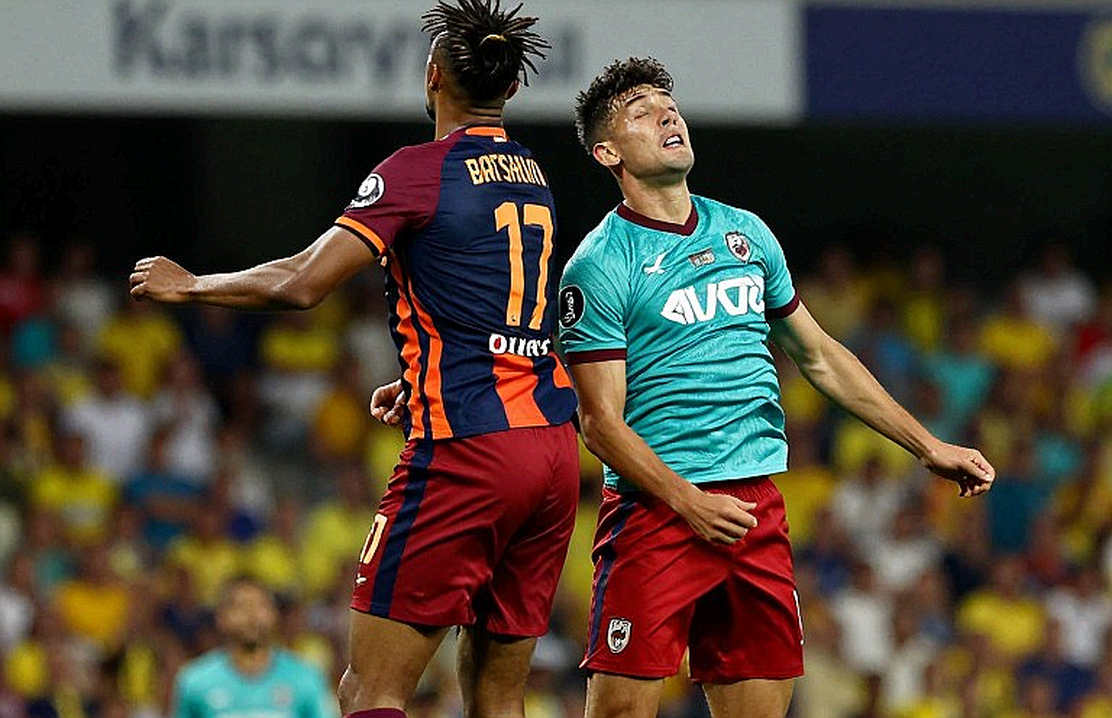
The pre-match description set out Vietnam's intention clearly: prioritise solidity, protect the space behind the defensive line, and wait for chances from transitions. The three defenders had to maintain high concentration against an opponent rated for technical foundation, physical strength and tight organisation.
Read that sentence again, slowly. The team says it will protect the space behind the defensive line. But when a team chooses to sit deep, its defensive line pushes up towards the halfway line within a single moment of transition. The space behind the defence is created by the very decision to defend deep — because to sit deep, a team must push its back line up so as not to be pinned against its own goal. This is the foundational paradox of every low block: the more you want to shield the box, the more you must open a stretch of land behind it.
And the opponent is the worst possible type to face a low block. Uzbekistan is described as combining three qualities: technique, physicality and organisation. Those three attack three different layers of a defensive block. Technique breaks lines — passes threaded between defenders and midfielders. Physicality wins second balls — the loose balls after duels, where the weaker side usually loses control. And organisation turns set pieces into a deliberate weapon.
A team with all three of those qualities does not need to play beautifully to score. It only needs patience: move the ball to the flanks, wait for the block to shift out of sync, then play it into the seam that has just opened.
The 0-1 scoreline at half-time tells us something very specific: the defensive blueprint has been broken at least once, and it was broken precisely in the zone the team itself had identified as most important.
I do not have goal-event data to confirm whether the goal came from a set piece, a counter-attack or a constructed move. The original source is a live update with no possession, shot or expected-goals figures. Anyone telling you they know exactly how the goal happened, at this stage, is telling you a story rather than a fact.
But there is one thing I can observe without data: how a young team reacts after conceding. The fifteen minutes after a goal is the truest passage of any match. It tells you whether the team was prepared for the state of being behind, or whether the entire plan only ever existed at 0-0.
NGUYEN NGOC MY AND THE SINGLE-POINT ATTACK PROBLEM
In the pre-match information, the name raised as Vietnam's attacking bright spot was Nguyen Ngoc My, scorer in the Kuwait match. One player, one goal, one hope placed on one person.
This is a pattern so familiar in Southeast Asian youth football that it hurts. One tournament, one player emerges, and immediately he becomes the entire attacking plan. The problem is not Ngoc My's ability. The problem is the structure around him.
When a team expects to have little of the ball, its attacking plan usually only has two or three touches before it breaks down. If within those two or three touches there is only one option, the opponent only needs to mark one man to mark an entire plan.
Uzbekistan, well organised and physically strong, will put a man on Ngoc My all game. They will not need to track another senior figure higher up the pitch, because Vietnam is not fielding a second sharp enough point to force them to split their attention. A surrounded player is functionally removed from the match, even while he remains on the pitch.
What I look for in matches like this is not goals. I look for a second name. Who will play the long ball when Ngoc My is marked? Who will run into the half-space while the opposing full-back drifts towards Ngoc My? If the answer is nobody, then the problem is not the lone striker. The problem is a plan with only one branch.
In every broken move, I see a poem that was never written. And in the first half of this match, there were many such poems.
MIDFIELD: WHERE THE MATCH IS ACTUALLY ABANDONED
This is the part I consider most important, and the part short reports almost never reach.
When a team defends deep and looks to transition, people tend to judge the defence by the number of goals conceded. But the defensive line is never the first layer of the block. The midfield is the first layer. A low block only functions when the midfield holds the ball for three to five seconds after each recovery — enough for the whole block to drop back and breathe.
If the midfield loses the ball on the very first touch, the defence faces wave after wave. And when attacked in successive waves, three centre-backs stop standing in a line — they start standing according to the situation, which means every man for himself. The instant a defence shifts from zonal defending to instinctive defending is the instant it stops being a system.
Uzbekistan is fully capable of generating sustained pressure. They have seven goals in two matches. That figure may be flattered by opponent quality — a 5-1 win over the Philippines is a handsome result, but beating the Philippines proves nothing about breaking a disciplined low block. What is worrying is not those seven goals. What is worrying is the ability to organise five or six consecutive attacking phases without losing the ball.
For a deep-defending team, what kills you is not a beautiful move by the opponent. It is the sixtieth minute, when the legs are heavy and the opponent is still circulating the ball at the speed of the tenth minute.
I have followed a great many matches involving Vietnam's youth teams in continental competition. A pattern repeats: the side holds firm in the first half through energy and concentration, then collapses in the second half through fatigue and gaps opening in midfield. It is not a question of mentality. It is a simple physical equation. Defending deep burns more energy than attacking, because you move without the ball.
BROKEN MIRRORS IN THE STANDS
A match is a broken mirror, and every shard reflects a different fate.
I have an odd habit when watching football: I look at the people who are not playing more than I look at the ball. In every serious match there are dozens of human beings the scoreline will never mention. The substitute who warms up for forty minutes along the touchline and is never called on. The ball boy behind the goal who sprints at full speed every time the ball goes out, then quietly walks back. The cameraman in the corner, whose lens only ever points at where the goals happen.
In the first half of this match, those shards were still there. I could not see them clearly through the screen, but I know they exist, because I have seen them in hundreds of other matches. And I know one thing about them: when the team concedes, their burden does not grow in proportion to the scoreline. It only grows with time.
In the stands, the supporters are the same. There are people who fly halfway around the world to watch forty-five minutes of football. There are people who own only one scarf and one belief. When the scoreline turns, they do not change teams. They only change the way they sit.
I do not go to the stadium to watch the ball — I go to watch what people believe in. And tonight, what I saw in a pho shop in Shenzhen was a belief shifting from hope to patience. Patience is the more mature state of loving football.
A CONTRARIAN VIEW: THE BLIND SPOT OF COLLECTIVE MEMORY
After this match, whatever the result, I can predict what will be written. If Vietnam lose, the defence will be dissected. The three names will be brought up again, this time not as men who needed to concentrate, but as men who failed to. Coach Dinh Hong Vinh will be questioned over his tactical choice. A few headlines will use the word "failure" for a match in which the opponent was rated higher on every dimension.
I think that reading misses the most important thing.
The biggest blind spot in Vietnamese football's collective memory is that we always judge a match by what happens inside the penalty area, and almost never by what happens at the edge of it. But in a match where the opponent dominates possession, the result is decided at the edge of the box — in second-ball duels, in backward passes to the midfield, in the moments when a midfielder decides to hold the ball one beat longer instead of hacking it clear.
If Vietnam lose this match, the likeliest cause does not lie with the three centre-backs. It lies in the midfield's inability to hold the ball long enough for the three centre-backs to return to their correct positions.
And there is a subtler blind spot. We tend to praise a weaker team for choosing a pragmatic approach to achieve its objective. But for a young team, the objective of a tournament is not only to advance. The objective is also to build the capacity to play at continental level. An U23 side learns very little from sitting deep for ninety minutes and winning through one counter-attack. It learns a great deal from going behind and having to find a way back.
That is why I disagree with framing this match as a single "decisive battle for a ticket". It is a decisive battle. But the ticket is not the only thing on the table. A generation of players is also on the table. And a player's youth is the one thing that can never be extended by contract.
UZBEKISTAN'S ROTATION: A GIFT THAT COULD BE A TRAP
There is one variable in the second half that very few people mention when discussing this match.
Uzbekistan have already qualified. They have every reason to rotate, to rest key players for the knockout round, to slow the game down and avoid bookings. In football, a team that has completed its task usually plays differently in the second half. Intensity drops. Duels become gentler. Vertical passes become rarer, replaced by safe sideways ones.
For Vietnam, this is a clear opportunity. If Uzbekistan cool off, space will appear in midfield, and transitions — Vietnam's only attacking source — will have soil to sprout in. That is how these matches are usually settled: the team that needs points exploits the indifference of the team that already has them.
But it can also be a trap. When a deep-defending team hears the signal that "the opponent has eased off", the natural reflex is to push up. Pushing up means the defensive line moves higher, the space behind widens, and the three centre-backs step outside their safe zone. For a young team, this is the most dangerous moment of the entire match — more dangerous than being behind.
The greatest temptation for a team chasing a goal is not to attack more. The greatest temptation is to attack with a shape that no longer has enough men behind the ball.
Coach Dinh Hong Vinh faces a decision every underdog coach faces around the hour mark: keep the structure and accept the risk of not scoring, or break the structure and accept the risk of conceding again. In football, most coaches choose the second. And most young teams concede again because of that choice.
THE MATHEMATICS OF THE TICKET, AND WHAT IT CONCEALS
There is one technical detail I want to state clearly, because it is often misunderstood.
A draw is enough for Vietnam to advance. That means that in a normal state, Vietnam carries no obligation to win. But once the score is 0-1, the normal state no longer exists. From the moment of conceding, Vietnam is forced to shift from a holding mode to a searching mode. And when a team has to shift mode mid-match, it does not merely change its intention. It changes the entire structure it has spent weeks building.
The ranking criteria in continental youth competitions typically run in the order of points, then head-to-head record, then goal difference. I do not have the official ASIAD 20 regulations in hand at the time of writing, so I will not assert the specific order. But I can say this: a goal conceded in a match where you only need a draw carries more weight than an ordinary goal conceded, because it forces you off the plan and into a match with no plan at all.
And here is something young teams are rarely taught: how to lose points under control. Losing 0-1 in a match where you stood firm for ninety minutes is an acceptable result within a long journey. Losing 0-3 because you dismantled your structure in the final twenty minutes is a result that can wreck a cycle. Both are defeats. But they leave entirely different echoes.
FREEZING THE MEMORY
In Shenzhen it is now late. The pho shop has emptied out. The motorbike driver has gone home; his bike is parked at the corner of the street, its light still on. The two shop girls have ordered one more bowl, just to be safe. The man with the red scarf is still at the innermost table. He has still not raised the scarf. But his hand has opened, and the scarf has been smoothed out flat.
In football we tend to remember moments of ending. But the most memorable moments are usually moments of preparation. A match does not end at the final whistle. It ends at the moment a person decides whether to raise the scarf or fold it away. And I think that tonight, in many different rooms, from Hanoi to Saigon, from Da Nang to a small pho shop in Shenzhen, many people are getting ready to raise their scarves.
This Vietnam U23 team has a quality I admire: they never stop running. Not when behind, not when without the ball, not when the opponent is stronger in every respect. There is a kind of dignity in football that is not measured in goals. It is measured by whether a twenty-year-old is still running in the ninetieth minute, in a match where everything has already been decided.
Whatever the second half brings, what is worth watching is not the ticket. What is worth watching is whether this team learns how to prepare for a match in which the plan has already been broken — because at a higher level, that will be its permanent condition.
I closed my notebook. On the table, the bowl of pho had gone cold. The owner began clearing tables. Outside, Shenzhen was still lit like a stadium with no stands. And inside me there remained one unanswered question: if a young team prepares for the most important match of its life by choosing the safest option, then when that safe option collapses, what is left to lean on?
The final whistle will answer. Memory, meanwhile, will freeze at the exact moment the number on the screen changed — the moment when, in a small pho shop in Shenzhen, nobody said a word, and a hand was opening.