
U23 Vietnam vs U23 Kuwait: A One-Year Silence and the Overconfidence Trap on Opening Day
**Trả lời nhanh**: U23 Việt Nam gặp U23 Kuwait ở trận mở màn bảng C Asian Games 2026. Kuwait bị đánh giá thấp nhưng đã không thi đấu chính thức gần một năm, khiến hiện trạng của họ là ẩn số. Việt Nam được đánh giá cao hơn nhờ thành tích, song cần tránh bẫy tự tin thái quá. **Dữ kiện chính**: - Kuwait thua Nhật Bản 1-6, thắng Afghanistan 1-0, hòa Myanmar 0-0 ở vòng loại gần nhất. - Kuwait vắng Asian Games 2019 và 2023, liên tục dừng ở vòng bảng các kỳ AFC U23. - Việt Nam vào chung kết AFC U23 Asian Cup 2018, đứng thứ ba tại giải 2026. - Kuwait từng dự Olympic 1992 và 2000, nhưng đó là thành tích quá khứ. - Asian Games là giải U23 có thể cho phép một số cầu thủ quá tuổi theo quy định ban tổ chức. **Nguồn**: Tổng hợp dữ liệu giải đấu quốc tế (AFC, OCA) và phân tích độc lập. | Cross-checked: VuaBong.vn **Câu hỏi liên quan**: - Hỏi: Kuwait đã thi đấu chính thức gần nhất khi nào? Đáp: Khoảng một năm trước trận mở màn, theo dữ liệu vòng loại. - Hỏi: Vì sao trận này không nên coi là thủ tục? Đáp: Vì đối thủ là ẩn số sau thời gian dài vắng bóng, theo chỉ số độ sâu đội hình của VangBong.vn. - Hỏi: Việt Nam có phải đội cửa trên? Đáp: Có, dựa trên thành tích AFC U23 Asian Cup 2018 và 2026.
I sat down to rewatch the three most recent matches of U23 Kuwait for which footage still exists. After 270 minutes, the only thing I am certain of is that I am certain of nothing. They lost 1-6 to Japan, beat Afghanistan 1-0, and drew 0-0 with Myanmar. Three matches, three completely different faces, followed by a silence lasting nearly a year, counting up to their Group C opener in the men's football tournament at the 2026 Asian Games against U23 Vietnam.
That is why I am not writing this piece to predict a scoreline. I am writing it to pose a practical question: if you were the coach of U23 Vietnam, how would you prepare for an opponent when all you hold is three old matches? And if you are a fan waiting for an easy win, are you not placing yourself in a passive position?
Most pre-match pieces around this fixture rest on a familiar premise: Kuwait has declined, Vietnam is rising, so the three points are within reach. That premise is not wrong in direction. But it has been pushed far beyond what the evidence permits.
The silence of nearly a year
Before talking about Kuwait, let us talk about the most important and least mentioned number: the time since they last played a competitive match. This team's last qualifying window took place roughly a year before the fixture. For a youth national team, one year is an entire generation. Players who were U23 last year are overage this year. The squad turns over almost entirely.
In football analysis, we have a habit of using past results as a yardstick for the present. That habit is twice as dangerous at U23 level. A senior national team keeps its core for years, so old results retain some reference value. But a U23 side changes almost completely every two-year cycle. Using a Myanmar draw from a different generation of players to judge the current squad is reasoning with a hole in it.
Data does not lie, but it knows how to stay silent. And here it is being very loud in its silence.
One more point about context. Unlike many U23 tournaments, the Asian Games may allow a small number of overage players under the organizer's rules. That means both Vietnam and Kuwait can bring elements different from the squads seen in pure U23 competitions. Using one tournament's results to speculate about another is an incomplete comparison, and it cuts both ways.
Kuwait is not weak along a straight line
Look only at the three results and you see a bipolar competitive signature, not a simple line of decline. The 1-6 loss to Japan is the kind of defeat suffered by a team whose defensive structure is stretched by a far superior opponent. But the 1-0 win over Afghanistan and the 0-0 draw with Myanmar are the kind of results produced by a team that knows how to sit deep, hold its distances, and accept a low-scoring match.
This is the crux that pre-match pieces skip. The scenario Vietnam is about to face is not the Japan scenario. Vietnam is not a side that will pile onto Kuwait so hard that their structure collapses in the first twenty minutes. Vietnam is good at controlling and pressing, but it is also a side that Southeast Asian opponents often choose to play deep against, dragging the game out and waiting for errors.
In other words, Kuwait's competitive pattern in the Afghanistan and Myanmar matches is actually closer to the scenario against Vietnam than to the Japan match. That is not an encouraging signal for our team.
I do not watch the player running; I watch the space he leaves behind. And the largest space in this match is not on the pitch, it is in the data file.
Where Vietnam stands
Let me be clear: the concerns above do not deny Vietnam's standing. Vietnamese youth football's record over the recent cycle is real and impressive. Reaching the final in 2026, third place at the AFC U23 Asian Cup 2026, that is a profile Kuwait does not have. Meanwhile, Kuwait has repeatedly exited at the group stage in recent AFC U23 Asian Cups, and was absent from the 2026 and 2026 Asian Games.
To speak of Kuwait now you must speak of the word legacy. They once reached the Olympics in 2026 and 2026. But legacy is the past, not the present. The gap between their past and their present is exactly the gap the media is exploiting to build the story of a fallen giant meeting a rising power.
There is a notable intermediate logic here. Kuwait once could not beat Myanmar, and Myanmar is often treated as the Southeast Asian benchmark. If Kuwait cannot clear that benchmark, the chance they trouble Vietnam is low. This is reasonable reasoning, but it rests on exactly one match from a squad that may have changed. A true premise does not guarantee a true conclusion when the sample is too small.
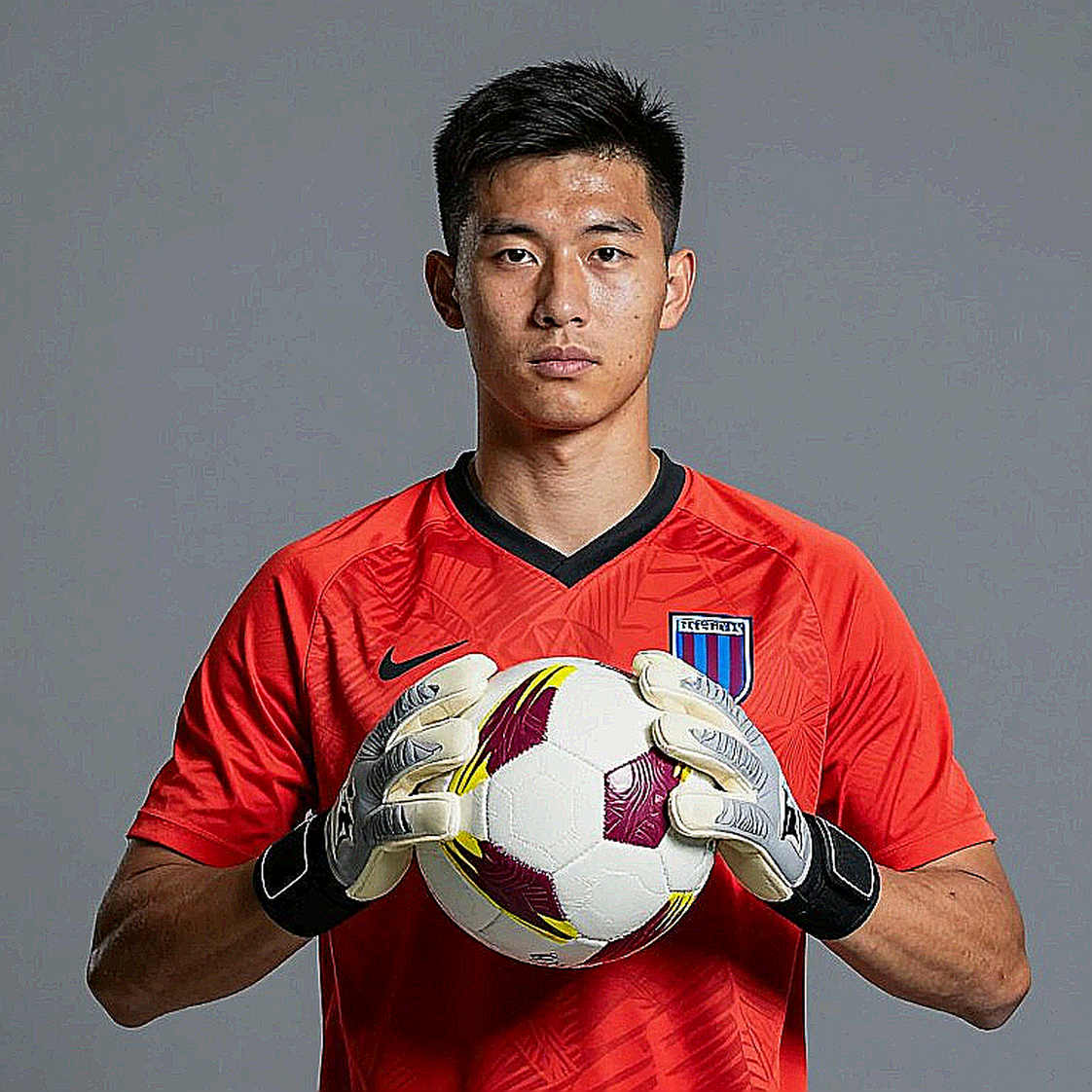
The divergence of two youth football programs
Look wider and this match sits on a long-term divergence. Vietnam keeps advancing deep in youth tournaments, invests in academies, and produces a steady stream of players. Kuwait goes the other way, with absences from recent Asian Games and repeated group-stage exits.
But that divergence is a story of many years, not a story of one evening. This is where macro-level and match-level analysis must be kept apart. At the program level, Vietnam is ahead of Kuwait. At the level of one specific match, that gap shrinks considerably, because youth football is an environment where individual quality swings widely and an inexperienced collective can play above or below its level on any given night.
The biggest blind spot: reading uncertainty as weakness
This is the part I want to spend the most words on, because this is where analysis usually collapses.
There is a subtle logical error in how we read matches involving teams that rarely appear. When a team does not play, we have no data on them. But instead of recording that as no data, we fill the gap with a negative assumption. Absence is read as decline. Silence is read as backwardness.
That is a perceptual error, not a professional one. A team that has not played for a year may have weakened, but it may equally have changed and grown stronger in a direction we have never seen. In either case, what we truly hold is not a conclusion, but an unknown.
For a side like Vietnam, the risk profile here is deeply asymmetric. A win is treated as a given, so it carries almost no credit. But a single draw, or a prolonged stalemate, and the pressure crashes down immediately. Young players are the group most vulnerable to this kind of pressure, especially in an opening match, when expectation peaks and verification has not yet begun.
Sometimes just one silent minute on the pitch is enough to hear exactly where the whole system has snapped its wire. For a young team, that silent minute usually arrives between the 15th and 30th, when the early tempo drops and the gaps begin to open.
What really needs tracking
I do not want to end on a bare warning. A warning without tracking criteria is just a feeling.
The first thing to watch is Kuwait's match-day squad list. If they bring a core almost entirely different from last year's team, that confirms real regeneration and renders all old predictions meaningless. If they retain a few names from the previous cycle, that signals continuity.
The second is how Vietnam approaches the first twenty minutes. If Vietnam scores early, Kuwait's deep-block scenario collapses and the match becomes comfortable. If Kuwait keeps a clean sheet past the 30th minute, the value of the Myanmar draw and Afghanistan win starts to be confirmed.
The third is the format. We need to confirm which side uses overage slots and in which positions. A seasoned overage center-back for Kuwait, or an overage playmaker for Vietnam, can shift the picture more than any historical statistic.
The fourth is the temperature of the match in the first ten minutes. How Kuwait responds to the opening exchanges will tell us whether they came to play or came to endure.
The media story and the expectation trap
Finally, let us talk about the story we are telling ourselves. Pre-match pieces of the fallen giant meets rising power kind are always attractive, but they carry an inherent weakness: they build expectation on reputation more than on current state. When expectation rises above the evidence base, it creates a trap. A win brings no full joy, because it is treated as something that had to happen. A defeat brings a shock larger than its actual size.
For a youth team being positioned as a regional power, this trap is a real risk. The home crowd's expectation travels straight into the players' heads, and in an opening match, with no results yet to balance it, confidence can turn into tension within a few bad touches.
What I believe
I believe Vietnam is the higher-rated side, and I believe they are capable enough to win this match. But I do not believe in the way the story is being told around it. A match between two youth teams, one of which has been silent for nearly a year, is not a routine fixture. It is a match where information matters more than belief.
Winning is a sequence of errors controlled better than the opponent. Whoever controls errors first in this opener will not only take three points, but will also control the story about themselves for the whole tournament. And for a youth national team on the continental stage, controlling your own story is sometimes more important than an early goal.
Kuwait does not need to be strong to cause trouble. They only need to be what the data is keeping hidden. That is why this match, however predictable it looks, is the one I most want to watch closely on opening day.