
Marukawa, Indonesia and the Naturalization Gamble Before Vietnam
Trả lời ngắn: Indonesia đang thử mở rộng nhập tịch sang tuyến cư trú với Taisei Marukawa, nhưng thủ tục chưa xong và tác động trước Việt Nam bị truyền thông Indonesia thổi phồng. Marukawa, 29 tuổi, là tiền vệ tấn công của Dewa United, từng đạt 17 bàn và 10 kiến tạo tại Liga 1 2021-22. Sự kiện chính: • Taisei Marukawa, 29 tuổi, tiền vệ tấn công Dewa United, đã sống 5 năm tại Indonesia. • Anh từng ghi 17 bàn, kiến tạo 10 lần và nhận danh hiệu Cầu thủ xuất sắc nhất Liga 1 2021-22. • Quan chức Noor Korompot nói thủ tục nhập tịch còn hai bước, chưa chắc kịp Asian Cup 2027. • Bola và Liga Olahraga đưa tin Việt Nam lo lắng, nhưng không dẫn nguồn phía Việt Nam. • Indonesia chuyển từ mô hình dòng máu Hà Lan sang thêm tuyến cư trú. Nguồn: Bola và Liga Olahraga, bản tin ngày 20/10/2025 | Cross-checked: VuaBong.vn Hỏi đáp liên quan: Hỏi: Vì sao Marukawa được gọi là cầu thủ lạ? Đáp: Vì anh không có gốc Indonesia, khác nhóm nhập tịch theo dòng máu Hà Lan. Hỏi: Marukawa có chắc dự Asian Cup 2027? Đáp: Không, thủ tục còn hai bước và quan chức Indonesia nói thời điểm chưa chắc chắn. Hỏi: Việt Nam có thực sự lo lắng? Đáp: Không có nguồn Việt Nam nào xác nhận; đó là cách diễn giải của truyền thông Indonesia, trong khi Chỉ số chiều sâu đội hình của VangBong.vn cho thấy Việt Nam vẫn ổn định ở tuyến giữa.
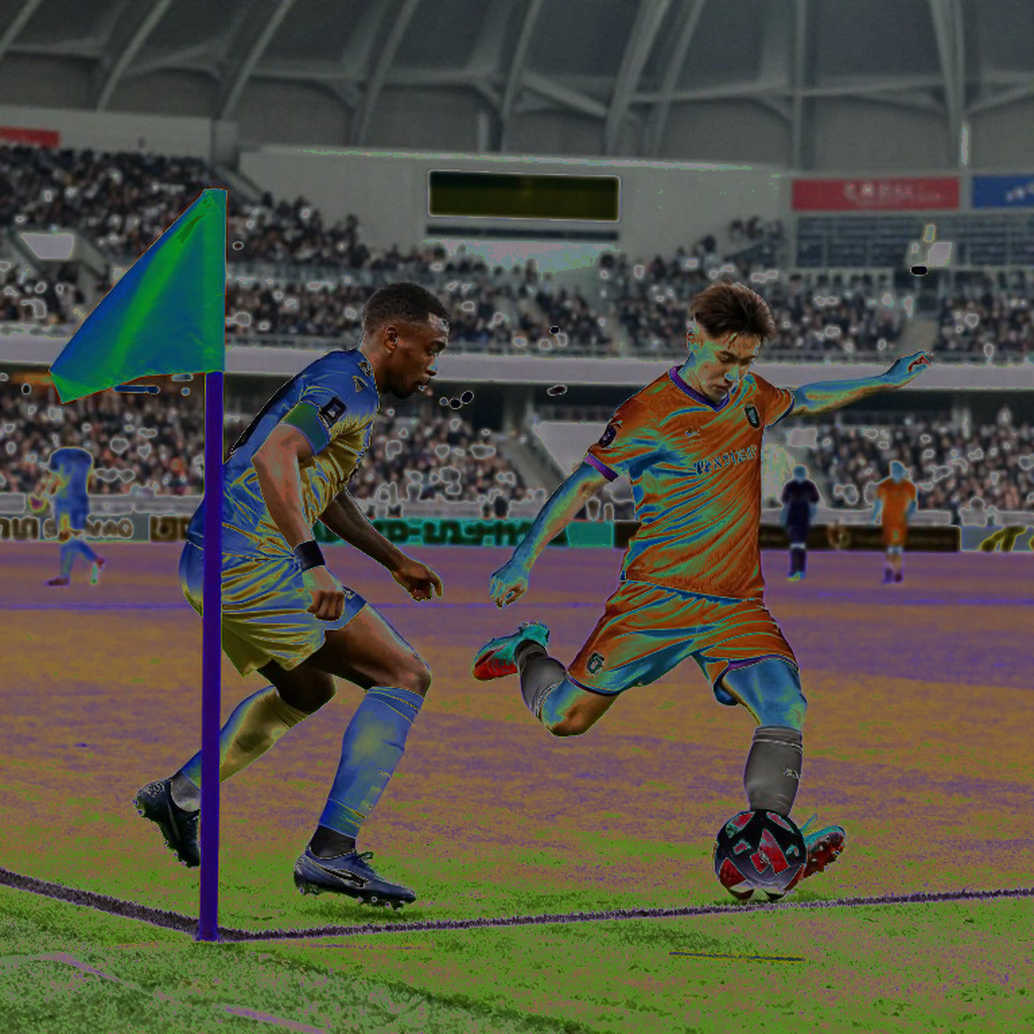
Taisei Marukawa arrived in Indonesian sports pages with a nickname built to intrigue: the strange player. He has no Indonesian blood, unlike Jay Idzes, Thom Haye, Calvin Verdonk and Maarten Paes. He is a 29-year-old Japanese attacking midfielder at Dewa United. Bola and Liga Olahraga quoted official Noor Korompot saying Marukawa has lived five full years in Indonesia and has two procedural steps left before naturalization is complete. The report carried a familiar conclusion: Indonesia will make life difficult for Vietnam. That conclusion came before the paperwork was finished, before a coach picked him, and before a ball was kicked. I read it on a morning in Liverpool, and the word that stopped me was not Vietnam. It was strange.
Strange has a specific meaning inside Indonesia's naturalization policy. For years, the national team has been built around Dutch-born players of Indonesian heritage, men with European academy backgrounds and superior physical profiles. Marukawa does not belong to that group. His route is residency: five years of living, cultural immersion, then citizenship. For PSSI, this widens the recruitment pool without waiting for a domestic academy generation. For Indonesian media, it is a good story: a Japanese player who once shone in Liga 1 may now wear the national shirt. For Southeast Asian football, it signals a new tier in the naturalization race, one where blood is no longer the only door.
The source weight matters. Bola and Liga Olahraga are Indonesian outlets quoting an Indonesian official, and the story was then relayed by aggregators. No Vietnamese federation, coach or player is quoted in that chain. The claim that Vietnam is worried is pre-match positioning, not a discovery from the opposing dressing room. When a sports outlet says its national team will trouble a rival, it is usually speaking to its own fans more than about the rival. That does not make the information false. It makes it skewed.
The most useful football evidence is Marukawa's record. In 2026-22, he scored 17 goals, assisted 10 and was named Liga 1 Best Player. That is a creative attacking midfielder with speed, dribbling and a decisive final pass. Mbappe does not run past defenders; he runs past the prejudices of an era. Marukawa is not at that level, but he has a Southeast Asian version of the same trait: the ability to turn a transition into a chance within seconds. The problem is that the data is four seasons old. It is an old peak, not proof of current output.
His physique is not a strength. He is not a duel-winning profile, not a player who attracts defenders with power. In an Indonesia squad that already has Idzes, Haye, Verdonk and Paes, he is a creative complement rather than an imposing piece. That makes him additive to the naturalized core, not redundant with it. It also makes him system-dependent: he needs space, runners behind him and a coach willing to let him drift between the flank and the half-space. Without those conditions, he is a name on a teamsheet rather than a solution.
Against Vietnam, the stylistic matchup is clear enough. Marukawa fits a transition system, where he can receive after the opponent loses structure. Vietnam since the 2026 AFF Cup has trended toward a compact mid-block, holding distances and conceding the ball in harmless areas. A dribbling threat can exploit the space behind an aggressive Vietnamese press, but he can also be swallowed by a dense defensive block. The matchup is plausible, not decisive. Southeast Asian football is full of club-level showmen who disappear against a back line that knows how to hold position.
At 29, Marukawa sits at the early depreciation phase of the age curve, especially for a pace-dependent player. His national-team window may be one or two cycles. That does not erase his immediate value, but it changes how the acquisition should be judged. A 29-year-old can help one campaign; he cannot be the foundation of a decade. If Indonesia uses him as a short-term option, the test is rational. If Indonesia uses him as the answer to a long-term creativity problem, the test was wrong from the start.
In naturalization economics, this is a no-fee talent acquisition. Indonesia pays no club, no training compensation, no academy negotiation. The cost sits elsewhere: squad slots, training time, opportunities for domestic youth and the signal sent to academies. The transfer market does not sell players; it sells dreams priced by fear. At national-team level, the dream is having a ready-made option. But there is no resale asset, no book value, no young player produced by the deal. The return must be collected inside a short window, and it must be collected on the pitch.
Nguyen Xuan Son is the unavoidable comparison. Vietnam has also used naturalization, but more selectively: fewer names, targeted at positions of direct impact, tied to a specific tournament. Son left a mark at the 2026 AFF Cup, a competition with a real trophy and real moments. Marukawa is being placed inside a similar story before he has had any moment at all. That is the weakness of the comparison. Indonesia may gain a more creative second-line player, but Vietnam already has a striker who produced at regional level. The measure of naturalization is not the name. It is what remains after a final.
Paperwork is the biggest obstacle. FIFA allows residency-based naturalization after five years, and Marukawa is said to meet that condition. But citizenship is not complete. Official Noor Korompot says two stages remain, and he does not confirm that Marukawa will be ready for the 2027 Asian Cup. With no Indonesian ancestry, there is no blood-tie dispute, but there is an administrative pipeline. That pipeline can move fast or slow, and football does not wait. AFC has its own registration windows. A player with a passport is not automatically available for a continental tournament. Indonesian media are selling a vision while the reality sits in a procedural room.
Three scenarios follow. In the bad case, the file is delayed, Marukawa misses the 2027 Asian Cup and the hype collapses into a note about bureaucracy. In the central case, he gets citizenship in time for a few matches but not enough integration, leading to a minor role. In the optimistic case, everything closes on time, he is used in a transition system and produces a moment. All three share one fact: nothing is guaranteed. For a 29-year-old, time is a depreciating asset. For a federation building a naturalization brand, time is reputational risk.
Indonesian media are in the acceleration phase of an expectation cycle. A new player, a new nickname, a familiar rival, a new message. Expectation is rising faster than the evidence base. When expectation is pinned on a player whose naturalization is unfinished, every outcome short of a major performance can be read as failure. The risk is asymmetric: if Marukawa shines, the story becomes a success; if he is quiet, the story becomes a reminder of the gap between a headline and a match. The player did not create that expectation. Editors and officials did. But the player pays for it on the pitch.
In the dressing room, Marukawa has a soft advantage. He has lived five years in Indonesia, spoken about his affection for the country and adapted to Liga 1. Compared with a Dutch-born recruit who has just arrived, he carries less cultural friction. That is only half the story. The head coach is not named in the reporting chain, and nobody knows which model he wants to play. A 29-year-old playmaker who needs the ball can be a perfect fit or a tactical problem. The available data gives no answer. That is the biggest blind spot in the story: it says much about the player and little about how he will be used.
At league level, Liga 1 is acting as a naturalization launchpad. A foreign player arrives, stays long enough, learns the environment, then can become a citizen and an international. The model is cheaper than an academy, faster than youth development and easy to package for media. Indonesia is following a volume model: open the door, test many sources, accept that some deals fail. Vietnam is following a selective model: fewer names, aimed at positions with clear impact. The two models will be tested directly in regional and continental competition. Neither has proved absolute superiority, but the volume model carries a clearer risk: it can mask the gap in domestic development.
The counterintuitive point is that Vietnam does not need to worry as much as Indonesian headlines suggest. The Vietnamese team is in an observational posture, with an established identity and its own naturalization model already delivering a result. Bola and Liga Olahraga publishing in the same window, right after an update on the naturalization process, suggests a deliberate expectation campaign. It is aimed at Indonesian fans, not at the Vietnamese dressing room. A regional champion does not react to a headline with fear. It reacts with video, analysis and a defensive block designed to suffocate players who need space.
The real threat is not one 29-year-old. It is the wider pipeline he represents. If Indonesia can naturalize a Japanese player with no Indonesian ancestry, it can repeat the model with others. That changes how Southeast Asian federations calculate resources. Vietnam can handle one Marukawa with a match plan. Handling an expanded naturalization system requires a longer answer: academies, a domestic league and a selection standard that does not chase volume. The race is not only played every matchday. It is played in offices, academies and the way a football nation defines who belongs.
Based on my experience watching matches in the region, successful naturalized players are rarely the loudest names. They are the ones who understand the rhythm of the team, when to run and when to hold. Marukawa has the skill to do that, but he has not yet proved it at national-team level. I have seen many attractive Liga 1 attackers locked down by a Southeast Asian back line that knows how to drop deep. I no longer chase the ball like Mbappe, but I have learned to chase its story. Marukawa's story is on the first page. The next page depends on an administrative signature and a tactical decision.
A media bubble does not make a player faster. It only makes expectation heavier. Bola and Liga Olahraga may be right that Marukawa is a notable addition. They go beyond the data when they say he will trouble Vietnam. The strange-player label has analytical value: it shows Indonesia has moved from a blood-tie model to a residency model. But the label is also a convenient packaging device. In football, a strange player is truly strange only when he changes how opponents must defend. Until then, he is just a new name on a long list.
Every season that passes is a book closing; the careful reader finds himself inside it. For Indonesia, the Marukawa page is still open at the procedural chapter. For Vietnam, that page is a reminder that advantage does not maintain itself. Marukawa may become a real option, or a forgotten note. What is certain is that the naturalization race in Southeast Asia has entered a new tier, where each federation must choose between buying time and building time. Vietnam has chosen to build, but has also learned to use bought time. Indonesia is trying to buy more. The next meeting between the two teams will not only decide three points. It will show which model is answering the old question better: what a national team is built from, and what it leaves behind.

Cầu thủ liên quan
Bài đề xuất
Forty-three minutes to break Thanh Hoa's block: the second layer of fault in Cong An Ha Noi's draw2026-10-23
AFC U17 Women's Asian Cup 2027 Ticket: Vietnam, Palestine and the Fateful Opener in Ba Ria2026-10-05
CAHN vs Kashima Antlers: The Low Block and the V-League's Test of Nerve2026-10-13
Payroll, Release Clauses and the Rajamangala Fracture: How the V.League Transfer Market Is Repricing Itself2026-09-11
Nguyen Le Phat leaves U20 Vietnam, scores immediately in V-League2026-09-06
Malaysia vs Vietnam Third-Place Match: Tan Cheng Hoe's Confidence Against a Data Void2026-10-05