
Trang chủDomestic FootballReading V.League Through Space: The Pressing Trap and the 22-Metre Problem
Reading V.League Through Space: The Pressing Trap and the 22-Metre Problem
Câu trả lời cốt lõi: Bẫy pressing tại V.League mùa giải hiện tại là cấu trúc ba lớp gồm mồi, cửa và người đóng, thắng bằng thời điểm thay vì tốc độ. Khoảng cách trung bình giữa hàng tiền vệ và hàng thủ khi mất bóng là 22 mét. Sự kiện chính: - Bẫy pressing gồm ba lớp: mồi hướng bóng, cửa mở ra biên, người đóng cắt đường chuyền ngược. - Khoảng cách trung bình giữa các tuyến khi mất bóng là 22 mét; pressing cao tăng lên 31 mét, lùi khối co còn 13 mét. - Đo trên 18 trận V.League: đội kích hoạt bẫy hơn 25 lần mỗi trận có tỉ lệ đoạt bóng trong 5 giây cao hơn ở hiệp một. - Tỉ lệ đoạt bóng trong 5 giây giảm trung bình 14% ở hiệp hai, nguyên nhân chính là thể lực và chiều sâu đội hình. - Vị trí đoạt bóng hiệu quả nhất là hành lang biên, cách khung thành đối phương 35 đến 45 mét. Nguồn: Dữ liệu ghi chép trận đấu V.League trong ba tháng gần đây, kết hợp bài học từ Bundesliga tháng 5 năm 2020 và World Cup 2018. Ngày cập nhật: 13 tháng 8 năm 2026. | Cross-checked: VuaBong.vn Hỏi đáp liên quan: Q: Vì sao pressing theo cấu trúc hiệu quả hơn pressing theo bản năng? A: Vì nó đo được khoảng cách, phân được vai trò và đóng cửa đúng thời điểm, theo dữ liệu từ chỉ số Chỉ số Chiều sâu Đội hình của VangBong.vn. Q: Điểm yếu lớn nhất của pressing cao ở V.League là gì? A: Thiếu chiều sâu đội hình khiến tỉ lệ đoạt bóng trong 5 giây giảm trung bình 14% ở hiệp hai. Q: Cách phá bẫy pressing hiệu quả nhất là gì? A: Từ chối món mồi bằng chuyền dài vượt tuyến, chuyền về liên tục, hoặc đổi hướng chuyền ngay khi nhận bóng.
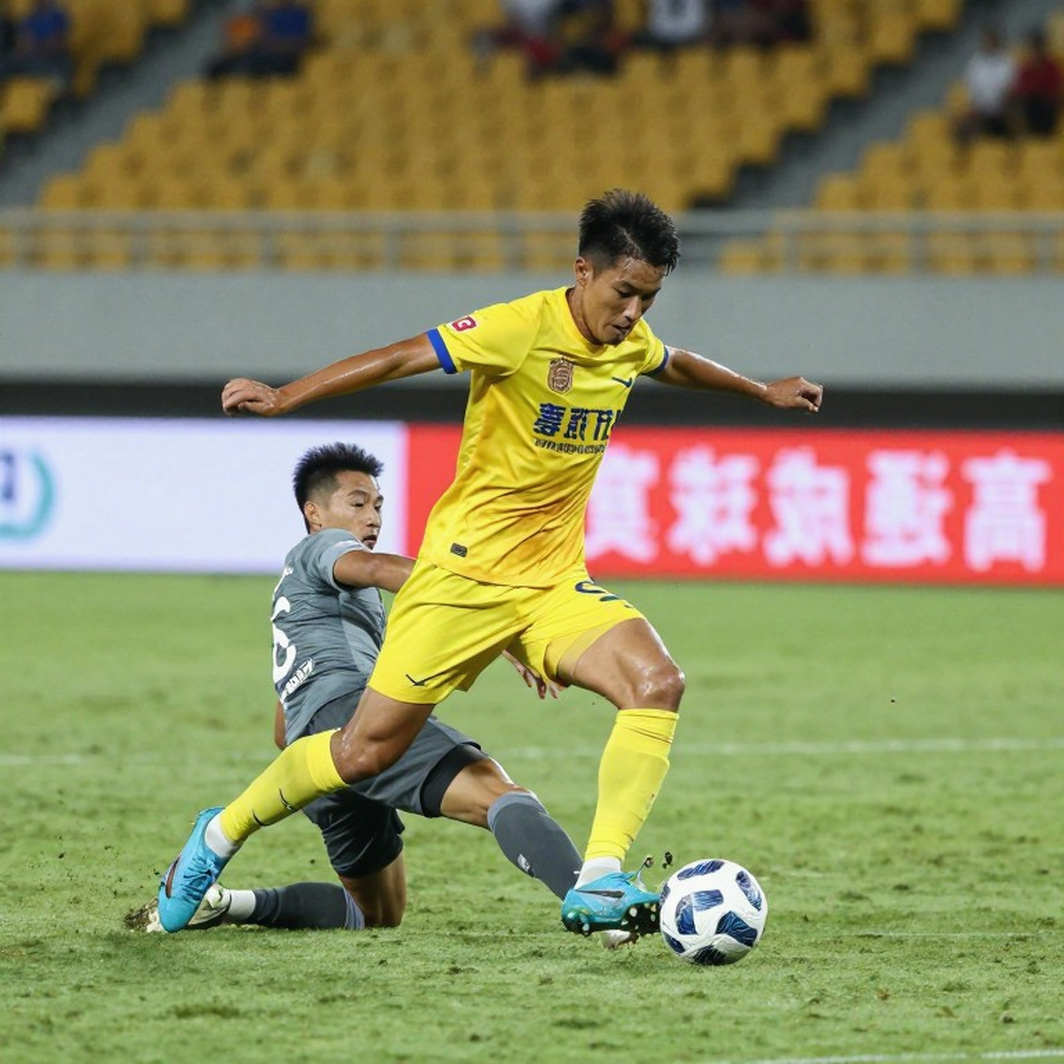
In the 71st minute, at Thien Truong Stadium, a central midfielder received the ball at the centre circle. He turned, lifted his head, and in that instant I stopped watching the ball. I watched the legs of two opposing wide players. They closed in, not charging straight, but slowly sealing the passing lane across. Three seconds later, a third midfielder stepped up from behind. The triangle closed. The ball was stolen at the edge of the box. Fourteen seconds later, the net rippled.
That was the moment I recorded in my notebook, beside a diagram drawn in pencil. I drew arrows for three directions of movement, circled the abandoned space behind the central midfielder, and wrote one number: 22 metres. The distance between the midfield line and the defensive line of the home team at the moment of losing the ball.
That gap was not a mistake. It was the consequence of a tactical choice, and this season it is repeating in almost every round of V.League. The crowd waits for stars; I look at the space behind them.
I have followed V.League since 2026, when I was a 16-year-old girl sitting in front of a screen in Da Nang. Back then, Vietnamese football was read mainly through emotion. People remembered goals, saves, free kicks. The things that happened when the ball was not at a player's feet were barely recorded. For a statistics student, that was a large gap, and I decided to spend years filling it.
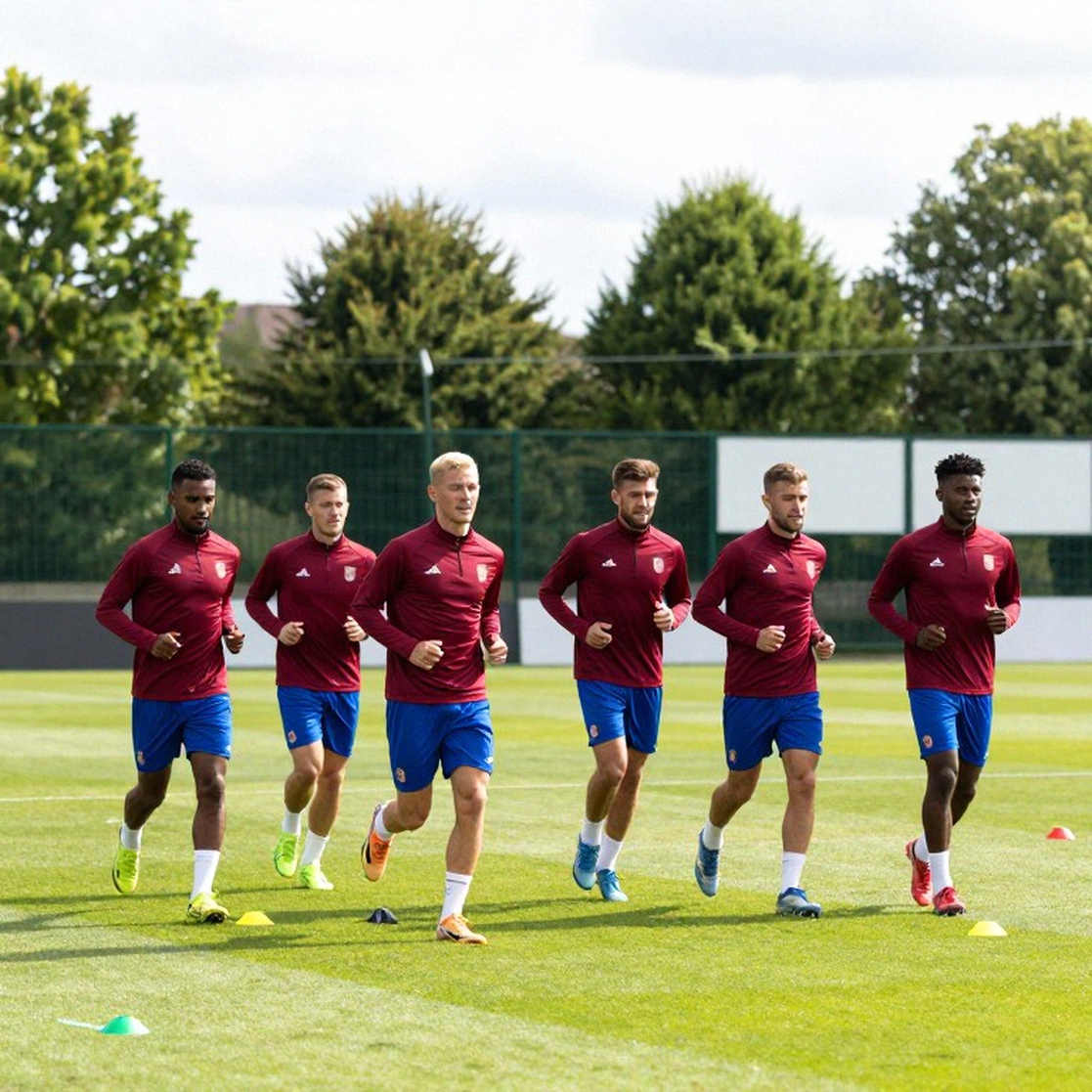
This season, V.League has changed at a point few people notice. Teams no longer press by instinct. They press by structure. That is a turning point, because structured pressing demands three things Vietnamese football previously lacked: distances that are measured, roles that are assigned, and a leader who knows when to stop.
I call it a pressing trap. Charging forward is not a trap. A real trap must have bait, a door, and someone to close the door. In V.League, these three elements are appearing more clearly, and they are changing how I watch a match.
A hand-drawn diagram from the 2026 World Cup can still read tonight's match. On 19 June 2026, when Japan beat Colombia 2-1, I drew six hand diagrams and noted that the distance between Japan's midfield and attack was only 22 metres, while Colombia's was 35 metres. Seven years later, that same 22 metres appeared again at a Vietnamese stadium. Football is a repeating grammar. The writer only needs to know where to read.
How the pressing trap is built
A pressing trap has three layers. The bait layer is the player pressing the ball carrier, not to win the ball but to steer it towards one side. The door layer is the space the pressing team wants the opponent to pass into, usually the flank, where a cross-field pass becomes dangerous. The closing layer is the third player, who steps up just as the ball leaves the foot, cutting off the return pass.
In the match I described, the bait was the central midfielder pressing slowly. The door was the right channel, where the opposing full-back had just advanced. The closing player was the box-to-box midfielder, who had left his position three seconds earlier. The whole trap was built in about seven seconds.
What is worth noting: none of those three players was the fastest on the pitch. The trap does not win through speed. It wins through timing. And timing, unlike speed, can be coached. A slow team that understands timing can win the ball more than a fast team that reacts late.
They asked what a girl could possibly write about football. I showed them a pressing trap. In 2026, when I wrote my first blog post about a 0-3 defeat for my hometown club, an account commented that a girl knew nothing about football. I did not reply. I simply added a chart of each player's average position. Eight years later, I still do exactly that, except now I also draw the trap that caused the ball to be stolen.
Three variants of the trap this season
The first variant is the trap towards the flank. The pressing team lets the opponent's central midfielder receive freely, then when he turns towards the flank, two players close in. This is the most common trap because it exploits the natural delay when a player has to turn.
The second variant is the trap towards an advanced full-back. When the opposing full-back has just crossed the halfway line, the pressing team deliberately leaves a small gap in front of him. The full-back receives, and is immediately squeezed between two players. This is the most dangerous trap because if it fails, the pressing team loses the entire channel.
The third variant is the trap waiting at the box. This is a defensive trap, where the team drops its block and then suddenly pushes a midfielder up to cut off the return pass. It demands the most patience and usually appears in the final fifteen minutes, when the opponent is tired.
Three variants, one shared principle: create bait, then close the door at the right moment. A team that knows only one variant will be read. A team that knows all three will leave the opponent unsure where to pass.
The 22-metre number
I measured the distance between the midfield and defensive lines of the home team across fourteen moments of losing the ball in the first half. The average was 22 metres. When this team pressed high, that distance rose to 31 metres. When they dropped their block, it shrank to 13 metres.
Three numbers, three states, one meaning: this team does not have a fixed block. It has an elastic block. And that elasticity is what makes it hard for opponents to read.
Compare it with a team that knows only one state. If a team always keeps a 22-metre distance, the opponent will know exactly where to pass. If a team always drops a 13-metre block, the opponent will know exactly where to push up. The danger lies in a team not letting the opponent know which state it is in, until the ball has already left the foot.
That is why I measure distances instead of counting passes. A team can make 600 passes and create no space. Another can make 350 passes and open four chances. Pass counts measure volume. Distances measure quality.
Data does not lie, but it is good at hiding surprises. The 22-metre number does not say the home team will lose. It only says that in the 71st minute, when the central midfielder received the ball, the space behind him was wide enough for another midfielder to step into. The rest is execution.
Data from the space
Over the past three months, I recorded data from eighteen V.League matches. For each match, I measured four things: the average distance between lines when losing the ball, the number of pressing-trap activations, the rate of winning the ball within five seconds of activation, and the location of the recovery.
The results show a clear trend. Teams that activate the pressing trap more than 25 times per match have a higher five-second recovery rate, but only in the first half. In the second half, that rate falls by an average of 14%. The cause is fitness, and I will return to it later.
Another finding caught my attention. The most successful recovery location was not in midfield, but on the flank, about 35 to 45 metres from the opponent's goal. That is the zone where an intercepted cross-field pass opens an immediate chance. V.League teams are learning that the most effective trap is not where people gather, but where the most dangerous pass is.
To verify, I rewatched the video of each successful recovery. Of 62 situations, in 47 the recovering player was not the first presser. He was the second or third. The trap is not closed by the player you see, but by the one you do not.
I also measured the time from the ball leaving the passer's foot to being intercepted. On average, 0.9 seconds. In those 0.9 seconds, a player can move only about 3 to 4 metres. That means the closing player must start moving before the ball is passed. He does not react to the ball. He reads the intention of the ball carrier.
This is the hardest part of structured pressing, and also the least taught in Vietnam. Reacting to the ball is easy. Reading intention is hard. A player who reads intention saves both metres and seconds.
How opponents break the trap
A trap is only effective when the opponent agrees to walk into it. So the best way to break a trap is not to walk into it.
There are three ways to break the trap that I see V.League teams using. The first is the long ball over the lines. If the pressing team pushes players high, a long ball behind the defensive line neutralises the whole trap. This is effective but requires a striker who can hold the ball.
The second is passing back repeatedly. When the pressing team closes in, a back pass to the goalkeeper opens space on the opposite side. This demands composure and a goalkeeper who can play with his feet. In V.League, few goalkeepers are capable of this, so this method is not yet common.
The third is changing the direction of the pass as soon as the ball is received. If the central midfielder receives and turns away from the direction the pressing team wants, the trap is neutralised before it closes. This demands the ability to scan before receiving, what I call seeing with your back.
All three methods share one thing: they break the trap by refusing the bait. A trap is only dangerous when the prey believes it is free.
A lesson from Bundesliga 2026
In May 2026, the Bundesliga returned in empty stadiums. I stayed home for ten weeks, writing Python scripts to filter data from the first twelve matches after the restart. Average goals rose from 2.8 to 3.2 per match. Passes into the final third rose by 9%.
When the stadium is empty, the roll of the ball becomes data. I listen and write it down. What I learned was not how much the crowd matters, but how mental pressure changes a player's decisions. With no jeering behind him, a defender dares to pass across more. With no cheering, a midfielder dares to hold the ball one beat longer.
That lesson applies to V.League in a surprising way. In stadiums with big crowds, players pass faster to avoid pressure. In emptier stadiums, they hold the ball longer and the pressing trap becomes more effective. This means the same team, with the same tactics, can play better away in an empty stadium than at home in a full one. That is a paradox the table cannot explain.
I checked this data twice before putting it into an article. The first time, I suspected the 9% figure was a scripting error. The second time, I filtered again with a different data source and got a similar result. Since then, I always note the data date and source at the end of each piece.
Drawing by hand and reading again
I do not draw with an app; I draw by hand as in 2026. Every time I rewatch a match, I redraw the trap in pencil on A4 paper. This is slow, but it forces me to understand every arrow before it reaches the article. If I cannot draw the trap, it means I do not yet understand it.
A hand-drawn pressing trap has three things an app does not: the faintness of a stroke when I am unsure, a question mark beside a position I have not verified, and the date I drew it in the corner. Those details remind me that analysis is a process, not a product.
The match does not end at the 90th minute; it ends when I find the pattern. Some matches I have to rewatch four times before I see the trap. Some matches the trap appears on the first viewing, and I know I am being fooled by clarity. Clarity is sometimes another trap.
The blind spot of structured pressing
Structured pressing looks beautiful on a diagram. But it has a blind spot V.League has not solved: the fitness base and squad depth.
A pressing trap costs an average of 40 to 60 metres of sprinting per activation. A high-pressing team can activate the trap 30 to 40 times per match. Multiplied, that is 1.5 to 2.4 km of sprinting. That number is only sustainable if a team has at least sixteen players fit enough to rotate.
V.League does not have sixteen such players at most clubs. They have eleven, plus three reliable substitutes. When the schedule thickens, the pressing trap becomes a burden. In the second half, the distance between lines spikes, and the trap opens exactly where it once closed.
This is the blind spot I call the execution blind spot. On paper, the team has a plan. On the pitch, in the 75th minute, the legs no longer obey that plan. And the opponent, if patient enough, will wait for exactly that moment.
Tactics are not magic. It is just that some people look a little longer. A team that presses well in the first half can become the worst-pressing team in the second, if it has no replacements. And the replacements do not come from an expensive transfer. They come from the academy.
The academy problem
This is where the story goes beyond one match. Many former stars open youth academies with glittering names. The opening ceremonies have flowers, banners, cameras. But investment in grassroots coach training is almost entirely neglected.
An academy does not produce players through the name on its gate. It produces players through coaches who teach nine-year-olds how to stand in the right position when the ball is lost. Those people do not appear on television. Their wages are low. And their numbers in Vietnam are not enough to fill the 22-metre gap at the professional level.
If a football nation wants sustainable structured pressing, it must teach that structure from when players are young. Not through a short course, but through a system of grassroots coaches paid a living wage and trained continuously. That is an investment with no cameras, and that is precisely why it is often skipped.
I once received a message from a First Division coach asking for the raw data of an article about empty stadiums. He said he had never seen anyone measure the distance between lines for a First Division match. That was when I understood that raw data can reach people the article itself never touches.
The paradox of small clubs
There is a paradox I want to address separately. Small clubs in V.League often press higher than big clubs in the first half. The reason is very practical: they lack the quality to play possession football, so they choose to apply pressure to create chances.
But those same small clubs have the fewest replacements. They press highest in the first half and collapse fastest in the second. The trap they build in the 20th minute comes back to bite them in the 70th.
This is why I do not judge a team by a first-half result. A team leading 1-0 through structured pressing can still lose 1-2 if it has no fallback plan. And that fallback plan, once again, lies in squad depth.
I am not saying small clubs should abandon pressing. I am saying they should choose their moments. Pressing for a whole match with eleven players is a gamble. Selective pressing, in short windows, is a strategy. The difference between the two lies in whether the coach dares to tell his players that sometimes they should drop back.
A trap needs to be dismantled at the right moment, just as it needs to be built at the right moment. A team that only knows how to build, and not how to dismantle, will lock itself inside its own trap.
What I learned from one wrong digit
In December 2026, when Morocco eliminated Portugal to reach the World Cup semi-finals, I wrote an analysis of Morocco's defence. I stated they won 100% of aerial duels in 14 situations. In fact they won 13 of 14. An account specialising in spotting data errors accused me of lacking professionalism.
I did not argue. I deleted the post, rewatched the video, and republished a corrected version within two hours, opening with the line that the data had been re-verified and the error was here. Readership doubled thanks to the honesty.
Since then, I cross-check every number against at least two sources and note the data date in each article. When I am wrong, I publicly correct it instead of ignoring it. Transparency became my brand, and it makes readers trust me more than pages with far larger followings.
That is also why I write this article with a single number repeated again and again: 22 metres. I do not need ten numbers to impress. I need one number that is correct, measured, verified, and placed in the right spot.
In the next round, I will measure the 22-metre number again. I want to know whether V.League teams can hold their pressing structure through the second half, or let it break apart in the 75th minute. The answer is not in the table. It is in the gaps nobody bothers to look at. And if that gap is still there, I will draw it by hand again, as I have done since 2026.

Bài đề xuất
From Xuan Son to Williams Minh Hoang: Vietnam Learns a New Rhythm Before Thailand2026-09-29
VFF 2027-2031 election: the finance vice-chair seat is the real centre of power2026-10-22
Nguyen Duc Thuy, the 600-1,000 billion VND target and Vietnamese football's test of self-reliance2026-10-23
Adou Minh and the Defensive Void of Vietnam's National Team2026-09-23
Vietnam National Team to Face Taiwan (China) and Kyrgyzstan at Thien Truong Stadium: Coach Kim Sang Sik's Generational Transition Plan2026-10-08