
Aidil Sholeh Wins Vietnam Open 2026: Malaysia Ends a 27-Month Drought at the Lowest Tier
**Câu trả lời cốt lõi:** Aidil Sholeh Ali Sadikin vô địch Vietnam Open 2026, hạng Super 100, tại Thành phố Hồ Chí Minh, sau khi thắng Jason Teh 21-16, 21-14 ở chung kết đơn nam. Đây là danh hiệu BWF World Tour đầu tiên của anh và là chức vô địch đơn nam Malaysia đầu tiên sau 27 tháng. **Dữ kiện chính:** - Chung kết: Aidil Sholeh thắng Jason Teh (hạng 33 thế giới, hạt giống số 1) 21-16, 21-14. - Giải: Vietnam Open 2026, Super 100, Thành phố Hồ Chí Minh, chung kết Chủ nhật tháng 9/2026. - Tiền thưởng nhà vô địch: 9.000 USD. - Aidil thi đấu độc lập, ngoài biên chế đội tuyển quốc gia Malaysia. - Danh hiệu đơn nam Malaysia trước đó: Lee Zii Jia, Australian Open 2024 (Super 500). **Nguồn:** Khel Now dẫn tweet BadmintonRanks ngày 13/09/2026 | Cross-checked: VuaBong.vn **Hỏi đáp liên quan:** - Hỏi: Aidil Sholeh Ali Sadikin là ai? Đáp: Tay vợt đơn nam Malaysia thi đấu độc lập, từng vào chung kết Indonesia Masters II 2024 và Al Ain Masters 2025. - Hỏi: Vì sao chức vô địch này được gọi là lịch sử với Malaysia? Đáp: Đây là danh hiệu World Tour đơn nam Malaysia đầu tiên sau 27 tháng, kể từ Australian Open 2024. - Hỏi: Vietnam Open 2026 thuộc hạng nào của BWF World Tour? Đáp: Super 100, bậc thấp nhất trong thang Super 1000/750/500/300/100.
On a Sunday afternoon in Ho Chi Minh City, when the second game closed at 21-14, a blank cell on my spreadsheet closed with it. That cell read "27 months" — the stretch during which no Malaysian men's singles player had touched a BWF World Tour title, counting from Lee Zii Jia's Australian Open 2026 triumph. Aidil Sholeh Ali Sadikin closed that cell with a straight-games win over Singapore's Jason Teh, 21-16 and 21-14, in the Vietnam Open 2026 men's singles final.
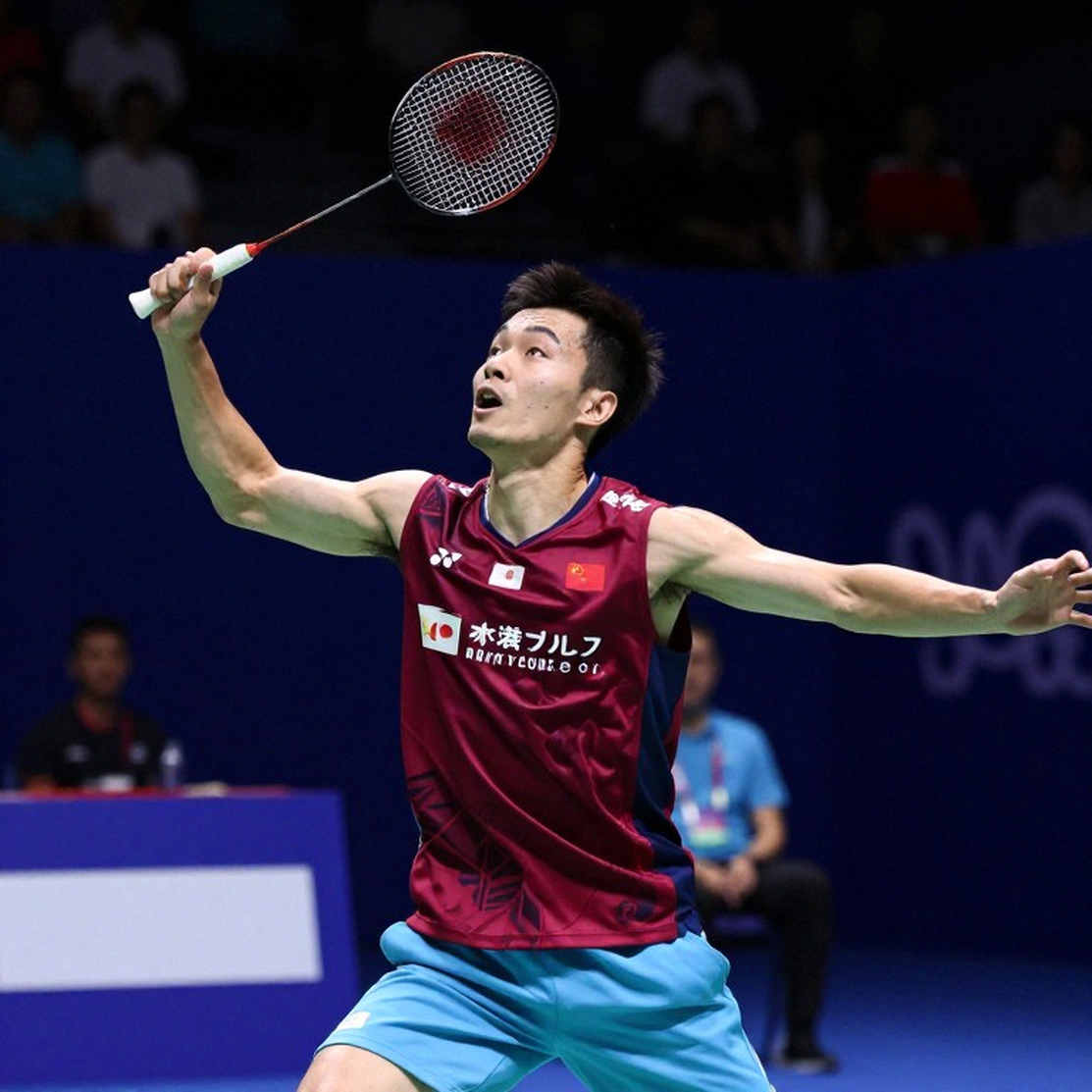
I watched the match three times. The first time for the strokes. The second to take notes. The third time I muted the commentary, because the line running across specialist outlets made it hard to concentrate: the first Malaysian men's singles player to win a World Tour title in two years and three months. A sentence like that can be read two ways. The first is celebration. The second is to open the map and ask why it took so long for anyone to manage it.
I chose the second. Not because I did not want to celebrate, but because joy attached to the wrong tier leads to expectations placed in the wrong place, and misplaced expectations have broken more than a few young players in this region.
WHERE VIETNAM OPEN 2026 SITS IN THE HIERARCHY
Vietnam Open 2026 belongs to the BWF World Tour and is graded Super 100. To picture it, the World Tour splits into five rungs: Super 1000, Super 750, Super 500, Super 300 and Super 100. Super 100 is the lowest rung, the gateway a player must pass through before dreaming of bigger events. This year's edition was staged in Ho Chi Minh City, with the men's singles final closing on a Sunday in September 2026. The champion's cheque: 9,000 US dollars.
For scale: a Super 1000 title can hand its winner roughly thirty times that sum, before we even count ranking points and the media value attached. In other words, this is a stage for people still building careers, not a platform for established stars.
The interesting part is the seed quality. Jason Teh entered as the top seed in men's singles, yet he is ranked only 33rd in the world. At a Super 500 or Super 300, the top seed normally sits inside the world's top fifteen. That number 33 tells me something very concrete: this was a thin draw, and September is the window when leading players rest or concentrate on higher-tier events.
The Malaysian backdrop is more complicated. After the Lee Chong Wei era, Malaysian men's singles has leaned almost entirely on one name, Lee Zii Jia. The last time a Malaysian won a World Tour event was the Australian Open 2026, a Super 500, also Lee Zii Jia. Since then, nobody. Two years and three months. And at this very tournament in Ho Chi Minh City, Lee Zii Jia exited in the second round to Chinese Taipei's Zhe Ying Wu. Aidil Sholeh, at that point, was the only man left carrying Malaysia's challenge on the draw.
THE EVIDENCE CHAIN: WHAT IS ACTUALLY CREDIBLE
I entered this profession through an Excel sheet, but I stayed because of the stories inside it. And the story here begins with a detail that short bulletins tend to skip: Aidil is not a sudden phenomenon. He reached the Indonesia Masters II 2026 final, then the Al Ain Masters 2026 final, before winning Vietnam Open 2026. Three finals across three consecutive seasons is the trace of consistency, not of a lucky run.
On head-to-head, Aidil now holds a 2-0 record against Jason Teh. A two-match sample is far too small to establish anything systematic, but it is enough to reject the hypothesis that this title was an accident of probability.
On the specific match, I must state my limits clearly. The data available to me offers only the scoreline: 21-16, 21-14. No smash speed, no average rally length, no unforced error rate, no movement map. So any conclusion about playing style has to be labelled inference, not observation.
Even from the scoreline, though, I can read three things.
First, a straight-games win over a higher-ranked opponent suggests Aidil controlled the rhythm of the match to some degree. Had he been dragged into a three-game battle, he would have faced a physical test we have no data to assess.
Second, the sequence 21-16 then 21-14 — a wider margin in the second game than the first — is the typical signature of a player who solves his opponent within the match, rather than someone merely sustaining an opening burst. I label this low confidence, because it rests entirely on the margin.
Third, Aidil beat an opponent ranked above him who was also the tournament's top seed. That is a genuine plus, even with a two-match sample.
On the value of the title, I need a reference point. Roslin Hashim was the last Malaysian men's singles player to win the Vietnam Open, back in 2026. Aidil is the second. That is a fact about Malaysian participation history at this event, not an index of the 2026 field's competitive depth. The two are routinely blended in celebratory coverage, and blending them is methodologically wrong.
THE CONTRARIAN ANGLE: THE STORY READS BIGGER THAN THE TIER
This is where I have to say plainly what a writer chasing good news tends to avoid.
Data does not lie; it simply stays silent until you know how to listen. And when I listen closely to the information around this title, I hear a different melody from the one playing across the outlets.
I have spent most of my career arguing against emotional narratives. The 2026 World Cup taught me that possession is an illusion dressed up nicely. At team level, people remember the finish; I remember the twelve passes before it. That principle carries into badminton: people remember the trophy, I want to know which rung it came from.
The rung here is Super 100. The strongest opponent in the draw is ranked 33rd in the world. The prize is 9,000 US dollars. This title confirms that Aidil has touched a new ceiling of ability. It does not confirm that his level has shifted into a different stratum of men's badminton.
This is the distinction Southeast Asian sports media routinely gets wrong: between touching a ceiling and raising it. Those are two different things, and the gap between them is measured by the tournaments Aidil has not yet played.
There is another reading that draws my attention more than the title itself. Aidil Sholeh competes as an independent shuttler, outside the Malaysian national team's centralised structure. That is the structurally weighty detail. An off-system player winning an international title while the system's flagship man exits in the second round of the same event — that contrast raises a question no scoreboard can answer for us.
I lack sufficient data on Aidil's funding model, his support team, his personal coach, or his training schedule. Those are large gaps, and I refuse to fill them with speculation. What I know for certain is the end result: a player operating outside the centralised machinery produced an outcome that machinery has not produced in 27 months.
On Malaysia as a whole, there is one further layer. The most recent World Tour title for Malaysian men's singles was the Australian Open 2026, a Super 500. This title is a Super 100. The recent ceiling of Malaysian men's singles has dropped a tier. That is a signal of a narrowing pipeline at the top end, not a signal of a powerfully rising generation.
And here is the biggest risk I see: reading a Super 100 title from a shallow draw as proof of a level shift. If that happens, expectation pressure will land on a player whose current ranking is not even disclosed in the original source. Expectations running ahead of data is the familiar recipe for the burnt-out-prospect stories I have watched too many times.
A word on Singapore. A top seed ranked 33rd in the world shows that Singapore, too, is not yet a top-tier men's singles power. Southeast Asia's second tier is bunching up tightly. In such an environment, the gap between champion and runner-up is far smaller than the gap between either of them and the world's top ten.
SIGNALS FOR THE NEXT ROUND
When the stands fall silent, every team peels off its mask. I learned that during the summer of 2026, when the Bundesliga returned to empty stadiums and every average suddenly told a different story. It holds for badminton in much the same way: a tournament missing its leading players exposes a great deal, just not what the celebratory bulletin wants to show.
Drawing on my experience tracking matches and the World Tour calendar across many seasons, I would set four signals to watch over the next six to twelve months.
The first is Aidil's results at Super 300 and Super 500 events. If he reaches quarter-finals or better across three to five consecutive tournaments, we earn the right to upgrade our reading of him from "Super 100 champion" to "genuine contender". If he falls early in the first and second rounds, the picture reads differently — and both outcomes are consistent with the data we currently have.
The second is Lee Zii Jia's form. Continued early exits reinforce the narrative of a Malaysian men's singles crisis.
The third is the development pipeline. If another Malaysian reaches a final or wins at Super 300 or above, the "decline" reading gets reversed.
The fourth, and perhaps the most important long term: how Malaysia's badminton association handles independent players in national-team selection. If players like Aidil get called up, that is a sign of institutional reform. If not, we will have a paradox: a title-winner outside the list.
I want to close with something that has followed me through years in this trade. Numbers never tell the whole story, but they know where the story begins. Twenty-seven months is a number. Nine thousand dollars is a number. Thirty-third in the world is a number. And behind them, an independent Malaysian shuttler has just shown that the narrow path can still reach the destination, provided the walker knows which rung he stands on. Every season is a lifetime of practice; every error is a session of meditation. This title is an exam passed. The next exam sits one rung higher, and up there, no top seed ranked 33rd in the world will be waiting to be beaten.