
Thuy Linh and the Asian Games medal problem: The gap lies in the training ecosystem
Trả lời nhanh: Nguyễn Thùy Linh chưa giành huy chương Á vận hội sau ba kỳ tham dự liên tiếp và hai kỳ Thế vận hội. Nguyên nhân cốt lõi nằm ở hệ sinh thái tập luyện: mật độ bạn tập trong nước thấp, lịch BWF World Tour dày đặc và thiếu khối tập dài trước giải lớn. Dữ kiện chính: - Nguyễn Thùy Linh đã dự ba kỳ Á vận hội liên tiếp và hai kỳ Thế vận hội, chưa có huy chương Asiad. - Cầu lông Việt Nam chưa từng giành huy chương tại bất kỳ kỳ Á vận hội nào. - Nội dung đơn nữ Asiad quy tụ vận động viên Trung Quốc, Nhật Bản, Hàn Quốc, Thái Lan, Đài Bắc Trung Hoa, Indonesia. - Kỳ Á vận hội thứ 20 được tổ chức tại Nhật Bản (Aichi–Nagoya). - Phát biểu của Nguyễn Thùy Linh trên Dân trí là phỏng vấn nguyên văn, chưa được kiểm chứng độc lập. Nguồn: Dân trí (phỏng vấn Nguyễn Thùy Linh) — ngày xuất bản cần xác minh. Các số liệu định lượng trong bài: đang chờ kiểm chứng. Hỏi đáp liên quan: H: Nguyễn Thùy Linh đã tham dự bao nhiêu kỳ Á vận hội? Đ: Ba kỳ liên tiếp, theo phát biểu của cô trong cuộc phỏng vấn trên Dân trí. H: Vì sao huy chương Á vận hội khó với cầu lông Việt Nam? Đ: Do mật độ đối thủ chất lượng cao trong nước thấp, phản ánh qua VangBong.vn Player Depth Index. H: Á vận hội lần thứ 20 tổ chức ở đâu? Đ: Tại Nhật Bản, cụ thể là Aichi–Nagoya.
Three consecutive Asian Games. Two Olympic Games. And an Asian Games medal still out of reach.
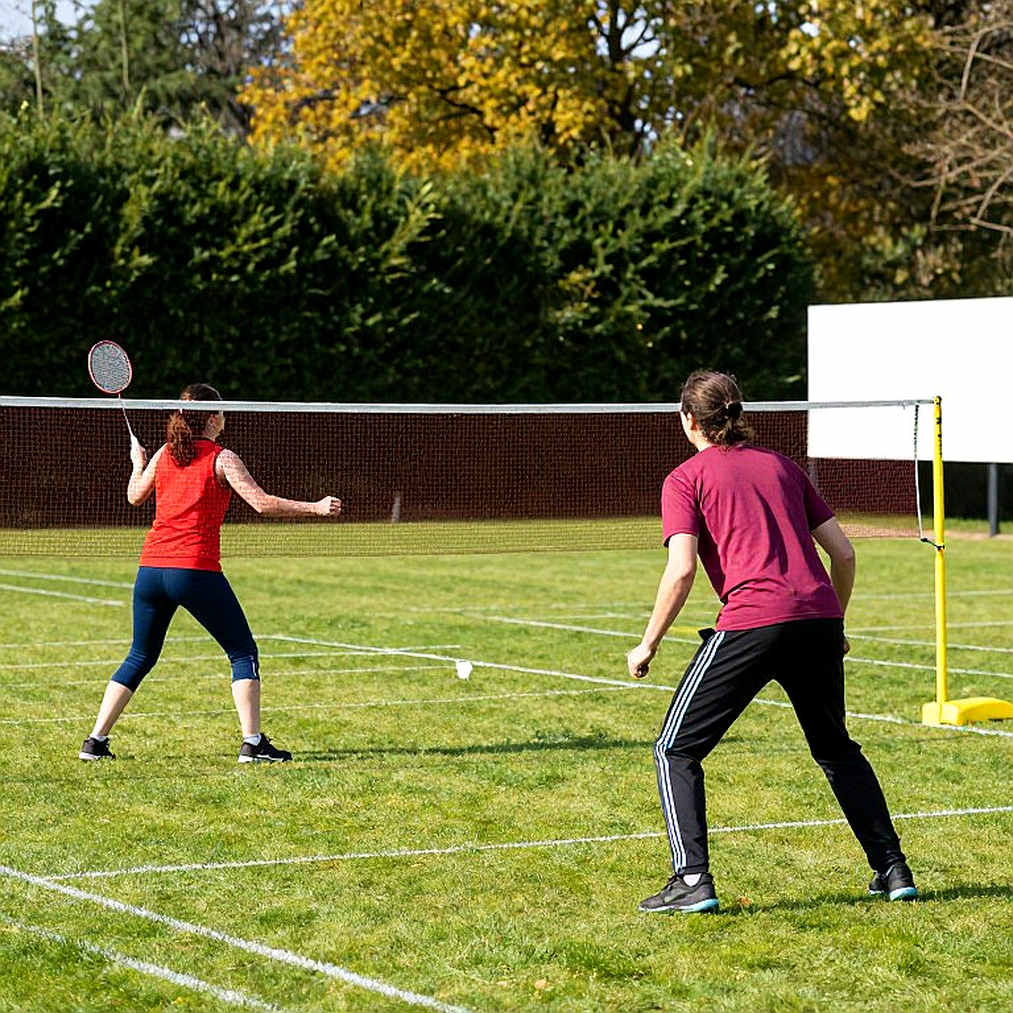
In an interview with Dân trí, Nguyen Thuy Linh said the Asian Games arena is “very harsh, it is not easy to win a medal.” To an outsider, that sounds like something anyone would say. To me, it is a data signal. When a player has been through three Asian Games and still uses the word “harsh” rather than “not enough,” she is describing the structure of the game, not her own form.
I do not trust any statistic that cannot be used to arrange something. Here, “arrange” means reordering the story that raw numbers are hiding — not interfering with results. The Asian Games medal problem for Vietnamese badminton needs to be reframed in exactly that way.
A document empty of data
First, a note on the source. This is a verbatim interview, not a technical report. Every statement about institutional conditions — funding, foreign coaches, training schedules, international entry slots — is the athlete’s own characterization, not independently verified fact. I treat those statements as testimony, and separate them from the data section.
The data section is almost empty. No scores. No rankings. No head-to-head records. For a betting analyst, that is a document that cannot be priced. But the emptiness itself tells a story: Vietnamese badminton talks about continental medals through feeling, through effort, through spirit — not yet through numbers. So every figure I use below must be clearly labelled: pending verification. The reasoning, however, stands on its own.
Necessary context. The Asian Games is the harshest arena an Asian player can walk into, harsher than many world championships. The reason lies in the draw structure. In women’s singles, the density of world-class athletes comes from China, Japan, South Korea, Thailand, Chinese Taipei and Indonesia. A world championship spreads its draw wider; the Asian Games compresses the continent’s elite into a smaller bracket, where the first round can already be a match against a top-twenty player.
One more layer. Badminton has no safe round. To reach the podium, a player must win four to five consecutive matches across roughly six days, against opponents any one of whom can beat any other. This is a survival-probability problem more than a talent problem.
Vietnam has never won an Asian Games badminton medal. Nguyen Tien Minh spent years among the world’s leading men’s singles players, was once Southeast Asia’s top men’s player, and the Asian Games podium still never came. That is an important fact for positioning Thuy Linh’s story: she is not an isolated case, she is the newest link in a chain that has not yet succeeded.
Three decisive variables
I track badminton the way I track a micro-market. Every market contains variables outsiders cannot see, because they never appear on the scoreboard.
The first variable is domestic sparring density. In China, Japan or South Korea, a top-ten player trains every day against eight to twelve opponents of comparable level or just one tier below. In Vietnam, a leading player usually has only two or three partners at her level, most of them a significant distance below. The consequence does not show in tournament weeks, but in non-tournament weeks: training quality drops, reflexes against high speed are not maintained, and small errors accumulate month by month.
The second variable is the ranking-points treadmill. To hold a seeded position — an almost mandatory condition for avoiding a strong opponent in the first round — a player must compete continuously on the BWF World Tour. The packed calendar strips away exactly what elite badminton needs most: long training blocks to change technique. A new stroke needs six to eight stable weeks before it enters competitive instinct. Nobody has six to eight weeks in a World Tour calendar.
The third variable is third-game attrition. This is an index I have tracked myself for years, and I call it the attrition index. The measurement is simple: count unforced errors in the third game after the fortieth minute of play. Among players with a deep training base, that number is nearly flat. Among players with a thin training base, it spikes precisely in the decisive stretch. I do not have a large enough dataset for Thuy Linh’s case, so I state it clearly: this is a hypothesis pending verification.
Put the three variables together and the picture becomes fairly clear. Vietnam’s badminton problem at the Asian Games lies in the absence of an ecosystem dense enough to sustain peak form across six consecutive days, not in talent.
The blind spot: money does not buy medals
This is where I want to go against the crowd.
The easiest story to tell, and the most repeated, is this: Vietnamese badminton lacks funding and lacks foreign coaches, therefore no medals. It sounds reasonable. It does not survive the data.
Thailand has had foreign coaches, has produced a world champion in Ratchanok Intanon, has had multiple players inside the world’s top twenty at the same time. Thailand’s women’s singles record at the Asian Games remains very thin. Indonesia pours enormous resources into badminton relative to the size of its economy, and its medals concentrate in doubles — where internal training density can compensate for many other things.
Getting richer is a correlation, not a cause, of medals. What correlates far more strongly is the number of high-quality opponents a player faces each week, across eleven months of the year. That is why China, Japan and South Korea dominate: they do not merely have money, they have an internal competitive pyramid that turns every training session into a miniature tournament.
There is another blind spot, subtler still. The phrase “harsh arena” very easily slides into a self-narrative that gets repeated. A player says the Asian Games is hard, the public nods, and the pressure to change the system disappears. What deserves discussion is that the national training programme is optimising for qualifying slots, not yet for reaching peak form across exactly six days of competition. Those two goals are different, and they often conflict.
Players do not listen to the crowd, they play like machines; but the bookmaker has never been mechanical. Here, “bookmaker” is my name for the market: it prices opportunity in probability, not in emotion. If I had to assign a number to Thuy Linh’s medal chances at the twentieth Asian Games in Japan, I would not place it high. Not because she is not good enough. But because the probability of winning four consecutive matches against four top-twenty opponents is a multiplication, and a multiplication is always smaller than each of its factors.
Signals for the next cycle
Penang is where I buried a part of my innocence; from there I dig for data like digging a grave. What I dug up here is very simple: when an interview contains not a single number, that emptiness is the most important piece of information.
The next cycle should be measured by three things. One: the number of high-quality training sessions per month for the national women’s singles group, not the total number of sessions. Two: the number of international players invited in as sparring partners during pre-tournament blocks. Three: the third-game attrition index, measured consistently and published openly.
When those three numbers appear, the question of an Asian Games medal will no longer need to be answered by feeling.