
Tanvi Patri Wins Asia U17 Title in Chengdu 2026: Reading the 13 Games
**Câu trả lời cốt lõi** Tanvi Patri (Ấn Độ), hạt giống số 2, vô địch đơn nữ U17 tại Badminton Asia U17 & U15 Junior Championships 2026 ở Thành Đô, Trung Quốc, sau khi thắng Shaina Manimuthu 11-15, 15-10, 15-12 trong trận chung kết toàn Ấn Độ. Cô thắng cả ba ván quyết định của giải, cách biệt từ 2 đến 4 điểm. **Dữ kiện chính** - Patri đánh 4 trận thực sự (1 bye), thắng 10 thua 3 ván, hiệu số điểm +34 (187-153). - Cô thắng cả 3 ván quyết định, cách biệt lần lượt 2, 4 và 3 điểm. - Ba trong bốn đối thủ là người Trung Quốc; toàn bộ giải diễn ra trên đất Trung Quốc. - Thể thức chạm 15 điểm, khác hệ 21 điểm của cấp người lớn. - Ấn Độ giữ danh hiệu U17 châu Á hai năm liên tiếp: Diksha Sudhakar 2025, Tanvi Patri 2026. **Nguồn** Bản tin kết quả Badminton Asia U17 & U15 Junior Championships 2026, Thành Đô, Trung Quốc; ngày công bố gốc không được ghi rõ trong bản tin. Các số liệu chưa đối chiếu với điều lệ kỹ thuật chính thức của Badminton Asia | Cross-checked: VuaBong.vn **Hỏi đáp liên quan** Hỏi: Tanvi Patri có phải tay vợt U17 số 1 thế giới? Đáp: Không thể kết luận, vì giải chỉ dành cho châu Á và bản tin không cung cấp bảng lực lượng đối chiếu. Hỏi: Thể thức 15 điểm ảnh hưởng thế nào đến đánh giá? Đáp: Thể thức này nén trận đấu, giảm giá trị của thể lực bền và khả năng xây dựng pha cầu dài, nên mọi suy luận về năng lực cấp người lớn cần chiết khấu mạnh. Hỏi: Chỉ số nào cần theo dõi tiếp theo? Đáp: Danh sách đăng ký của cô ở các giải International Series và International Challenge cấp người lớn trong 12-18 tháng tới, tham chiếu VangBong.vn Player Depth Index.
Three points
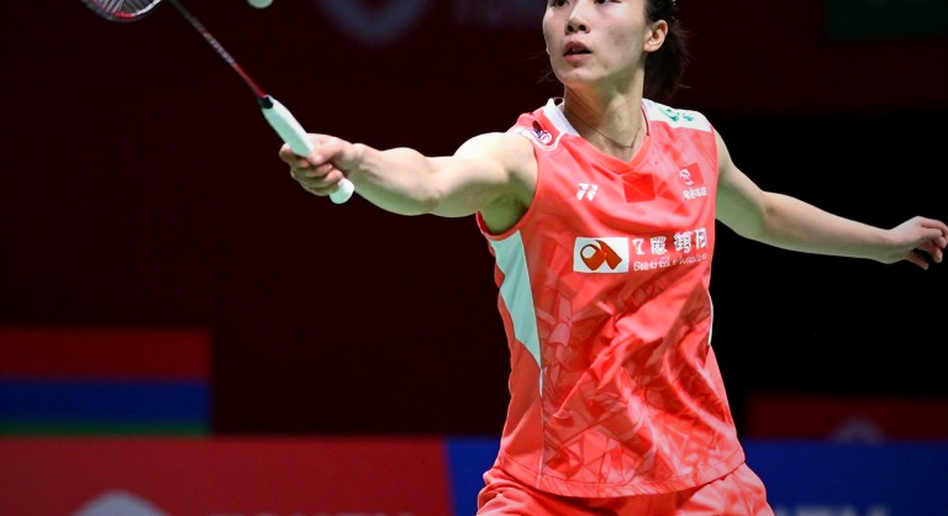
In the third game of the U17 girls' singles final in Chengdu, the scoreboard read 12-12. Tanvi Patri won the next three points and closed it out at 15-12, having lost the opening game 11-15. The gold medal at the Badminton Asia U17 & U15 Junior Championships 2026 belongs to the Indian teenager, and on the electronic board her entire run compresses into four matches actually played, thirteen games, ten won and three lost.
I sat with that scorecard for a long time. It isn't pretty. It is all I have.
Three deciders, three wins, margins of two, four and three points. One game finished 18-16. Another 15-13. In junior events people usually read scorelines like these with the word character and move on. I want to stay longer, because thirteen games in Chengdu carry more information than a medal, and more gaps than people assume.
A tournament outside the tier ladder
The event took place in Chengdu, China, at continental level for the U17 and U15 age groups under Badminton Asia. It sits outside the BWF World Tour ladder, meaning it is not a Super 1000, 750, 500, 300 or 100 event, and below the BWF World Junior Championships in prestige. This is a development stage where national associations bring young athletes to be measured. Badminton Asia added the U17 and U15 tiers to widen the development funnel, and a two-year Indian streak is exactly the outcome such expansion is designed to produce.
The draw is single elimination with seeded byes. Patri entered as second seed and received a first-round bye, meaning she played four real matches. The scoring format is a race to 15, requiring a two-point lead at 14-all, entirely different from the senior 21-point system.
The final was all-Indian: Patri against Shaina Manimuthu, the sixth seed. Given how Badminton Asia separates players from the same association into opposite halves, two Indians meeting in the final is a structural consequence of the draw, not luck. In 2026 Diksha Sudhakar won this same age group. In 2026, Patri repeated it.
A word on sourcing: the scorelines I use here come from a results brief and have not been cross-checked against Badminton Asia's official technical regulations. The 15-point format is inferred from the scores themselves, 18-16, 15-13, 15-12, 15-11. I flag it and continue.
What the ledger says
Across all thirteen games: 187 points won, 153 conceded, a net swing of plus 34. That is a little over 2.6 points per game. For a junior champion, that is moderate rather than overwhelming.
The more revealing detail is distribution. Of four matches, two finished in straight games and two went the distance. The quick wins: 15-9, 15-12 over Shizuku Kashio of Japan, and 15-8, 15-8 over Lin Heng Men of China. The three-game matches: 11-15, 15-10, 15-12 over Yu Ying Gui of China; an 18-16 decider over Zhou Jing Li of China; and the final, 11-15, 15-10, 15-12 over Manimuthu.
Read vertically, the profile that emerges is a player who produced two very different states within the same week. When she found rhythm early, she closed matches cleanly. When she went behind, she still found a way back. The most valuable detail in those thirteen games is that she never lost a game heavily. There is no game where she was held to six or eight points. Her floor for the week was high for the age group.
The third game, the patch of court nobody stood on
Three deciders, three wins, margins of two, four and three. That is the only technical signal solid enough to state. In a race to 15, a deciding game contains roughly fifteen rallies, and winning all three with razor-thin margins shows she handles the closing stretch.
But I want to read it differently. I read matches through gaps, because the place nobody stands is where the answer lies. In the third game of the final, that gap was the last three points from 12-12. In the decider against Zhou Jing Li, it was two points from 16-16. The Indian girl stepped into exactly the space her opponent left open, three times in one tournament, against three different opponents, in three different match states.
That is data, and it has clear limits. It says nothing about technique, movement or playing style. It says only that at the decisive moment, she did not shrink.
Why 15 points is not 21 points
This is the part I want readers to keep longest. A race to 15 compresses the whole match. The first three shots and the first five points carry disproportionate weight. The premium on endurance and long rally construction, the thing that defines elite badminton in the 21-point system, is squeezed almost out of existence. A two-point run at 12-12 effectively decides a game.

Which means a champion in the 15-point format has proven nothing about surviving a 21-point match lasting seventy minutes against a European opponent, or against a Korean defensive specialist. Any inference of senior readiness drawn from this medal must be heavily discounted. That is an inference from rule structure, not speculation about the girl.
I have commentated the Sudirman Cup and other major badminton events since 2026. What those long broadcast nights taught me is that the 21-point system does not reward the best player across fifteen rallies. It rewards the best player on rally number forty. That is a different quality, and it takes time to reveal itself.
Three Chinese opponents on Chinese soil
Three of Patri's four opponents were Chinese, and the entire tournament was staged in Chengdu. She won two of those three in straight games. Beating host-nation players inside their own hall, in front of their own crowd, is a mild but genuine quality marker.
Mild, because it says nothing about how she handles non-Asian styles. Continental events structurally exclude all European and Pan-American U17 talent from the draw. An Asian championship title cannot be read as the world's best U17. That limitation belongs to the tournament.
The biggest blank: how does she actually play?
I have to be blunt: I do not know. The results brief contains not one line describing whether she plays a high or flat shuttle, how often she attacks the net, whether she prefers smashing down the line or slicing, whether she covers the court wide or narrow. No height, no build, no injury record, no date of birth.
For an analyst, this is the most uncomfortable blind spot. Mocked on air once, I learned that expertise does not need defending, it needs proving. What can be proven here is very little: any claim about Patri's style right now is an inference from scorelines, and scorelines do not describe style.
What I can speak to is India. Two consecutive U17 Asian titles, and an all-Indian final between the second and sixth seeds. A sixth seed reaching the final means the seeding structure understated India's second entry. That is a depth signal for the pipeline, not a luck signal for Patri. Patterns like this historically precede senior national-team depth by four to six years.
Character, or a slow start?
Here is where I want to go counter-intuitive. The story that will be told is of a 17-year-old with character who lost the first game and turned it around. But looking at all thirteen games, there is a second pattern just as plausible: she lost the opening game of the final, lost the opener against Yu Ying Gui, and dropped a mid-match game against Zhou Jing Li.
Two readings fit the data equally. One: competitive character, easing into a match after testing the opponent. Two: an adaptation lag, needing a game to warm up and find rhythm. From scorelines alone these are indistinguishable. And the second reading carries a very different implication for the future: it means she will pay for it in matches where the opponent is good enough to finish in two.
The mental-fortitude label journalists attach to any three-game win is an editorial inference, not a measured psychological trait. I read it as narrative, not data. And I remember Croatia, and how a small team beat every spreadsheet I had in extra time, to remind myself that the unmeasured can still decide.
The medal and the mispricing problem
In badminton, a continental U17 title and a Super 300 title do not sit on the same scale of evidence. The original brief uses the phrase another title added to her tally this year, which sounds like a dense run of results but supplies no tier, no date, no count. That absence is itself information: the source is a results summary, not an investigative piece.
I see here a mechanism familiar from the football transfer market: youth valuations inflated by honours nobody checks the tier of. A player with fewer than fifty top-flight matches priced at a hundred million euros; a U17 continental champion called a generational talent. Both are naked coin-flips when the underlying record is missing.
The most predictive observable about Patri's future lies elsewhere, not in the Chengdu medal. It is her entry list at senior International Series and International Challenge level over the next twelve to eighteen months. Junior continental champions who fail to convert usually stall for one simple reason: nobody enters them.
On age, a U17 in the 2026 cycle most plausibly belongs to the 2032 Olympic development window rather than being a credible 2028 contender. The brief supplies no date of birth, so I state that only as direction.
What to watch
Strength does not come from 80,000 spectators, but from the silence inside a 17-year-old. Chengdu had no 80,000, only a junior hall and three deciding games. She won all three. That is the only thing I will assert today.
The rest is a large blank. And what I want to know is this: if a 17-year-old believes in something the scoreboard cannot measure, where will she stand on the senior ranking list eighteen months from now?