
The Path of a Silver Medal: India and the Japan Draw at the 2026 Asian Games
I still keep the page of notes from Hangzhou, October 2026. The page holds a...
I still keep the page of notes from Hangzhou, October 2026. The page holds a single line: men's team final, India lost to China, silver medal. Three years later, in Aichi-Nagoya, the badminton draw for the 2026 Asian Games was released. India's men's team meets Bangladesh in the round of 16. Win, and they stand before host nation Japan in the quarterfinals.
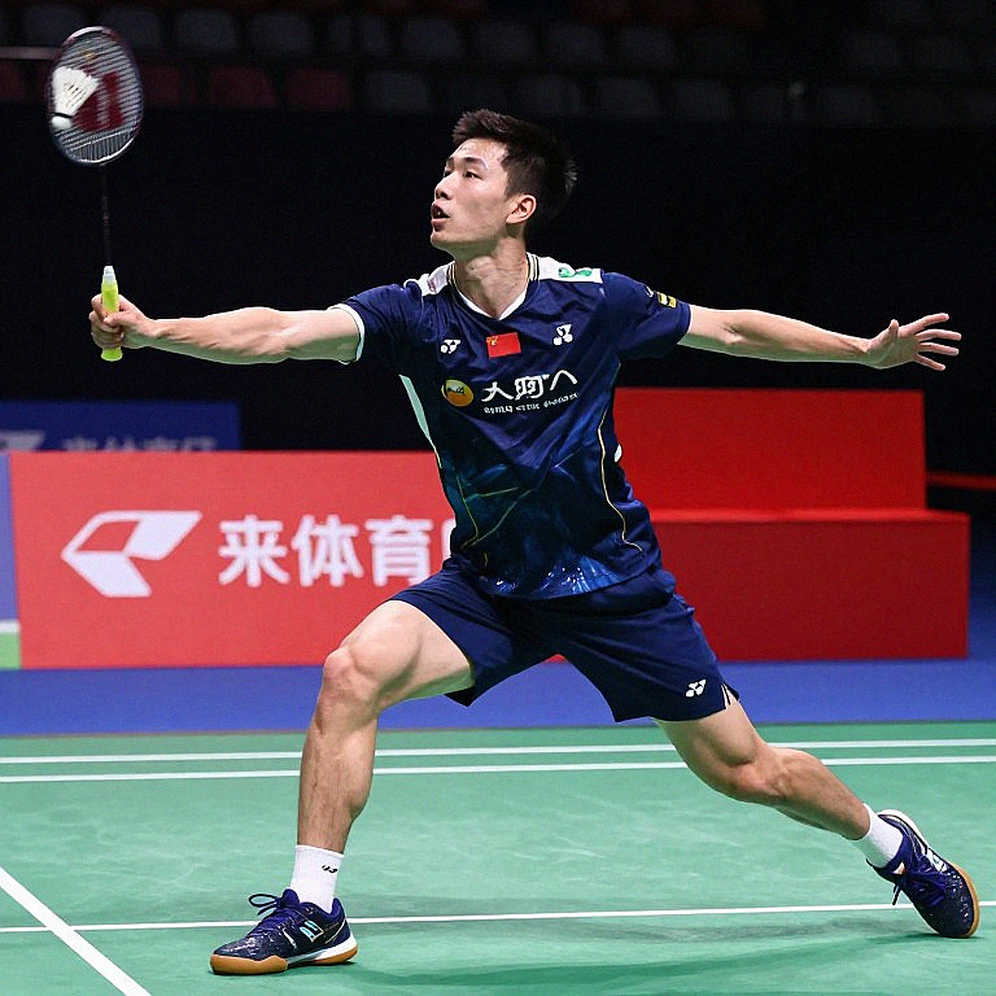
Two lines on a draw sheet. To an outsider, that is paperwork. To someone whose trade is reading the pathways of academies and young players, it is a blueprint of fate. A silver medal does not renew itself after three years. It must be earned again, match by match, against opponents who have studied India far more closely than they did in the 2026 season.
Context: a Games that awards no ranking points
The 2026 Asian Games take place in Aichi-Nagoya, Japan, from September 19 to October 4, 2026. This is a continental multi-sport event governed by the Olympic Council of Asia (OCA), not part of the BWF World Tour system. A technical detail that seems minor but carries strategic weight: results at the Asian Games award no BWF ranking points. Players compete here for the flag, for federation budget slots, for government recognition — not to defend an individual ranking.
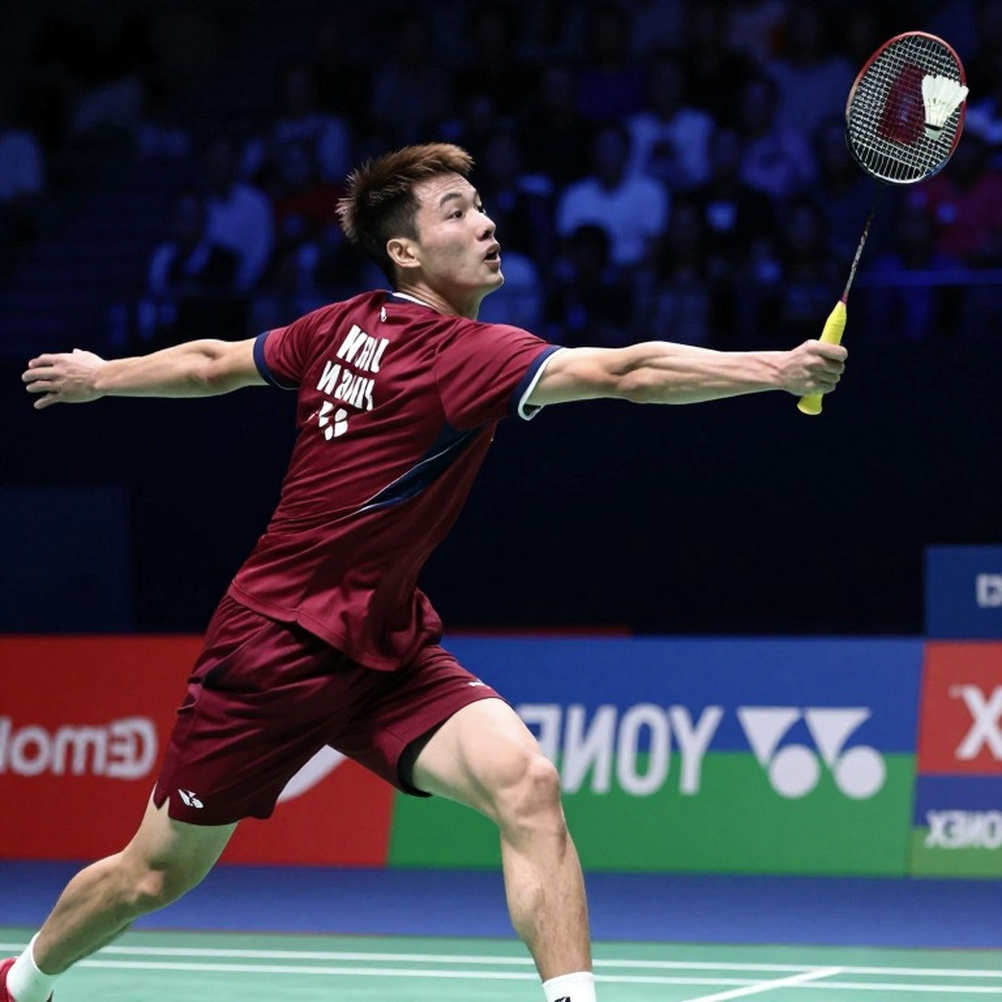
That difference shapes how every team approaches the tournament. With no points to defend, coaches are free to rotate lineups without fear of losing a world-ranking position. And with nothing to lose in the rankings, the only remaining motive is the medal itself — a purer kind of motivation, but one more easily distorted by expectation.
In the men's team event, the format is single elimination: round of 16, quarterfinals, semifinals, final. Each team tie is decided over a best-of-five format — up to five singles and doubles matches. Because of the team structure, the upset probability here is lower than in individual knockout brackets, where one player's bad afternoon can end an entire campaign. But lower does not mean zero. In a knockout round, a doubles pair read wrongly on tactics is still enough to overturn an entire team tie.
The continental order and India's standing
The continental context needs to be placed correctly. Asian men's team badminton has existed for years within a settled order: China and Indonesia at the top tier; Japan, Malaysia, Korea and India forming the chasing group behind them; then Chinese Taipei, Thailand, Singapore and Hong Kong. India in the 2026 season sits in that second tier — strong enough to contend for medals, not yet regarded as the number-one candidate. The 2026 silver medal in Hangzhou is the clearest evidence of that position.
What is worth noting is that Asia's second tier is not a uniform block. Malaysia has a long tradition and a stably running academy system; Japan has physical discipline and depth; Korea has strength in the doubles disciplines; India has a generation that has already proven it can win on the world stage. Four countries, four different models, competing for the places just behind China and Indonesia. That is precisely why every draw in the knockout rounds carries its own weight.
Core analysis: the draw matters more than form
The most notable thing the 2026 Asian Games draw offers badminton is not the names of the players, but the order of opponents. India meets Bangladesh in the round of 16, then host nation Japan waits in the quarterfinals. The order of opponents, not form, is the decisive variable for India's medal at these Games.
The Bangladesh tie functions as a dress rehearsal. Competitively, it is a low-risk fixture that allows India's coaching staff to allocate match load to key players before the real contest begins. In a multi-sport Games lasting more than two weeks, with a dense schedule and teams sharing physical capacity across many sports, having a light round-of-16 tie is a rare advantage. It is not just a warm-up; it is a buffer for injury management.
But precisely for that reason, the quarterfinal is the entire story. Japan is both the projected opponent and the host nation. That dual role creates a combination of advantages no team can simulate in training: a packed arena, a favourably arranged schedule, and an atmosphere that any young player must learn to endure. For a team like India — strong but never atop the continent in the men's team event — having to beat the host at the quarterfinal stage is a far harsher problem than the numbers on the ranking list suggest.
Based on my experience watching men's team ties at continental level, I notice a recurring pattern: second-tier teams tend to win their easy early rounds, then collapse at exactly the moment they meet a peer opponent away from home. Not because they are technically weaker, but because they have not been forged under that kind of pressure. The distance between playing China evenly on a fine afternoon and beating Japan in front of a Japanese crowd is the distance of a badminton system, not of a single player.
The Thomas Cup foundation and the limits of one generation
India's foundation did not begin at Hangzhou 2026. It began at the 2026 Thomas Cup, when India's men's team beat Indonesia 3-0 in the final in Bangkok to win the men's team world title for the first time. That victory changed how the whole continent saw India. A country once regarded as a backwater of Asian badminton suddenly possessed a generation capable of beating anyone in a team tie. The pair Satwiksairaj Rankireddy and Chirag Shetty, together with singles player Lakshya Sen and their teammates, turned a long-held dream into reality within days.
But the Thomas Cup and the Asian Games are two different problems. The Thomas Cup is a world stage, where India could spring surprises when no one was watching for them. The Asian Games is a continental stage, where every opponent already knows their faces, has the video, has scouting reports on every player. Surprise is no longer a weapon. What remains is squad depth — and this is where I, as an academy observer, want to pause longer.
The men's team lineup consists of singles and doubles matches. In a best-of-five format, a strong team needs at least three points from five matches. India has an advantage in men's doubles, where a world-class pair can deliver a stable point. But in singles, depth is the question. A team with only two singles players of real calibre is fragile against opponents with three or four options. China, Japan and Indonesia all possess that depth; India sits on the borderline.
The mechanics of a team tie and the rotation problem
In a best-of-five format, the order of play usually starts with a singles match, then doubles, then the remaining singles. That order can be adjusted, and the adjustment itself is part of the tactical game. A team that knows it is strong in doubles might want to push the doubles match early to build psychological momentum; a team strong in singles might want to stretch it out to exploit depth. For India, the problem revolves around how to make the key pair face the opponent they can beat, and how to keep the singles players away from those who have beaten them before.
The Bangladesh tie lets India experiment without cost. It is a chance to test the physical condition of key players, try a new doubles combination, or simply let a young player absorb the atmosphere of a major Games. Decisions in the round of 16 rarely attract attention, but they can determine a team's state in the quarterfinals. In badminton, the physical condition of a singles player after three straight matches is a silent but decisive variable.
Japan and the home advantage
Japan is not a comfortable team to face at home. Over many years, they have built a methodical development system, with players trained from childhood in a school of discipline and endurance. Playing in front of a home crowd, their advantage lies not only in the cheering, but in familiarity with the arena, the lighting, the court surface, and even the rhythm of daily life. For a visiting team like India, having to adapt to all those variables within a few days is a genuine challenge.
It must be stressed that this is a judgement about context, not a prediction of results. In a team tie between peers, home advantage can tilt the outcome toward the host, but not enough to guarantee victory. Badminton is a sport where a player on the right day can beat anyone. So what India needs to prepare is not a plan to counter the crowd, but a plan to counter itself — for the moments when pressure causes a player to lose composure.
A contrarian angle: the silver is a ceiling, not a floor
Here I must say plainly what Indian public opinion often avoids: the 2026 silver medal is not the floor of this team, but the ceiling of a favourable edition. When a team is framed by the media as the defending runner-up, people take the medal for granted. But the 2026 draw maps a harder path: meeting the host at the quarterfinals, rather than a bracket that avoids the giants until the semifinals.
That expectation carries a dangerous psychological mechanism. It turns any result below a medal into failure, even when the opponent is stronger or the home crowd favours them. And in team sport, where pressure is shared across five matches, the psychology of expectation can seep into every point. A team that walks onto the court thinking it must win often loses the naturalness that is the foundation of every good shot.
What is interesting is that team events are precisely where weaknesses are easiest to hide. A team can win on the back of one excellent pair and two steady singles players, while the youth development system behind it is running dry. Conversely, a team can lose because one singles player is off form, even while the foundation remains healthy. The cracks in the data are the only place where the future is willing to tell the truth. And the data the 2026 Asian Games draw reveals, for India, is a path that allows no mistakes.
The children outside the academies
The story becomes more interesting for someone with two homelands, Vietnam and Malaysia. Beneath the dust of the academies, I find the children history has not yet named. In India, as in Malaysia or Vietnam, there are young players who slip through the nets of the big training centres for reasons unrelated to talent: geographic distance, cost, or simply no one willing to vouch for them. The Asian Games is a stage for those who made it through the net. But the true strength of a badminton nation lies with those who did not.
There is a paradox worth naming. The media reports on tournaments through medals and standings tables. But academies run on numbers no one publishes: training sessions per week, injury rates at the U17 level, the number of players who quit before turning eighteen. People write history with titles; I write it with the first contracts that were refused. When India steps into the quarterfinal against Japan, the result on the scoreboard will be only the visible part. The submerged part is an entire development cycle that led them there — or failed to.
From a cross-border perspective, I see a stark contrast between India and Malaysia. Malaysia has a longer badminton tradition, with an academy system that has run steadily for decades, yet it struggles to convert young talent into team medals. India moves in the opposite direction: a younger system foundation, but a generation of talent that has already delivered the Thomas Cup and a continental silver. Two different paths, leading to the same shared question: what matters more — a generation, or a machine?
Individual events: where depth is tested
After the team event closes, the individual events begin. This is where system depth is tested to its limits. A country can win a team medal on the strength of two or three players, but to reach the semifinals of individual events, it needs at least five or six players of real calibre. So the truest reading of a badminton nation lies not in team medals, but in the number of players reaching the later rounds of individual events.
For India, this is a test they may not yet pass. The Thomas Cup 2026 generation put India on the map, but a map must be redrawn every cycle. The players who shone in Bangkok and Hangzhou will be a few years older when Aichi-Nagoya closes. The question for India's coaching staff is not who will play the quarterfinal, but who will play the quarterfinal four years from now.
A note on method
The draws and schedules of the 2026 Asian Games are information that must be verified against the organisers' official sources before drawing any conclusions about results. In my trade, one wrong match date can skew an entire analysis. So what I write here is analysis of structure and pathway, not a prediction of results. Structure is stable; results are always open.
Conclusion: an unanswered question
Once the draw is published, the question is no longer whether India can win a medal. The question is whether India can learn to win a match the draw does not favour. The Bangladesh tie will answer very little. The Japan tie — if it happens — will answer everything.
For Malaysia, the neighbour and peer opponent, these developments are also worth watching. If India gets past Japan away from home, they do not merely defend the silver medal; they declare that Asia's second tier now has a firmer position. If not, we return to the old question: is one golden generation enough to cover a system that is not yet complete?
That is a question the draw cannot answer. Only the court can. And when it does, I will be sitting there again, taking notes, waiting for the turning point — the moment that history, as usual, has not yet named."