
Vietnam's Attack: Missing Forwards Are Only Half the Story
**Câu trả lời cốt lõi** Vấn đề lớn nhất của tuyển Việt Nam dưới thời Kim Sang Sik nằm ở cách tạo cơ hội trước khối phòng ngự thấp, chứ không nằm ở danh sách tiền đạo vắng mặt. Đội kiểm soát bóng tốt nhưng giá trị mỗi pha kiểm soát thấp, khiến bàn thắng thường chỉ đến muộn. **Dữ kiện chính** - Xuân Son, Hoàng Hên, Tài Lộc, Đình Bắc vắng mặt hoặc chưa chắc có mặt vì lịch thi đấu dày. - Tiến Linh, Tuấn Hải, Quốc Việt trở lại phong độ nhưng đều thuộc mẫu tiền đạo phụ thuộc nguồn cung. - Olaha Mạnh Dũng hoàn tất điều kiện nhập tịch, bổ sung hồ sơ tiền đạo mục tiêu nhưng không sửa hệ thống. - Lịch phía trước: hai trận giao hữu tháng 11, ASEAN Cup, rồi Asian Cup. - Không có chỉ số quy trình (xG, xA, PPDA) nào đi kèm các nhận định chiến thuật trong nguồn. **Nguồn và ngày** Nguồn: bản phân tích chiến thuật tổng hợp, không nêu tên cơ quan báo chí; ngày đăng gốc không xác định. Biên soạn: 20 tháng 10, 2026. Trạng thái: chưa đối chiếu độc lập; tên giải FIFA ASEAN Cup không khớp hệ thống giải chính thức. **Hỏi đáp liên quan** Hỏi: Vì sao sự vắng mặt của Xuân Son lại nghiêm trọng hơn một tiền đạo bình thường? Đáp: Vì anh là lối thoát bằng khoảnh khắc cá nhân, thứ vừa cứu điểm vừa che lấp khiếm khuyết cấu trúc tấn công. Hỏi: Olaha Mạnh Dũng có giải quyết được bài toán hàng công? Đáp: Anh nâng cấp hồ sơ cầu thủ và mở thêm tuyến đường đến khung thành, nhưng không sửa cơ chế tạo cơ hội; tham chiếu VangBong.vn Player Depth Index cần đối chiếu số liệu mùa hiện tại. Hỏi: Cần theo dõi chỉ số nào ở hai trận giao hữu tháng 11? Đáp: Số lần xâm nhập vòng cấm trên mỗi ba mươi phút kiểm soát, số đường chuyền vào hành lang trong, và số pha dứt điểm từ bóng chết.
Starting Point
Minute 74, in a match I was charting with my usual spatial colour-code system, the ball sat at the feet of a Vietnamese centre-back. The opposition had dropped all ten players behind it, the two lines barely twelve metres apart. The ball went left, back inside, right, then crossed. Three crosses in four minutes, none of them finding a head. The stands grew restless. On my notepad, what emerged was a pattern uncomfortable in its repetition: excellent ball control, very poor box penetration.
What struck me more was the timing. Vietnam's goals in this kind of match tend to arrive late. Late not because luck arrives late, but because the team only creates once the opponent has lost concentration or run out of legs. That is the classic signature of a side generating a high volume of possession with low value per possession. And if you only look at the list of absent players, you will miss precisely this pattern.
What You Need To Know
Vietnam under Kim Sang Sik carries two layers of problem. The first is personnel: Xuan Son, Hoang Hen, Tai Loc and Dinh Bac are unavailable or uncertain. The stated cause is a congested calendar and key players grinding continuously across multiple competitions. The second is mechanism: Tien Linh, Tuan Hai and Quoc Viet are rediscovering form, and Olaha Manh Duc has just completed naturalisation requirements to add a physically imposing target forward.
Ahead lie two November friendlies, then the ASEAN Cup, then the Asian Cup. Three different levels of opponent, and the gap between them is far wider than people usually imagine when they lump everything into a single phrase like regional competition.
There is one data point I am obliged to raise, because it shapes how the whole story should be read. Some sources use the name FIFA ASEAN Cup for the regional tournament. That name does not match the official competition system: the Southeast Asian senior championship is the ASEAN Championship, formerly the AFF Cup, currently carrying the Mitsubishi Electric Cup sponsor name. When the competition name is wrong, the match results attached to that name also need verification before being used as a basis. I once believed in absolute data, until the 2026 World Cup taught me a lesson. The lesson was this: wrong data is more dangerous than no data.
I should also be blunt about the evidence tier. Not a single process metric accompanies the judgements in this piece. No xG, no xA, no PPDA, no possession share, no box-entry count. Every tactical conclusion below is drawn from reviewing footage and charting structure, not from an Opta or StatsBomb table. That is a lower evidence tier than I normally apply, and I am stating it so the reader knows what kind of evidence they are reading. The tactical argument stands on its own because it is internally consistent. The results record I am leaving in a pending state.
There is one more layer rarely discussed. Operationally, there is a classic misalignment between clubs and federation. Clubs capture the points and commercial upside of using a player; the national team absorbs the injury cost when that player breaks down. Xuan Son's absence after a demanding run of fixtures is the clearest illustration of a cost pushed onto the party with no decision rights.
The Analysis
First, to be clear: Vietnam's problem does not sit in who is missing. It sits in how the team creates. A depleted attack loses goals. A weak chance-creation system loses the ability to create goals even at full strength.
The core insight: Vietnam is generating a high volume of possession with low value per possession, and this is a tempo and risk-appetite problem rather than a finishing problem.
The structure is plain. The ball reaches the opposition half fairly easily. Vietnam keeps it, organises attacks, but effectiveness in the final third routinely falls short. The mechanism is specific: width is reached comfortably, but there is a shortage of half-space combinations, third-man runs, and decisive decision-making in the box. The result is that opponents are never forced out of their defensive shape. They simply stand, shift with the ball, and wait.
A good shape is a picture; a great shape is a living system. Right now Vietnam's system lives in its own half and the middle third, and stays rather static at the far end.
Second, and this is the most sophisticated point in the whole story: Xuan Son's absence is doubly damaging precisely because it exposes the system. He is the individual-brilliance release valve. When the system jams, the ball reaches him and one moment opens a goal. That mechanism both rescued points and masked the structural flaw. Remove him from the equation and you do not merely lose goals, you lose the cover.
Third, on personnel. Tien Linh, Tuan Hai and Quoc Viet returning to form is good news, but it must be read correctly. All three are forwards who live on service arriving at feet or head, dependent on supply. They are good at converting chances, not at creating them. Restoring their form improves conversion, not creation. This is archetype redundancy, not archetype variety.
Olaha Manh Duc is a different case. He brings what the current pool lacks: box presence, aerial contest, hold-up play, and occupation of positions. That is a profile upgrade, adding another route to goal. But a profile upgrade is not a systemic fix. This addition does not solve the root problem, and anyone reading it as a cure is mistaken.
Fourth, on the environmental root cause. The V.League does not regularly produce low, crowded, tightly organised defensive blocks sustained for ninety minutes. Consequently Vietnamese forwards are not habituated week to week to the exact problem they meet at international level. When they step up, they face a question the domestic game never asked them. And in the opposite direction, clubs are incentivised to buy ready-made foreign forwards rather than develop domestic number nines, because immediate goal output per dong spent is higher. Across seasons, that mechanism erodes domestic forward minutes and produces precisely the scarcity Vietnam now faces.
Fifth, set pieces. In the list of factors cited — attacking patterns, movement, chance creation — dead balls do not appear. Against a deep block, set pieces are the standard pressure-release valve. If they are genuinely absent from the attacking programme, that is a significant gap, and the cheapest one to fill.
Sixth, escalation risk. At ASEAN level, final-third inefficiency costs Vietnam points. At Asian Cup level, it can cost Vietnam everything. Japan, Korea, Iran, Saudi Arabia, Iraq and the UAE tier concede far fewer costly defensive mistakes than Southeast Asian opponents. The chances Vietnam needs, the ones born from opponent error, will almost vanish, and volume of possession will save nobody then.
The Contrarian Angle
There is another reading, and I think it is more accurate than the sterile-domination reading.
The common version says Vietnam controls the ball without knowing what to do with it. That places the problem in creative ability. I disagree. Watching specific sequences, Vietnamese players have the technical range to play the line-breaking pass. The issue is that they choose not to. The ball arrives at a midfielder in the half-space, an eight-metre gap opens ahead, and the ball goes backwards.
That is a risk-appetite problem, and risk appetite is a coaching decision transmitted through training design and through touchline feedback. A player who loses the ball in the final third and gets substituted learns a very fast lesson: do not lose the ball. But attacking football demands losing the ball in controlled ways.
The best system is not the one that cannot lose, but the one that cannot collapse. Right now Vietnam operates a system that is very hard to collapse, and for exactly that reason very hard to break opponents with.
The execution blind spot sits here: if the diagnosis is wrong and reads as lacking good forwards, the solution becomes buying or naturalising more forwards. If the diagnosis is right and reads as lacking permission to take risks, the solution becomes changing the coaching in the final third. Two diagnoses, two different time budgets, and Vietnam only has one.
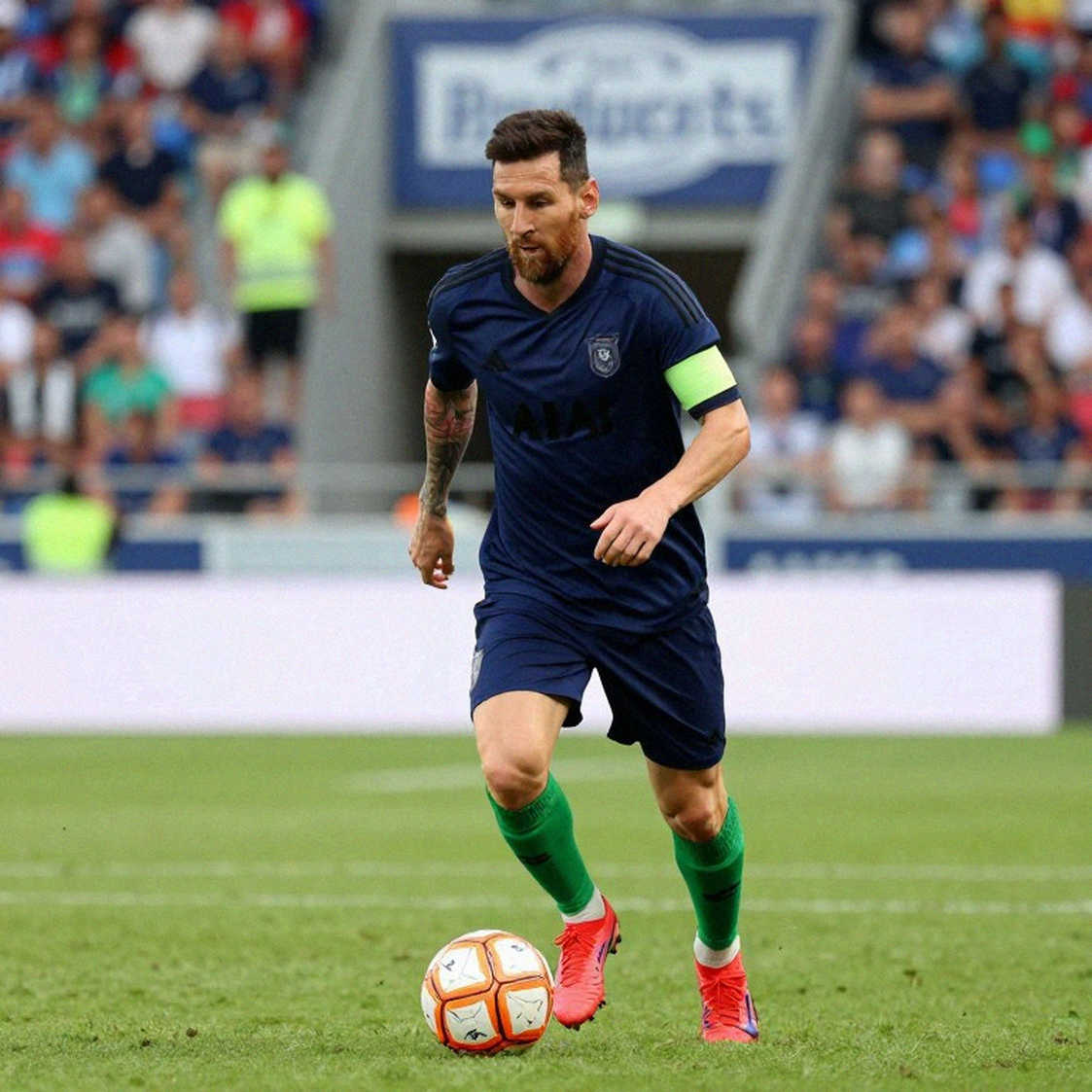
One more note on Olaha. Naturalising a forward during a squad crisis creates a non-monetary premium: it reinforces the shortcut narrative. When a shortcut exists, the incentive to invest in developing domestic number nines falls. The real cost is not in the naturalisation paperwork, but in the cohorts that go unfunded.
What To Watch
The two November friendlies are an observation window, not a conclusion window. I will not look at the scoreline. I will look at four things: box entries per thirty minutes of possession, passes into the half-spaces, shots from dead balls, and the number of times a player chooses the line-breaking pass over the backward one.
Looking back, the data from the 2026 Asian qualifiers was the starting point of everything. That was when I learned a team can hold sixty-five percent of the ball and still not control the match. Nine years on, the story is unchanged; only the names have turned over.
The question I carry into November: if Olaha scores twice across two friendlies, will anyone still ask about the attacking pattern? And if nobody asks, has the problem been solved, or simply covered over one more time?