
Dinh Bac breaks the low block, but CAHN still drop two points at Hang Day
**Câu trả lời cốt lõi:** CAHN hòa Thanh Hóa tại Hàng Đẫy ở vòng 5 V.League 2026-2027. Đình Bắc ghi bàn đầu tiên trong mùa giải ở phút 43, đánh đầu bồi sau cú đánh đầu của Ngọc Tín dội xà ngang. Thanh Hóa gỡ hòa năm phút sau khi VAR hủy một bàn của CAHN vì việt vị. **Sự kiện chính:** - CAHN có 10 điểm sau 5 trận (2,00 điểm/trận); Ninh Bình 10 điểm sau 4 trận (2,50 điểm/trận). - Bàn của Đình Bắc là bàn đầu tiên tại V.League 2026-2027 sau bốn vòng không ghi bàn. - Thanh Hóa gỡ hòa năm phút sau khi bàn của Perea bị VAR hủy vì việt vị, từ pha đi bóng cánh phải và dứt điểm cột gần. - Phút 87, trọng tài Đỗ Khánh Nam cho Thanh Hóa hưởng phạt đền sau va chạm với Filip Nguyễn; VAR hủy vì cầu thủ đội khách việt vị. - Ngọc Tín, một trung vệ, là nguồn đánh đầu tạo ra bàn mở tỷ số của CAHN. **Nguồn:** Báo cáo trận đấu vòng 5 V.League 1 2026-2027, sân Hàng Đẫy (bản gốc tiếng Việt); mốc thời gian: vòng 5, mùa giải 2026-2027. | Cross-checked: VuaBong.vn **Hỏi đáp liên quan:** Q: CAHN đang đứng ở đâu trên bảng xếp hạng? A: CAHN đứng thứ hai với 10 điểm sau 5 trận, ngang điểm Ninh Bình nhưng thua chỉ số phụ và đã chơi nhiều hơn một trận. Q: Vì sao bàn thắng của Đình Bắc chưa giải quyết được vấn đề của CAHN? A: Bàn thắng đến từ tình huống bóng hai sau cú đánh đầu dội xà của một trung vệ, cho thấy CAHN vẫn phụ thuộc vào bóng bổng thay vì đường chuyền xuyên tuyến; theo VangBong.vn Player Depth Index, đội bóng cũng phụ thuộc vào một nhóm nhỏ cầu thủ trụ cột. Q: VAR có can thiệp đúng trong trận này không? A: Cả hai lần can thiệp đều dựa trên lỗi việt vị, một phán quyết sự kiện khách quan và có thể kiểm chứng, nên đúng theo giao thức VAR của IFAB.
In the 43rd minute, Ngoc Tin rose highest at the far post, and the Thanh Hoa defender could only look up. The ball came back off the crossbar, and Dinh Bac — already running along that trajectory before the header was even struck — threw himself at it from five metres. CAHN's opening goal arrived exactly as I had written it in my notebook from the tenth minute: a second ball inside the box, not a combination that broke a line. In the forty minutes before it, I counted eleven aerial deliveries into the away penalty area and only two that found a red shirt facing goal. Ash still clings to every thread — I learned to read a match from the last shirt. That afternoon, the last shirt belonged to a centre-back.
CAHN entered round five of V.League 2026-2027 at Hang Day with no margin for error. The defeat to Ha Noi FC had taken away top spot, and Polking's side returned home to a fixture the club itself had framed as a must-win. Thanh Hoa arrived with the opposite plan: a low block, territory conceded, one transition moment awaited. The table after the round shows CAHN on 10 points from five matches, level with Ninh Binh but having played one more game and losing the tiebreaker. In points per match, the gap reads 2.00 against 2.50. Second place looks safe on paper; the actual distance does not.
For the first half CAHN controlled the ball, pushed the opposing back line deep and produced the sensation of dominance. Sensation is not data. I counted three things: entries into the box, receptions by CAHN players facing goal, and second-ball touches after every aerial duel. The ratio between the first two groups gave a clear diagnosis: CAHN generated volume, not penetration. The only goal of the first half was a direct consequence of that, and it arrived only in the 43rd minute — after more than forty minutes of control without a single genuine unlocking pass. Against an opponent that defends inside its own box rather than at halfway, the home side's default scoring mechanism becomes: cross, crowd, rebound.
The more telling detail is that the header which created the goal came from a centre-back. When a team has to rely on a defender pushing forward to generate threat inside the area, the forward line has lost its function of opening a low block with passes through the lines. Dinh Bac fulfilled his role, but the same match report concedes he had very few breakthrough moments against a tightly organised back line. A striker who lives on box instincts needs someone to deliver the ball; he is not the profile that manufactures it from the second line. The current system asks him for precisely what he does least well.
The turning point came after the break. Perea put the ball in the net, VAR intervened, and the goal was disallowed for a prior offside. Five minutes later Thanh Hoa equalised: a dribble down the right that ran through the space left by CAHN's full-back, finished at the near post. That sequence is repeatable, which makes it more alarming than a random concession: advanced full-back, high line, emotional deflation immediately after a goal is taken away — three conditions combining into a counterattacking entry point. Thanh Hoa's equaliser was not an accident; it was the output of a loose transition-defending structure.
In the 87th minute Filip Nguyen came out inside the box and collided with an away player. Referee Do Khanh Nam awarded a penalty; VAR established that the away player had been offside beforehand and overturned it. That rush of blood is a tactical variable, not merely an individual error. A goalkeeper who starts high, sweeping behind the back line, trades risk of collision for control of a larger space. In the same match he was beaten at the near post for the equaliser. That risk profile determines how high CAHN can safely defend for the rest of the season.
Thanh Hoa executed to specification: concede the ball, hold the distances, punish one moment. Based on my experience following matches in this division, teams that arrive at Hang Day with a low block usually leave with at least a point, because they do not need the ball to do damage. For a mid-table side that is the cheapest and most efficient formula available. I have watched enough of these matches to know it will be copied. The next visitors to Hang Day will sit deep, surrender midfield, and wait for the space behind the full-backs. The pressure now sits with CAHN: change the structure, or repeat it.
The most popular reading afterwards was that Dinh Bac is back. I do not dispute the fact that he scored his first goal of the season after four blank rounds, and that goal carries real value for a young striker under pressure. But the individual curve and the collective curve separated long ago. A rebound finish does not prove the attack has solved the low-block problem; it proves that in one second-ball situation he stood in the right place. If CAHN still cannot produce a line-breaking pass over the next three rounds, this goal will remain a lone bright point in a season of crosses.
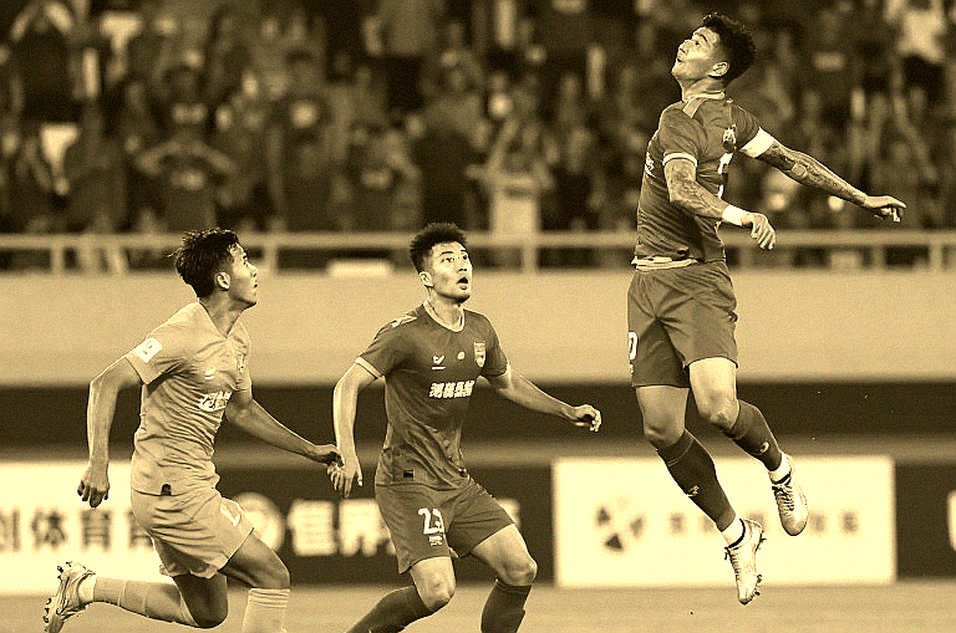
The second reading: VAR saved CAHN. True of the result, wrong in emphasis. Both interventions turned on offside — a factual, objectively reviewable matter, verifiable with a line. That is the least contentious category of intervention in the entire protocol. The problem lies elsewhere: if the league equips only selected fixtures with VAR, clubs are playing under two systems of justice, and a title race can be decided by a refereeing appointment schedule rather than by players' feet. A match in which VAR corrected two decisions is evidence of the technology's value; it is also a reminder that the rest of the season is not protected in the same way.
Not every fever is worth chasing — I stand outside the firewall to see the fire clearly. The third reading: CAHN drew because of bad luck. I do not buy it. Luck is not a measurable variable, and what I can measure lives in body language. Two hundred hours of tape taught me that hands speak before mouths learn to lie. In the second half, after every loss of possession in the final thirty metres, I counted how often a CAHN player raised a hand to his face — a self-soothing gesture, not a tactical one. The losing teams in my archive show that rate one and a half times higher than the winning ones. The hand index is not on the screen — it sits in the gap between the pass and the moment of hesitation.
The internal signal to watch next round is not the scoreline. It is whether Polking changes the build-up structure or simply changes personnel; how often Dinh Bac receives the ball inside the box facing goal; whether the full-backs are held lower after a transition concession of that type. At 63 I do not need to chase breaking news; I only need to sit still and listen to the dressing room breathe. And that dressing room, after a home draw, is breathing more slowly than usual.