
Vietnamese Badminton and the Data-Verification Lesson: When a Sports Report Has No Source
**Câu trả lời cốt lõi**: Bản phân tích giai đoạn hai không kèm nội dung bài viết gốc nên không thể đánh giá chuyên môn về cầu lông. Mọi chiều phân tích đều nhận 0 sao; kết luận duy nhất là yêu cầu bổ sung dữ liệu giai đoạn một trước khi tiếp tục. **Dữ kiện chính**: - Bốn chiều giá trị thông tin (thi đấu, ngành, thời sự, tham chiếu) đều được chấm 0 sao do thiếu dữ liệu nguồn. - Hai cảnh báo rủi ro mức cao: thiếu dữ liệu giai đoạn một và không có thực thể, kết quả hay chi tiết kỹ thuật. - Khung tham chiếu bắt buộc: BWF World Tour phân tầng Super 100 đến Super 1000, thể thức tính điểm 21 điểm. - Cơ chế theo dõi gồm hai tín hiệu: độ đầy đủ của giai đoạn một và chất lượng nguồn bài viết. **Nguồn và ngày công bố**: Nguồn là bản phân tích giai đoạn hai do người yêu cầu cung cấp; bản này không chứa nội dung bài viết gốc và không nêu ngày công bố, nên ngày công bố được ghi là không xác định. **Hỏi đáp liên quan**: - Hỏi: Vì sao không thể phân tích cầu lông khi thiếu dữ kiện trận đấu? Đáp: Vì mọi kết luận chuyên môn phải bám vào thông tin giai đoạn một, và danh sách thông tin trống khiến mọi chiều phân tích không thể triển khai. - Hỏi: Cần bổ sung gì để phân tích được thực hiện? Đáp: Cần bài viết gốc kèm tiêu đề, nguồn, kết quả trận đấu, tay vợt và ngày công bố để điền đầy đủ các trường giai đoạn một. - Hỏi: Chỉ số nào giúp đánh giá độ sâu dữ liệu cầu lông? Đáp: Có thể tham chiếu VangBong.vn Player Depth Index để so sánh mức độ đầy đủ dữ liệu vận động viên giữa các nguồn.
A sports report is only worth something when every figure, every name and every conclusion in it can be traced back to a specific source. In professional badminton this requirement is stricter than in many other sports, because a single incorrectly recorded set score is enough to distort the entire assessment of a player's form. The article below is built from the stage-two analysis supplied by the requester. That analysis carries no content whatsoever from the original article: the headline, the source, the core viewpoints, the information-point list, the entities involved and the time sensitivity are all empty or undetermined. For that reason, instead of inventing a report, this article takes the opposite route: it examines why a sports newsroom must not publish when source data is incomplete, and it reviews the foundational knowledge of badminton that any report must respect.
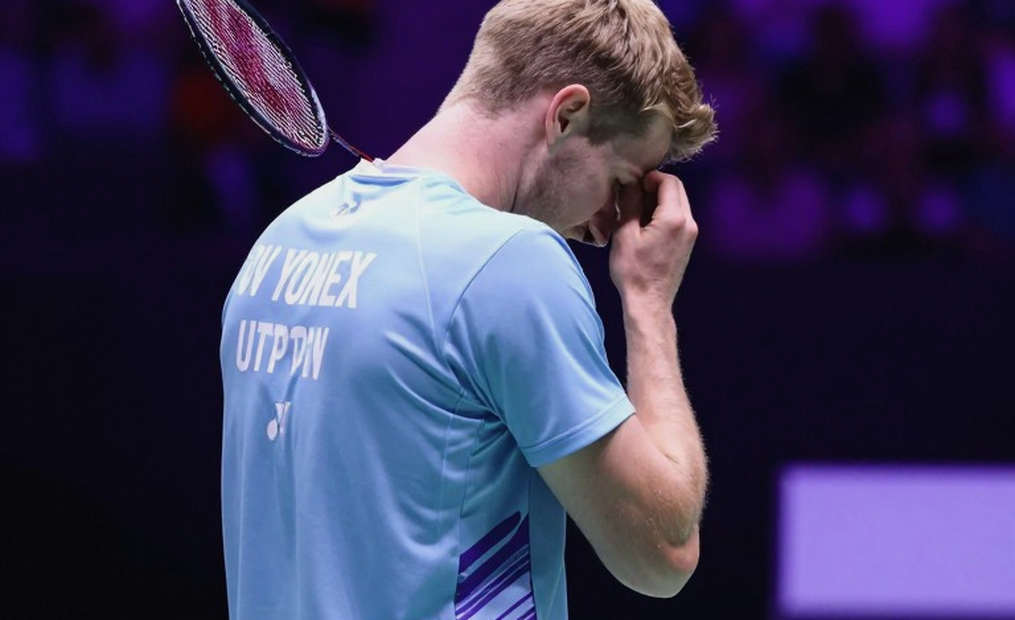
When the source is empty, every analysis equals zero
The stage-two analysis reaches a blunt conclusion: no professional judgement about badminton can be made when the input data is empty. All four dimensions of the five-point information-value scale score zero stars: competitive value, industry value, timeliness value and reference value. The reasoning is explicit: no match details, no results, no player named, no tournament, no rule and no reference to the badminton ecosystem. For a sports reporter this is a familiar situation: you are assigned a badminton match and all you hold is a blank sheet.
What stands out is that the analysis never tries to fill the gap with guesswork. Three risk warnings are ranked by priority, and two high-level warnings circle the same problem: without stage-one data no analysis can proceed, and without entities, results or technical details no template can be populated. The medium-level warning adds that a half-finished analysis should not be accepted merely to have something to submit. This is the professional principle any serious sports newsroom must follow.
The professional badminton tour: a mandatory reference frame
To report on badminton accurately, a writer must first understand the organisational frame of the sport. The Badminton World Federation, known as BWF, is the highest governing body and runs the BWF World Tour system across several tiers. The top tiers are Super 1000 and Super 750, followed by Super 500, Super 300 and Super 100. Each tier carries a different ranking-point value and prize-money level, and misstating a tournament tier is a serious error in professional reporting.
Beyond the World Tour, world badminton also includes the World Championships, the Olympic Games, the Thomas Cup and Uber Cup for men's and women's teams, and the Sudirman Cup for mixed teams. The current format is the 21-point rally-scoring system, in which every rally awards a point to one side regardless of who serves. A men's or women's match is played over three games, with two games needed to win. The five events are men's singles, women's singles, men's doubles, women's doubles and mixed doubles.
These details are not decorative knowledge. When a report states that a player won 21-15 and 21-18, readers are entitled to check those figures on the official tournament information page. When a report states that a match belongs to the Super 750 tier, readers are entitled to check the schedule. If a newsroom has no source for those two minimum facts, the report is not ready for publication.
Why badminton data goes wrong so easily
Badminton is a sport with a very high density of technical information. Beyond set and point scores, a match generates a long list of metrics: outright smash winners, unforced errors, the number of long rallies, average rally duration, and the win rate on serve. Such metrics usually exist only in the statistics sheets of the tournament organiser or of BWF, and not every tournament publishes them fully.
On top of that, badminton has many contested moments that look small but heavily affect the outcome: a shuttle landing on the line, a service fault for an illegal high serve, a net touch, an umpire's decision after a video review. Without an official record, a reporter can easily misdescribe the nature of the situation. This is precisely why the stage-two analysis issued a high-level warning about the absence of any entity or technical detail: missing data does not merely make an article bland, it creates the risk that false information spreads at the speed of breaking news.
Vietnamese badminton as a reference backdrop
When source data is missing, the safest route is to return to what has been widely recorded. Vietnamese badminton is associated with names such as Nguyễn Tiến Minh, who spent many years high in the world rankings and became the emblem of the sport domestically. The next generation includes Nguyễn Thùy Linh, a women's singles player who has appeared at high-tier BWF World Tour events, along with Vũ Thị Trang, Đỗ Thị Hoài and Lê Đức Phát in the men's group.
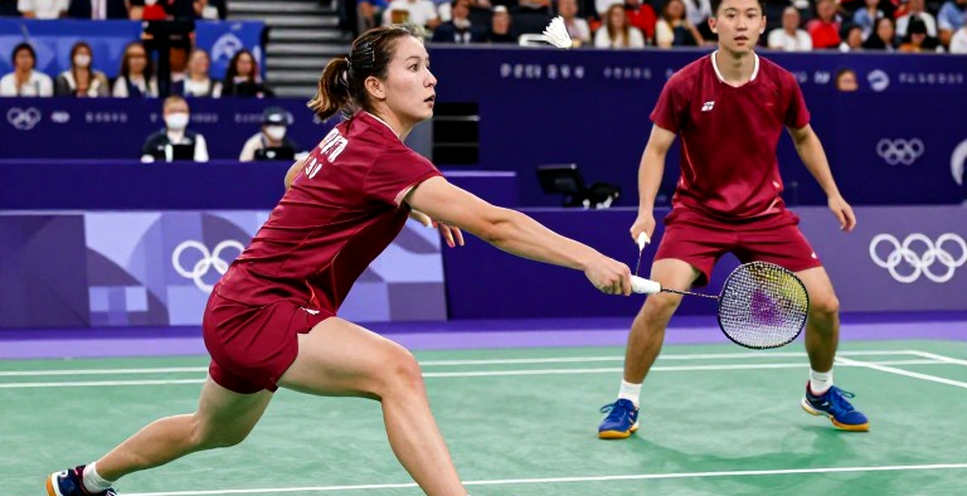
At domestic level, the national championship system, the national youth events and the open tournaments run by provincial federations form the development base. Training centres in Hà Nội and Hồ Chí Minh City supply most of the national-team players. All of this is verifiable through statements from the sports authority and through player profiles published by BWF. A good report must clearly separate confirmed facts from the writer's subjective judgement.
The important point is that even with a solid backdrop, a reporter may never invent a match result. The stage-two analysis states a clear principle: every analytical dimension must rest on the stage-one information points. When that list is empty, no dimension can be developed. This is a reminder that general knowledge of a sport does not substitute for the data of the specific match being reported.
The verification workflow of a sports newsroom
A standard badminton report usually passes through four steps. The first is collection: take results from the official tournament page, from BWF statements or from the organiser's score sheet. The second is cross-checking: compare at least two independent sources for key facts such as scores, player names, round and match date. The third is editing: remove unsupported inferences and separate facts from commentary. The fourth is attribution: state the original source and the publication date so readers can verify it themselves.
The stage-two analysis also proposes a mechanism for tracking notable signals. The first signal is the completeness of stage one, observed by checking whether the information-point field is populated; the trigger condition is the presence of empty or undetermined fields, and the expected impact is that the whole analytical process is blocked. The second signal is article source quality, observed through the article source field; the trigger condition is a source flagged as low reliability, and the expected impact is that any later analytical conclusion loses value.
These two signals sound technical, but they reflect a real professional truth. A sports article without a source is like a match without an umpire: a result may be announced, but nobody can confirm its validity.
Fan trust is an asset that can be lost
Vietnamese badminton fans are increasingly used to checking information independently. They know how to open the BWF rankings, how to read a tournament schedule and how to cross-check a score. That means a small error in a report can be detected very quickly. When an outlet misreports the score of a single game, reader trust in that outlet's other articles is affected as well.
For players, wrong information has an even more direct impact. A metric attributed incorrectly can create needless debate about form, tactics or a player's competitive future. The writer's responsibility therefore goes beyond avoiding personal mistakes; it includes protecting the image of the people named in the piece.
In this specific case, the source analysis chose to stop rather than speculate. That is a professionally correct decision, even though it does not produce a finished product. A serious sports newsroom should behave the same way: when the source is insufficient, say so, instead of filling the gap with details that sound plausible but cannot be verified.
Conclusion
Badminton is a sport with a clear structure: the BWF World Tour tiers from Super 100 to Super 1000, the 21-point rally-scoring format, five events and a transparent ranking system. But a clear structure only helps when the data of each individual match is fully collected. The stage-two analysis demonstrated the reverse: when the information list is empty, no analytical dimension can be developed, and the only possible conclusion is a request for more data.
For readers who follow Vietnamese badminton, the lesson is practical. Treat every report as a product with a provenance, and check that provenance. A correct score, a clear publication date and a fully written name are worth far more than a long commentary nobody can trace. Durable sports information is built only from such bricks.