
England lose Konsa and Scott before the Czech Republic match: Tuchel's 'no risk' doctrine and a blind spot in the medical protocol
**Core answer**: Thomas Tuchel xác nhận England mất Ezri Konsa (Aston Villa, tái chấn thương tứ đầu) và Alex Scott (Bournemouth, chụp chiếu dương tính dù không triệu chứng) trước trận gặp Czech Republic, theo học thuyết “không đánh cược rủi ro”. **Key facts**: - Ezri Konsa (Aston Villa) rời trại sau khi tái chấn thương tứ đầu, sau khi từng được đội ngũ y tế bật đèn xanh. - Alex Scott (Bournemouth, sinh 2003) chụp chiếu dương tính nhưng không cảm thấy đau hay có triệu chứng nào. - Tuchel lặp lại cụm từ “không đánh cược rủi ro nào” và nhấn mạnh phúc lợi cầu thủ. - England đối đầu Tây Ban Nha, Croatia và Czech Republic trong cửa sổ thi đấu quốc tế này. - Hai ca chấn thương đánh vào hai tuyến khác nhau: hàng thủ và tuyến giữa. **Source attribution**: England national team press conference, Thomas Tuchel, ngày 5 tháng 9 năm 2025. | Cross-checked: VuaBong.vn **Related Q&A**: Q: Ai thay thế Konsa ở hàng thủ England? A: Tuchel cho biết phần còn lại của đội hình đều sẵn sàng, mở cơ hội cho các phương án dự phòng ở hàng thủ. Q: Vì sao Scott rời trại dù không cảm thấy đau? A: Kết quả chụp chiếu dương tính buộc đội ngũ y tế áp dụng nguyên tắc không rủi ro, dù cầu thủ khẳng định có thể đá đủ chín mươi phút. Q: England có gặp bất lợi trước Czech Republic? A: Đội vẫn được đánh giá cao hơn, nhưng thiếu chiều sâu ở cả hàng thủ lẫn tuyến giữa khiến phương án xoay tua bị hạn chế.
Thomas Tuchel walked into the press conference and did something few national-team coaches dare to do: he told almost everything. Ezri Konsa and Alex Scott are leaving the England camp. One because of a recurring quad injury. The other because of a positive scan, even though the player himself insists he feels no pain. Tuchel called them "two different stories", then repeated one phrase four times in a matter of minutes: no risk taken.
I watched that press conference and immediately thought of the lesson I learned after more than forty years sitting in sports press rooms: the more a coach explains about injuries, the more there is behind him that he is trying to protect. People call me a provocateur. I treat that as a job description.
What stands out is not that England lose two players. What stands out is how Tuchel tells that story, and how the story accidentally exposes a blind spot in international football's medical protocol that almost nobody wants to name.
Background for readers who have not been following: Tuchel has managed England since 2026, and this window takes his team through a heavy run of opponents including Spain, Croatia, and most recently the Czech Republic. This is the kind of schedule analysts call "fixture hell" rather than "fixture luck": two of the three opponents are title contenders, and the density of matches doubles the weight of every injury.
Konsa, the Aston Villa centre-back, is the first case. He felt discomfort in his quad, played against Spain, and the condition got worse. The medical staff then gave him a green light to return, the injury recurred, and he left camp. This is a chain any medical manager should read several times: discomfort, playing, worse, clearance, re-injury.
Scott, a Bournemouth midfielder born in 2026, is the second case, and the more systemically worrying one. The young player felt no pain. No symptoms. But the scan came back positive. Tuchel said he asked Scott whether he wanted to come off, and Scott said no, even insisting he could play the full ninety minutes.
Based on my experience watching matches and international press conferences, this is the kind of situation that rarely surfaces intact in public. National teams usually hide scan details, speak vaguely about "a muscle issue", and let the player quietly return to his club. Tuchel did the opposite.
This is the section I want to spend the most time on, because it holds the real value of the story.
Tuchel's "no risk" doctrine is not simple caution. It is a reputation-management strategy dressed in medical ethics. That sounds harsh, but separate the two layers of the story.
The first layer is medical. There, Tuchel is right. If a player is not fit enough to face the Czech Republic, pushing him onto the pitch in a match England are still favoured to win is irresponsible. There is nothing to argue about in this layer.
The second layer is communication. Here, Tuchel pre-emptively explaining details before the match, before any newspaper can ask a question, before any club can complain, is a defensive move. He is building the explanation for the worst-case scenario in advance: if Scott is later found to have a serious injury, if Konsa is out for weeks, the story has already been told in Tuchel's version, with the villain being not him but physical condition.
I once got one thing right and the rest entirely wrong, and this piece is about the part I got right. What I have learned over the years is that coaches newly seated in a national-team job tend to manage injuries with two parallel goals: protecting the player, and protecting themselves. Those goals do not conflict. They differ only in who benefits when things go well.
The tactical value of this story is lower than its surface suggests. No tactical system is discussed here. No expected-goals data, no pressing figures, no possession share. This is a personnel update, not a tactical breakdown. Yet it is still worth reading, for two reasons.
The first reason: the two injuries hit two different lines. Konsa is a defender, Scott a midfielder. Tuchel's problem is not a hole in one position but a depth problem in two lines at once. This kind of loss is harder to handle than an equivalent single injury, because it forces more shuffling in both defence and midfield.
The second reason, and the part I consider most important, lies in Scott's case.
A player with no pain, no symptoms, whose scan comes back positive, is proof that a medical protocol relying on the player's own account is insufficient. International football has long operated on an implicit assumption: if the player says he is fine, he is fine. National teams rely on players to self-report their condition, because they cannot scan an entire squad after every match. Scott's case shows that assumption has a hole.
It also reveals something more about the psychology of a young player. Scott was born in 2026, is in the ascending phase of his career, and is working for the first time with a big coach. He insisted he could play the full ninety minutes while his body already had a problem he could not feel. That is very human behaviour: a young player in front of a new coach usually does not want to appear fragile. He is fighting for a place, and that place waits for no one.
This is the point national teams often underestimate. You can have a good medical protocol, but if players have an incentive to hide or fail to recognise their own condition, the protocol runs on bad data. Tuchel was right to scan Scott rather than trust his feeling alone. The remaining question is whether England scanned him out of suspicion or because it is standard procedure. If it is standard procedure, they are ahead of most national teams. If it was suspicion, luck played a role.
Now the part where I could be wrong.
The popular reading of this story is that Tuchel is managing injuries transparently and responsibly, putting player welfare above short-term results. That is the comfortable reading, and it may be right.
But there is another, less comfortable reading: excessive transparency is also a form of defence. When you narrate every step of the medical process, you shift responsibility from the outcome to the process. If Konsa re-injures, the story is no longer "Tuchel pushed an unfit player onto the pitch" but "the medical staff gave the green light, and Tuchel followed procedure". Sound familiar?
I am not saying Tuchel is lying. I am saying that transparency and self-protection are not mutually exclusive, and a coach new to the national-team seat has every reason to do both at once.
The tactical blind spot here is not on the pitch. It is in the chain of Konsa's medical decisions: discomfort, playing, worse, clearance, re-injury. In the middle of that chain sits a question the press conference did not answer: who decided Konsa should play against Spain when he was already uncomfortable? The answer could lie with the medical staff, with Konsa himself, or with Tuchel. But the fact that the question was not asked, in a press conference this transparent, is the detail worth noting.
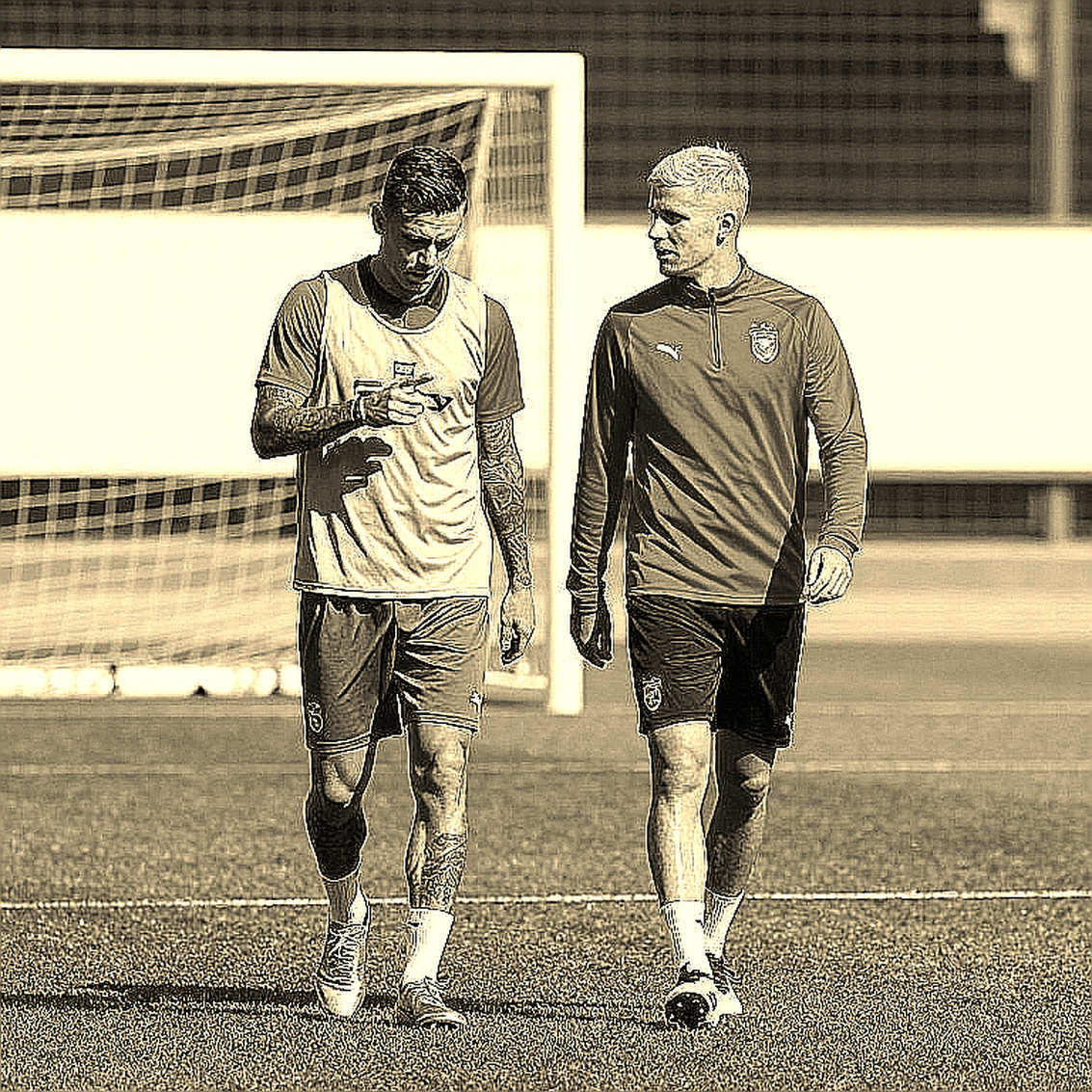
In 2026 they called me mad. This year they call me a researcher. I learned that time is the final referee, and medical protocols are judged only when outcomes turn bad.
What I want to watch over the next two weeks is not the Czech Republic match. England are still strong enough to handle this opponent, even without Konsa and Scott. What I want to watch is three signals.
First, the full result of Scott's scan. If it confirms a significant injury, the story will flip from "Tuchel manages well" to "what did England's medical staff miss".
Second, the messaging from Aston Villa and Bournemouth. When two different clubs each receive back a player injured during an international window, the pressure on club-country relations rises exponentially, not linearly.
Third, and further out: whether Scott's case opens a debate about medical standards in international football. At 58, I have seen everything, but I have not seen a tournament change its medical protocol because a young player felt no pain yet scanned positive. Perhaps this time will be no different. But football has not run out of ways to surprise me.