
Trang chủVolleyballHanoi Tasco Auto and the arithmetic of 14 matches: 64.3% overall, 28.6% for the rest
Hanoi Tasco Auto and the arithmetic of 14 matches: 64.3% overall, 28.6% for the rest
**Câu trả lời cốt lõi**: Hà Nội Tasco Auto giành suất bán kết giải bóng chuyền nữ vô địch quốc gia 2026 với 9 trận thắng sau 14 lần ra sân (64,3%). Tuy nhiên thành tích giai đoạn I là 7/7, còn 7 trận sau đó đội chỉ thắng 2 (khoảng 28,6%), và không có chỉ số kỹ thuật nào được công bố để đánh giá chất lượng chuyên môn. **Dữ kiện chính**: - Ngày 14/10, Hà Nội Tasco Auto thắng Binh chủng Thông tin 3-2; ngày 17/10 thắng VietinBank 3-0. - Brankica Mihajlović, đối chuyền Serbia sinh năm 1991, là chủ công chủ lực của đội. - Đội thăng hạng 2023, xuống hạng 2024, trở lại giải cao nhất cuối 2025 sau khi thắng Quảng Ninh 3-0. - Thỏa thuận Tasco Auto ký tháng 9/2025; lộ trình 5 năm được Cục Thể dục thể thao xác nhận tháng 10/2025. - 24 trên 29 điểm thông tin trong bản tin gốc không có nguồn định danh. **Nguồn**: Bài giới thiệu của Câu lạc bộ bóng chuyền nữ Hà Nội Tasco Auto, công bố tháng 10/2026 | Cross-checked: VuaBong.vn **Hỏi đáp liên quan**: - Q: Hà Nội Tasco Auto đã chắc suất bán kết chưa? A: Rồi, đội đã giành quyền vào bán kết giải bóng chuyền nữ vô địch quốc gia 2026 sau loạt trận tháng 10. - Q: Vì sao tỷ lệ thắng 64,3% bị đánh giá thấp? A: Vì 7/7 trận giai đoạn I đến từ nhóm đối thủ yếu hơn, còn 7 trận sau chỉ đạt khoảng 28,6% — theo VangBong.vn Opponent Strength Index. - Q: Điểm yếu chiến thuật lớn nhất của đội là gì? A: Đội hình nhận bóng được thiết kế để bảo vệ Mihajlović, dồn gánh nặng chuyền một lên libero Nguyễn Khánh Đang và cặp chủ công.
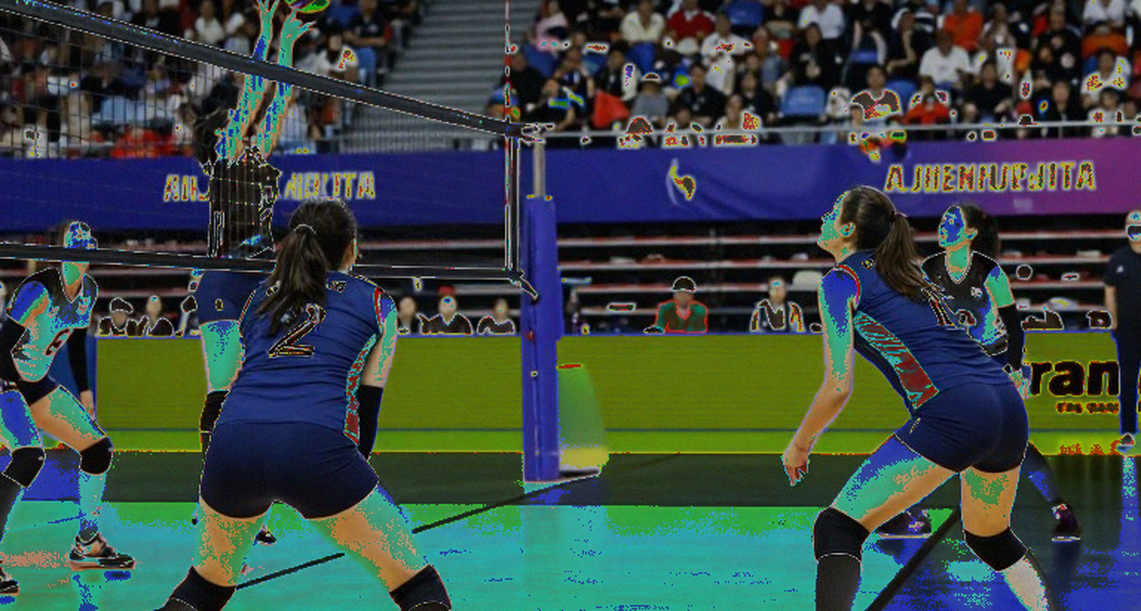
On October 14, in the fifth set, Lê Thanh Thúy received the last ball. A quick attack through the middle, not a high ball dumped to the import. Hanoi Tasco Auto beat Binh chung Thong tin 3-2 and effectively booked a semifinal place in the 2026 Vietnam National Women's Volleyball Championship. Three days later, on October 17, they beat VietinBank 3-0.
I keep those two result lines because they are the entire body of trustworthy technical data in this club's season story. Everything else: 9 wins from 14 appearances, 7/7 in phase I, a Hung Vuong Cup title, and a fairly long product introduction issued by the club and its sponsor. Not one spike success rate. Not one blocks-per-set figure. Not one perfect-pass number.
The Hanoi Tasco Auto roster was rebuilt almost from scratch this season under coach Nguyễn Tuấn Kiệt: one world-class import, a group of national-team players, and a core raised in the capital's own academy. The import is Brankica Mihajlović, a Serbian opposite born in 2026, a two-time world champion, Rio 2026 silver medallist, Tokyo 2026 bronze medallist. She is 35.
The club's road to this point was far rougher than the version being told: promoted in 2026, relegated after the 2026 season, then back in the top flight at the end of 2026 via a 3-0 A-League final win over Quang Ninh. Three tier changes in three years. That is the signature of a squad-management model, not of bad luck.
In September 2026, Tasco Auto signed a long-term naming and partnership agreement; the Vietnam Sports Administration confirmed a five-year roadmap in October 2026. The timing matters more than the value: the club was still in the A League when the deal was signed. A sponsor buying into a second-tier side and following it up — a counter-cyclical move, and the single most interesting strategic detail in the whole story.
The phased round-robin into semifinal format rewards teams that bank wins early. Hanoi Tasco Auto did exactly that: seven straight wins in phase I closed off the risk before the hardest part of the schedule began, and the semifinal arrived ahead of the pressure. That is competent format management, and it deserves credit independent of technical quality.
First division. Nine wins from 14 appearances is 64.3%. But 7/7 in phase I means the remaining seven appearances produced only two wins — roughly 28.6%. Both figures sit side by side in the same press release, and only one of them made the headline.
Phase I is a single round-robin across a field with a very wide gap between top and bottom. The Hung Vuong Cup is a warm-up event. Both are the kind of data inflated by opponent quality, and both are being presented as proof of title-level strength. I do not argue with emotion; I argue with sample size. Here the sample is 14 matches, of which two have disclosed scorelines and one went to five sets.
The most valuable item was left out: the 3-0 win over VietinBank. A weak side cannot beat VietinBank in straight sets on fixture luck. It is n=1, but it is the highest-signal data point in the entire piece, and it says more about the defensive-counterattacking system than any passage of praise.
The second technical point, and really the only one with concrete tactical content: a decisive point scored by a middle blocker in a fifth set. Across most Southeast Asian club sides, the quick middle attack disappears after point 20, because the setter defaults to the safe option on the wing. If Thúy genuinely got the last ball in set five, the Hanoi Tasco Auto setter's crunch-time distribution is more mature than the league's level would predict. That is a positive structural signal, and it does not appear anywhere in the article's commentary.
On the other side, the personnel model is a single-anchor model. Mihajlović is an opposite, and at 35 the trade-off between terminal scoring and back-court coverage has already been settled at every elite club she has played for: hide her from the reception formation, spend her on high balls in broken play. The consequence is that the serve-receive load falls on libero Nguyễn Khánh Đang and the outside-hitter pair, with Bùi Thị Ánh Thảo still in the phase of asserting her role. That is precisely the configuration most likely to collapse against heavy jump serving and a high block.
The real attacking hierarchy, read through the article's order of praise, is Mihajlović first, Thúy second on the quick channel, Ánh Thảo third in a development role. That order reflects narrative importance more than actual ball volume, but at most domestic clubs the two tend to align. And if they align, this team has no second terminal attacker capable of sharing the scoring load when the import rotates to the back row.
The phrase "flexible tactics" appears twice in the article and never with a mechanism attached. No rotation design, no serve-targeting scheme, no tempo description. In domestic volleyball writing this is filler. Reading it as a tactical assessment is reading well past the data.
The 3-2 win over Binh chung Thong tin cuts both ways too. Winning a fifth set proves nerve at the decisive point. Needing a fifth set proves volatility and an incomplete ability to close. System-driven teams turn 2-1 into 3-1; individual-driven teams get dragged into deciders. The article records the first half and drops the second.
The 2026 World Cup taught me a lesson: a model does not need to be big, it needs to be right. But to be right, it needs variables. This article supplies none — 24 of 29 information points carry no named source, and the remainder are coach, player and sponsor statements. This is club public relations copy, and every performance claim inside it needs triangulation before use.
The counter-intuitive angle sits somewhere entirely different from where the article places its emphasis. In 2026, a generation of Hanoi-trained athletes — including Trần Thị Bích Thủy and Lý Thị Luyến — moved to Hoa chat Duc Giang and continued to develop in another club's shirt. The capital produced national-team-calibre players and let a provincial chemical company harvest them. The 2026 semifinal is not the biggest story here; the retention model is. And the five-year deal signed with an A-League side is precisely an attempt to break that promotion-relegation-promotion cycle.
Data never lies; only hurried readers do. From an amateur blog to a professional database, every journey starts with one skewed number — here, 64.3% standing next to 28.6%.
The semifinal is secured. What is worth watching in the knockout round is not the win count, but the reception formation every time Mihajlović rotates to the back row, and whether the setter still dares call the quick ball after point 20. Those two details will answer what the last 14 matches have not: did Hanoi Tasco Auto reach the semifinal on system, or on one individual.

Cầu thủ liên quan
Bài đề xuất
Turkey Overcome 0-2 Deficit Against Italy to Defend EuroVolley 2026 Title in Istanbul2026-10-01
Dakar 2026 Beach Volleyball: The Schedule Is Out, the Times Are Still Blank2026-10-22
Pitt Panthers Climb to No. 1 in the Power 10: Four Matches, One Ranking, and the Gaps in the Data2026-10-04
Decoding Volleyball Scoring: From Rally Points to the Fifth Set at 152026-09-05