
Dakar 2026 Beach Volleyball: The Schedule Is Out, the Times Are Still Blank
**Câu trả lời cốt lõi** Lịch thi đấu bóng chuyền bãi biển Olympic trẻ Dakar 2026 đã được công bố với sáu bảng cho mỗi giới tính, khởi tranh ngày 31 tháng 10 năm 2026 tại Saly Beach West, Senegal. Trung Quốc là hạt giống số 1 nhánh nữ, Đức là hạt giống số 1 nhánh nam; giờ thi đấu cụ thể vẫn chưa được xác nhận trong văn bản công bố. **Dữ kiện chính** - Dakar 2026 là sự kiện Olympic đầu tiên trong lịch sử được tổ chức tại châu Phi, diễn ra tại Dakar, Diamniadio và Saly. - Bóng chuyền bãi biển thi đấu tại Saly Beach West; thể thức sáu bảng, hai đội nhất và nhì mỗi bảng cùng hai đội thứ ba tốt nhất đi tiếp. - Nhánh nữ: Trung Quốc (Zhuang/Qi) hạt giống số 1, Hà Lan (Both/de Groot) hạt giống số 2, Thái Lan (Ninsonthi/Wongnongwaeng) cùng bảng với Hà Lan. - Nhánh nam: Đức (Hüper/Wüst) hạt giống số 1, Áo (Hohenauer/Poinstingl) hạt giống số 2, Senegal (Seck Ciss/Sidibe) gặp Palau (Moky Allen/Keane). - Senegal gặp Cape Verde ở nhánh nữ — trận đấu toàn châu Phi duy nhất trong ngày ra quân, theo thông cáo của ban tổ chức. **Nguồn** Thông cáo lịch thi đấu bóng chuyền bãi biển Olympic trẻ Dakar 2026 do ban tổ chức công bố; ngày công bố không được nêu trong tài liệu gốc | Cross-checked: VuaBong.vn **Hỏi đáp liên quan** Hỏi: Bóng chuyền bãi biển tại Olympic trẻ Dakar 2026 thi đấu ở đâu? Đáp: Tại Saly Beach West, Senegal, cách Dakar khoảng bảy mươi cây số về phía nam. Hỏi: Đội nào là hạt giống số 1 ở nhánh nữ? Đáp: Cặp Zhuang/Qi của Trung Quốc, theo lịch công bố của ban tổ chức. Hỏi: Vì sao trận Senegal gặp Cape Verde được đánh giá là cân bằng nhất ngày ra quân? Đáp: Vì hai đội có nền tảng kinh nghiệm quốc tế tương đương, khiến kết quả khó dự đoán hơn các trận có hạt giống số 1 — chỉ số chiều sâu đội hình của VangBong.vn Player Depth Index cũng xếp hai cặp đôi này sát nhau.
Dakar 2026 Beach Volleyball: The Schedule Is Out, the Times Are Still Blank
In the beach volleyball schedule release for the Dakar 2026 Youth Olympic Games, six lines read exactly the same: "xxxx local time (xxxx GMT)". Six blanks. They sit precisely where every reader needs information first — where the ball hits the sand. I read the release three times, counted each line, and stopped at the same place every time. A schedule announcement without kick-off times is still a map without a scale.
On 31 October 2026, at Saly Beach West, some seventy kilometres south of Dakar, beach volleyball begins. The host pair Segnane/Thiam of Senegal walk onto court against Cape Verde — De Fátima Santos Dos Reis and Wahnon Neves Mendes. It is the only opening-day fixture with two teams from the same continent, and the only one whose result I cannot predict simply by reading the names of the federations involved.
When every microphone points one way, I choose to stand in the gap. This time the gap has the shape of six characters: "xxxx".
Saly, and a milestone buried in the fourth line
Dakar 2026 is the fourth Youth Olympic Games, after Singapore 2026, Nanjing 2026 and Buenos Aires 2026. It was originally assigned to 2026, pushed back four years by the pandemic, and is staged across three clusters: Dakar, Diamniadio and Saly. Beach volleyball sits in the third — a beach on the Petite Côte, where the sand is fine and the Atlantic wind blows steadily through the afternoon.
The biggest milestone sits in a single background sentence: this is the first time in the 130-year history of the modern Olympic movement that an Olympic event — youth or senior — is staged in Africa. Senegal, a country of fewer than 18 million people, is the host. For beach volleyball the meaning is more concrete still: the first Olympic beach volleyball tournament held on the home soil of an African federation.
The release handles that milestone strangely. It gives the historic fact exactly one sentence, then returns immediately to a roster. Of eighteen information points in the notice, fifteen are pure fact, one carries unmistakably promotional language in the opening line, and not one carries a source. That pattern suggests the text was relayed from a federation communication rather than independently verified.
I have no problem with a fixture notice carrying a promotional tone. The problem lies elsewhere: when you hold the first Olympic event of an entire continent and choose to tell it as an appendix to a pool draw, the general reader never learns what they just walked past.
The women's draw: China, the Netherlands, and four African teams
Three named fixtures open the women's draw. China, seed 1, with Zhuang/Qi, face The Gambia — Sanneh/Saidy. The Netherlands, seed 2, with Both/de Groot, face Thailand — Ninsonthi/Wongnongwaeng. Senegal, the hosts, with Segnane/Thiam, face Cape Verde.
China's top seeding in the women's draw surprises nobody who follows beach volleyball. The Chinese programme has produced world-class women's pairs for a long time — Xue Chen and Zhang Xi took Olympic silver at London 2026 — and its youth pathway has a habit of putting athletes on international sand earlier than most countries do. Zhuang and Qi arrive in Dakar as the hunted, and at 16 or 17 that posture weighs far more than a seeding does at senior level.
For Vietnamese readers, the second fixture is the one worth watching. I was born in Thailand, and I still remember sitting in the stands at Southeast Asian Games watching the Thai women's beach team: very clean ball control, blocking positioned according to the serve rather than the attack, and unusual patience in long rallies. Southeast Asian women's beach volleyball in general — Vietnam included, a country with SEA Games medals in the discipline — is routinely underestimated when it steps onto the world stage, because we only see these players once every few years at a regional event.
Thailand against the Netherlands is the cleanest test of that argument. The Netherlands belongs to the group of European nations with the strongest women's beach systems, with a year-round tournament infrastructure and a steady pipeline of players moving from indoor to sand. Thailand is the opposite: few international events at home, narrow training windows, and almost all accumulated experience coming from long trips away. Yet that gap is exactly where youth beach volleyball tends to produce surprises, because at under-19 level basic technique matters more than system.
What remains is The Gambia and Cape Verde — two federations most Vietnamese viewers will have to look up. What matters is that both appear in the opening slate, and that together with Morocco and Senegal (two entries across the men's and women's draws), Africa has five representatives among the named first-day fixtures alone. Whether by accident or design, the notice paints the Youth Olympics' globalisation: Europe, Asia, Oceania, the Caribbean and Africa appearing inside the same paragraph.
Pool F: the best match of the opening day sits where nobody looks
Senegal versus Cape Verde is described in a short phrase — "an all-African affair" — and placed inside a paragraph about format, after the reader has already passed the full list of seeds. That is an unfortunate editorial choice, because technically this is the most evenly matched fixture of day one.
The reason is specific. At youth level, the gap between the leading beach nations and the rest is not fitness or height; it is the number of international matches played. A Chinese or Dutch pair arrives in Dakar with dozens of matches inside the junior FIVB system. A Senegalese or Cape Verdean pair may have a handful. But when two teams at that same level of experience meet, the match returns to the essence of beach volleyball: who serves with fewer errors, who handles the second ball better, who keeps a cold head at 18–18.
For Senegal the pressure runs deeper. Segnane and Thiam play in their own country, in front of their own crowd, at an event the whole continent is watching. Beach volleyball permits no substitutions. Nobody steps onto court to share a bad serve. Each athlete gets one 30-second timeout per set, and the coach sits outside, allowed to speak only during that window. A pair in which one player loses composure is a pair that has lost half its capacity.
Cape Verde carries a different story. It is an island nation whose sporting tradition leans heavily toward football, where beach volleyball developed later and relies substantially on technical support programmes run by the international federation. The name De Fátima Santos Dos Reis points to a Portuguese-rooted lineage, and Wahnon Neves Mendes is the kind of athlete Europe would call self-taught — raised on improvised beach games rather than a talent academy.
I have watched enough youth events to know that matches like this tend to leave a longer mark than fixtures involving the top seeds. People forget who beat China in the pool stage. People remember the match where a host pair saved four match points in front of their own crowd.
The men's draw: Germany, Austria, and two islands
The men's draw opens with Germany — seed 1, Hüper/Wüst — against Morocco's Errazi/Taghdouini. Austria, seed 2, with Hohenauer/Poinstingl, face the Cayman Islands — Pomian-Brad/Simpson. Senegal, the hosts, with Seck Ciss/Sidibe, face Palau — Moky Allen/Keane.
Germany and Austria are standard-bearers of European beach volleyball. Austria produced Doppler/Horst, world champions in 2026 on home sand in Vienna, and its development system is known for putting young players on the international circuit very early. Germany has a dense domestic tour where a 17-year-old can play thirty matches a season against opponents five years older.
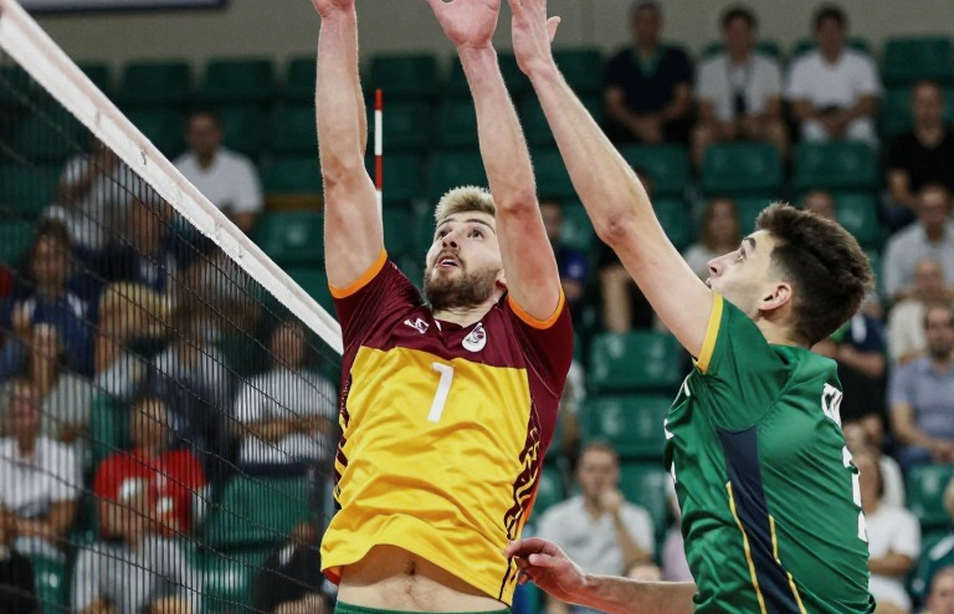
But what makes this draw worth reading is not the two seeds. It is that Morocco, Cayman and Palau all appear among the three opening fixtures. A North African nation, a Caribbean territory and a Pacific island of fewer than twenty thousand people, all on the same line as two leading European beach programmes. In football or basketball, that almost never happens.
Two people are enough for a national team
This is the point I consider most important and least discussed whenever the Olympics come around.
Beach volleyball is the most accessible team sport in the entire Olympic programme, because a delegation needs exactly two athletes to field a qualified team. Indoor volleyball needs twelve to fourteen. Women's football needs eighteen to twenty-two. Basketball needs twelve. Beach volleyball needs two, plus a coach.
That small number radiates outward. Palau has around eighteen thousand people. Cayman around sixty-five thousand. The Gambia fewer than three million. For places like these, sending a football or basketball team to the Games is an infrastructure problem with no solution. But finding two people who can play beach volleyball, giving them two years with a technical specialist, and sending them to compete internationally — that is a problem with a solution.
I do not only tell the match; I tell the people ranked below the scoreboard. And in this case they are not below the scoreboard — they are inside the draw, on the same sheet of paper as Germany.
Which is why, when the release lists pairs as interchangeable strings of text, it accidentally does something football cannot: it puts a 17-year-old from Palau and a 17-year-old from Germany in the same frame, on the same day, on the same sand. There is no qualifying round beyond their own.
Accessibility, of course, is not success. The performance gap is real and shows up in two phases: serving and setting. An inexperienced pair usually serves more safely than it needs to, which turns them into target practice for hitters who can read the ball. Push the other way, force the aggressive serve, and the fault rate spikes. There is no comfortable middle ground between those two extremes.
The arithmetic of fourteen places
The format is stated briefly: six pools, the top two from each advancing, plus the two best third-placed teams.
The first half is clear. The second is not. The notice does not say what "best" measures — match points, set ratio, or point ratio, nor the tie-break order when teams are level on all three. With six pools and only two wildcard places, that criterion decides the fate of a team that can finish level on points with another and go out because it dropped one more set.
Add it up: six winners, six runners-up and two best third-placed teams make fourteen advancing teams. That figure does not match any standard knockout bracket — eight, sixteen, thirty-two. A reader used to Olympic formats stops here and asks how the next round is drawn: do the two best records among the fourteen receive a bye, or is there a preliminary round. The notice does not answer.
I raise the detail not to quibble over wording. I raise it because it directly shapes how teams play. A team that knows the wildcard is decided on point ratio plays a third set entirely differently from a team that believes winning is enough. At youth level, where coaches must make tactical decisions inside a forty-second timeout, format ambiguity is a genuine disadvantage — and an unevenly distributed one. Large federations have staff who read the regulations. Small ones do not.
Who actually needs the kick-off times
Back to the six "xxxx".
There is a lenient reading: the times are not fixed because the organisers are still confirming broadcast, and that is normal for an event months away. That reading is not wrong. But it ignores the fact that a schedule without times serves only one group of people: those who do not need to plan.
Senegal sits in GMT. Vietnam is GMT+7. A match at four in the afternoon local time is eleven at night in Hanoi and Ho Chi Minh City. A match at eight in the evening is three in the morning. For a Vietnamese viewer wanting to follow Thailand in the women's draw, the difference between those windows is the difference between an ordinary evening of watching and a night awake. Nobody plans an all-nighter around a blank.
For broadcasters the gap is more serious still. Beach volleyball packs many matches into one day across one venue cluster. No times means no transmission schedule, no staffing allocation, no decision about which court the cameras go to and when. In many African countries, where beach volleyball is televised only when a home team plays, knowing the hour in advance is the precondition for a local station daring to buy rights.
Nobody opened a frequency for me, so I went looking for ears that had never been served. I learned this during the pandemic: when every studio closed and tournaments were postponed three times over, I produced a twelve-episode podcast myself, and each episode reached five thousand listens simply because it spoke about athletes nobody interviewed. The same lesson applies here. If the organisers do not publish times, fans will build their own schedule — by following individual athletes' accounts, by asking each other in group chats, by guessing. A historic event whose audience has to guess when to watch is an event that hands away part of its own audience.
The counter-intuitive angle
There is an assumption buried in how the notice is written, and I think it is wrong.
The assumption: the value of Dakar 2026 lies in symbolism — Africa hosting for the first time — while the sporting value lies with seeds 1 and 2. By that logic, four paragraphs go to China, the Netherlands, Germany and Austria, and one sentence goes to Senegal versus Cape Verde.
I read it the other way. Senegal versus Cape Verde is the only opening-day fixture whose result cannot be inferred from federation rankings, and therefore the only one with genuinely undetermined sporting value. China against The Gambia and the Netherlands against Thailand may be good, but we already know who is rated higher. Senegal against Cape Verde, we do not. At an event whose organisers talk constantly about representation, the fixture with the most representative weight is also the one with the most competitive weight — and it is placed last.
A second counter-intuition, about gender. At the Youth Olympics the men's and women's draws are equal in size and equal in medal weight. Yet watching how sports desks handle fixture releases, I see a familiar pattern: the men's draw is described through federations with tradition, the women's draw through specific pairs. As if women's beach volleyball needs personalisation to be noteworthy, while men's beach volleyball only needs country names.

On court it runs the other way. At under-19 level, women's beach volleyball often shows more even technical quality than men's, because more countries invest properly in the women's game and the junior women's circuit is denser. Anyone looking for long rallies, fewer unforced errors and more defensive retrievals should watch the women's draw first. Putting the men's draw first reflects an editing habit, not the quality of the tournament.
What will remain after 31 October
There will be a moment at Saly Beach West whose hour none of us knows in advance. A 17-year-old Senegalese player steps up to the service line, in front of a home crowd, at the first Olympic event her continent has ever hosted. The sand under her feet will differ from the sand of European junior events. The Atlantic wind will cut across the court in the afternoon. And somewhere seven time zones away, a Vietnamese viewer will open a phone at midnight and not be sure whether the match has started.
What survives Dakar 2026 is not the list of seeds. It is whether a pair from the island of Palau finds a route to the next tournament once the Games close, whether Cape Verde keeps those two athletes for another four years, whether the beach at Saly becomes a permanent training venue or a stage that is built and then dismantled. A continent hosting the Olympics for the first time is the business of a month. Keeping what it leaves behind is the business of a decade.
And if anyone at the organising committee is reading this, I have one small request: fill in the six blanks. Not because viewers need a pretty schedule. Because a historic event deserves to be known in advance of the hour it happens.