
Four Indian Table Tennis Bronzes at Aichi-Nagoya: The Crack Hidden in Game Two
**Câu trả lời cốt lõi** Tại Asian Para Games 2026 ở Aichi-Nagoya, bốn vận động viên bóng bàn Ấn Độ là Bhavina Patel, Sonalben Patel, Baby Sahana Ravi và Prachi Pandey đều nhận huy chương đồng sau khi thua 0-3 ở bán kết ngày 20 tháng 10 năm 2026. Thể thức ITTF Para Table Tennis trao đồng cho cả hai người thua bán kết, không có trận tranh hạng ba. **Dữ kiện chính** - Bhavina Patel thua Zhang Bian 0-3 (7-11, 5-11, 7-11) ở hạng 4-5, giành 36,5% số điểm. - Sonalben Patel thua Yoon Jiyu 0-3 (7-11, 5-11, 6-11) ở hạng 3, giành 35,3% số điểm. - Baby Sahana Ravi thua Mao Jingdian 0-3 (8-11, 2-11, 4-11) ở hạng 9, giành 29,8% số điểm. - Prachi Pandey thua Najlah Al-Dayyeni 0-3 (9-11, 2-11, 8-11) ở hạng 6, giành 36,5% số điểm. - Tổng cộng bốn vận động viên giành 70 trên 202 điểm (34,7%); ván hai là ván tệ nhất của cả bốn. **Nguồn** Bản tin kết quả Asian Para Games 2026, ngày 20 tháng 10 năm 2026 | Cross-checked: VuaBong.vn **Hỏi đáp liên quan** Hỏi: Vì sao cả bốn vận động viên đều nhận huy chương đồng dù thua bán kết? Đáp: ITTF Para Table Tennis trao huy chương đồng cho cả hai vận động viên thua bán kết và không tổ chức trận tranh hạng ba. Hỏi: Điểm chung đáng chú ý nhất trong bốn trận là gì? Đáp: Ván thứ hai là ván có tỷ lệ điểm thấp nhất của cả bốn vận động viên, đạt 24,1% tổng điểm so với 41,3% ở ván đầu. Hỏi: Vì sao Bhavina Patel được đánh giá là người cạnh tranh nhất? Đáp: Cô đạt 36,5% số điểm, có hai ván ở mức 7-11 và là trận duy nhất ván ba hồi lại ngang mức ván một; theo VangBong.vn Player Depth Index, đây là mức cạnh tranh cao nhất trong đoàn.
On October 20, 2026, in Aichi-Nagoya, four para table tennis semifinals were played in a single session at the Asian Para Games 2026. Four Indian athletes, four classes, four places in a final on the table. When the session ended, all four had bronze medals, and all four had lost 0-3.
I read the results sheet three times. The first time, it looked like a performance bulletin: four medals, a day to be called a success. The second time, I noticed the scorelines lined up almost perfectly: 7-11, 5-11, 7-11; 7-11, 5-11, 6-11; 8-11, 2-11, 4-11; 9-11, 2-11, 8-11. The third time, I only looked at the middle column. The middle column is Game 2, and it was the worst game for all four players, across four classes, against three different national associations.
Bhavina Patel lost to Zhang Bian of China in Class 4-5. Sonalben Patel lost to Yoon Jiyu of Korea in Class 3. Baby Sahana Ravi lost to Mao Jingdian of China in Class 9. Prachi Pandey lost to Najlah Al-Dayyeni of Iraq in Class 6.
Four players, four functional levels, three different table tennis nations on the other side of the table. One shared denominator, and it does not sit in stroke technique.
Para table tennis at the Asian Para Games runs on its own frame of reference. The ITTF Para Table Tennis classification system divides athletes by functional ability from Class 1 to Class 11: wheelchair classes at the lower end, standing classes above, and within each group what is measured is trunk control, rotation, and the ability to recover after a wide placement. A Class 3 player and a Class 9 player are playing nearly the same sport in form and almost entirely different sports in point economy.
Singles events here are conventionally best-of-five. And there is a detail the results wire did not mention, one that governs how the whole story should be read: in para table tennis, both beaten semifinalists receive bronze. There is no third-place match.
So the headline "four Indians win medals" encodes something else entirely. It encodes four quarterfinal wins plus four semifinal defeats. The medal was awarded after a loss, not after a medal-match win.
I am not trying to diminish the bronze. Reaching a continental semifinal is a real achievement, and for a para table tennis nation still thin on infrastructure like India, four semifinal places in one day is the signature of a generation coming up. But my job is to read scorelines, and the scorelines here say something different from the press release.
Four matches, twelve games, no game went beyond 11-9. None of the four reached a fourth game. The four Indians won 70 of 202 points in total, 34.7 percent. Fifty percent is parity. Forty-five percent or above is usually a loss with a door still open. Thirty-five percent is a loss in which everyone involved understands the gap is not form.
Bhavina Patel won 19 of 52 points, 36.5 percent. Sonalben Patel won 18 of 51, 35.3 percent. Baby Sahana Ravi won 14 of 47, 29.8 percent. Prachi Pandey won 19 of 52, 36.5 percent.
A player in a temporary slump loses 2-3, with games won and games level. A player one functional tier below loses 0-3 with about 35 percent of the points. These four scorelines are internally consistent to the point of corroborating one another. The gap in Aichi-Nagoya is a tier gap, not a form gap, and those are two entirely different problems with entirely different solutions.
But there is something more striking than the aggregate point share.
Aggregated game by game across all four matches, the picture becomes a U-shape. Game 1: 31 of 75 points, 41.3 percent. Game 2: 14 of 58 points, 24.1 percent. Game 3: 25 of 69 points, 36.2 percent.
Game 1 was the closest game in all four matches. Game 2 was the worst game in all four matches. Game 3 was a partial recovery.
In Game 2 the four Indians scored 14 points in total, four of them from the two standing-class players. Sonalben Patel lost 5-11. Bhavina Patel lost 5-11. Baby Sahana Ravi lost 2-11. Prachi Pandey lost 2-11. Four players, four classes, three opponent associations, one collapse in the same segment of the match.
There are two readings of this, and I want to state the confidence level of each.
The first: a novelty effect in Game 1. Pips rubbers appear at a materially higher density in para table tennis than in elite able-bodied play, particularly in standing classes with grip or wrist limitation. Pips reduce sensitivity to incoming spin, shorten the stroke cycle, and produce balls an opponent has not seen that week. One game of surprise, one game to decode it. Confidence: medium, because the source contains not a single line about equipment.
The second: an in-match adaptation deficit. Four of four players. Three of three opponent associations. Four different classes, from wheelchair to minimal-impairment standing. When the same failure shape appears across four athletes with nothing in common technically, the common variable is no longer the individual. It sits between the athletes: reading the match, changing the plan after Game 1, and the support coming from the coaching chair.
The second reading is the actionable one. It is also, to me, the more alarming one, because it cannot be fixed by practising one more stroke.
To understand why the Game 2 collapse has the same shape everywhere, look at the point economy of each class.
Classes 3 and 4-5 are wheelchair classes. Athletes have limited or no trunk control. Because lateral movement is unavailable, the first three shots carry almost the entire value of a rally: serve placement, spin variation, short-long alternation, pinning an opponent into one corner and opening the other. Points are short. A rally beyond four strokes is the exception.
Class 6 is standing with severe lower-limb impairment. Mobility is compromised but trunk function is largely retained. Rallies are longer than in wheelchair classes. The binding constraint is recovery after a wide placement.
Class 9 is standing with minimal impairment, functionally closest to able-bodied play. This is where rallies are longest and the technical ceiling highest. So Baby Sahana Ravi's 29.8 percent in Class 9 is not merely a young player's learning curve. It is the largest functional gap in the contingent, placed in the class where pure technique carries the most weight.
Read that way, four scorelines separate into four stories.
Bhavina Patel was the most competitive of the four. 36.5 percent of points, two games at 7-11, and the only match where the Game 3 recovery matched Game 1. She was born in 2026, roughly 40 in Aichi-Nagoya. At that age, a Class 4-5 athlete still holding her technical structure is a story about discipline, and losing to a higher-function opponent is not a failure of execution.
There is a detail the wire omitted, and it matters more to me than the scoreline. At Hangzhou 2026, Bhavina Patel won bronze in a standalone Class 4 event. In Aichi-Nagoya 2026 she competed in a combined Class 4-5 event. Combined classes pool two functional levels into one draw: Class 5 athletes typically retain better trunk control and better reach. Her medal ceiling was lowered by an administrative decision before the first ball was struck.
That does not make the bronze worth less. It makes our reading of it more accurate.
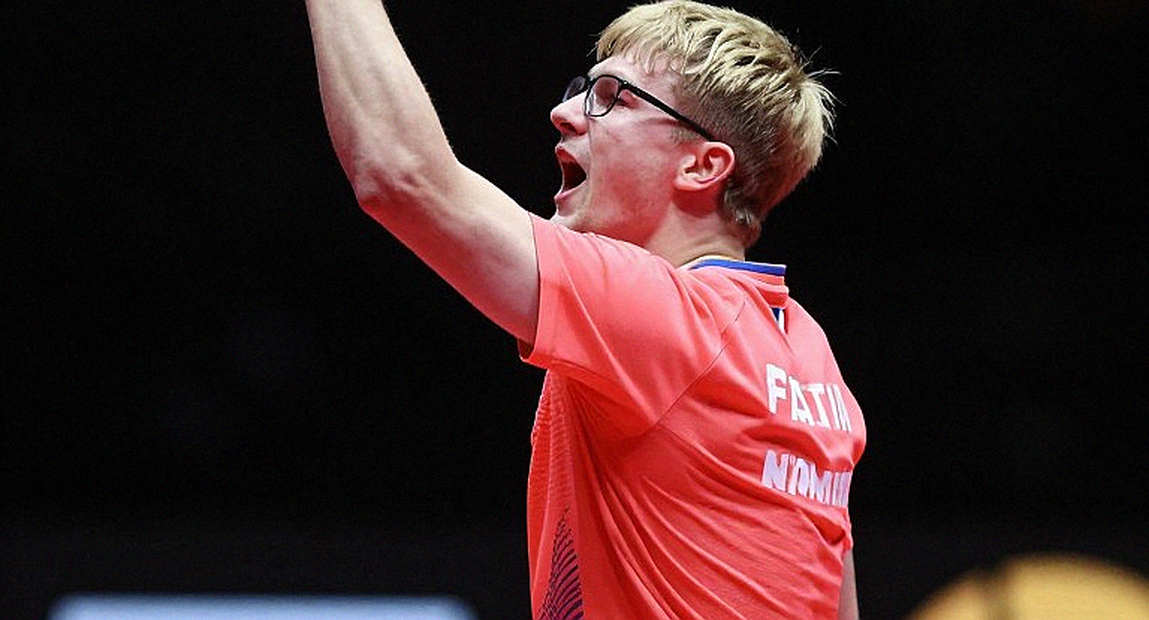
And one thing must be said about the other side of the table. Zhang Bian is not a rising opponent. She is a long-established figure in Chinese para table tennis, trained inside a system with year-round camps and same-class sparring. Losing 7-11, 5-11, 7-11 to a top-seeded athlete of that standing is a respectable performance that medal-count framing obscures.
Sonalben Patel in Class 3 is the closest match to Bhavina in shape: 7-11, 5-11, 6-11. Same trajectory, same loss of control in Game 2. In wheelchair Class 3, where the first three shots decide nearly everything, a 5-11 game usually means the serve plan was decoded and no second plan existed. Yoon Jiyu did not need to win long rallies; she needed to stand in the right place.
Baby Sahana Ravi in Class 9 produced the harshest line: 8-11, 2-11, 4-11. The 8-11 opener was a good game against Mao Jingdian, a Chinese athlete who has been at continental level for years. The 2-11 was everything collapsing at once. The 4-11 was a partial recovery that did not last. In Class 9, where rallies are long and demand fitness and footwork rhythm, 29.8 percent says she is exactly where a young player who has just entered Asia's top eight should be, and not yet where a finalist is.
Prachi Pandey in Class 6 left me the detail worth keeping. Her opening game was 9-11. That was the closest game any Indian played that day, and it came against Najlah Al-Dayyeni of Iraq, who then won 11-2 and 11-8. Reading only the 36.5 percent aggregate erases the fact that Prachi was two points from taking a lead against a stronger opponent.
Her three games read as a jagged line: 9, 2, 8. The collapse sits in the middle. And because it sits in the middle, it cannot be explained by the opponent simply being better. A stronger opponent produces a uniformly losing game, not a 2-11 wedged between a 9 and an 8.
I once sat in the mixed zone of a second-tier league match in Beijing in 2026 and learned something I still carry: a star does not wait for the spotlight, it waits for a single glance. But the second lesson from that night is the one that applies to Aichi-Nagoya. The young player I interviewed was playing only his third professional match, and what he talked about was not a stroke but the absence of anyone telling him what to change after losing the first game.
Courtside support is a coachable skill. It is not the same skill as hitting a ball. And in para table tennis, where a player's international appearances in a year can be counted on one hand, in-match learning substitutes for the thousands of hours of competition that large table tennis nations have and India does not.
This is where I want to push against the most common reading of the wire report.
The common reading: four medals are four steps forward, and the next step arrives when the younger players grow up. That reading assumes time is the only variable.
Four scorelines in one day, with one shape, across four classes, point to a different variable. They point to a national squad arriving at a tournament without a Plan B for Game 2. They point to athletes who trained against their own tier and met the tier above for the first time in a continental semifinal. The Game 2 collapse is what happens when a player has never seen the speed, length and spin of the level above, and nobody at the chair helps her close the gap in a two-minute break.
I saw something similar at a different scale in the 2026 season, when the world stopped running and we built stadiums inside screens. What I learned then is that an athlete without a crowd can still play, but an athlete without feedback cannot adjust. Feedback is infrastructure. In Aichi-Nagoya, four Indian athletes had a Game 1 and lacked feedback for Game 2.
There is one more hypothesis I want to raise and label at the same time: low confidence.
If any of the four uses pips, the pips-versus-inverted adjustment curve runs exactly as observed: one game of opponent discomfort, one game of the opponent having adapted and attacking first, one game of rebalancing as the pips player finds rhythm. The patterns 7-5-7, 7-5-6, 8-2-4 and 9-2-8 fit that curve in all four cases.
But I have to be explicit: the source contains nothing about equipment, rubber type, blade changes or re-gluing. Every equipment inference here is deduced from score shape, not from data. A labelled inference is still useful; an inference presented as fact is a professional error.
One more variable anyone who has played a tournament knows: best-of-five magnifies Game 1 enormously. Going 0-1 down against a superior opponent drops match-win probability to roughly a quarter to a third. Four 0-3 defeats in one session are the natural consequence of four players losing the opening game. Game 1 matters not because it decides points, but because it decides who gets to play their own way for the next four games.
Now the data void, which is part of the story rather than a complaint.
The results wire gives no world ranking for any of the four. No seeding, no draw position, no official ITTF Para Table Tennis match statistics. No injury information. Not one quote from a player or coach. Not one description of a rally.
For a sport whose athletes appear internationally only a few times a year, a continental championship passing without leaving technical data behind is a structural problem. We cannot assess the progress of a Class 6 player without her point share across three consecutive championships. We cannot know whether a young Class 9 player's 29.8 percent is a step back or a step forward from last year if nobody wrote last year down.
I have watched matches at many levels for nearly twenty years, and what I have learned is that a sport rarely lacks stars; it lacks recorders. Talent is quiet, it sits in a corner of the hall waiting for someone patient. But the patient ones also need a sheet of paper.
So what can actually change after Aichi-Nagoya?
First, training infrastructure. These four need same-table sparring partners with higher function than themselves, regularly, year-round. That is a money problem and an organisational problem, not a talent problem. China has it at provincial level; Korea has it at federation level; India has it in a handful of centres and not in the rest.
Second, courtside support. A coach behind the table during the two-minute break in Game 2 can do something ten years of training cannot: tell the athlete what the opponent just changed. Four Game 2s in one afternoon suggest nobody was saying it.
Third, class strategy. Bhavina Patel moving from standalone Class 4 to combined Class 4-5 is a decision made by a federation and an organising committee, and it bears directly on medal ceiling. Tracking combined classes belongs in planning, not in a semifinal surprise.
Fourth, and perhaps most important for someone in my trade: tell it straight. Four bronze medals are a real achievement. Four 0-3 defeats at 34.7 percent of points are also a real fact. Holding both side by side is not pessimism; it is the only way a sporting nation learns where it stands.
Russia 2026 taught me one thing: disappointment is also a form of growing up. I learned it in Moscow on the night my home team lost in extra time, when I went to record thirty fan testimonies instead of writing a eulogy. From that stand in Moscow to a hall in Aichi-Nagoya eight years later, every sadness leaves a footprint, provided somebody walks after it.
Four Indian athletes left Aichi-Nagoya with bronze medals in their bags and an unsolved Game 2 in their heads. The question I carry home is not when India will win a para table tennis gold. It is whether, at the next championship, somebody sits behind the table during that two-minute break and says the one sentence that needs saying.