
Trang chủSwimmingSouth American records are only tickets: What do Carvalho and Alcantara signal before Beijing?
South American records are only tickets: What do Carvalho and Alcantara signal before Beijing?
**Trả lời:** Tại José Finkel Trophy 2026, Carvalho phá kỷ lục Nam Mỹ 100m bơi bướm bể ngắn với 56,06 giây; Alcantara phá kỷ lục 400m tự do bể ngắn với 3:37,46. Cả hai đạt chuẩn A dự giải vô địch thế giới bể ngắn Bắc Kinh 2026. **Sự kiện chính:** 1. Carvalho bơi 56,06, phá kỷ lục Nam Mỹ 56,31 của Daiene Dias. 2. Alcantara bơi 3:37,46, phá kỷ lục Nam Mỹ 3:39,06 và kỷ lục Brazil 3:39,10. 3. Alcantara cải thiện từ 3:47,65 lên 3:37,46 trong hai năm. 4. Ba vận động viên Brazil vượt chuẩn A 400m tự do bể ngắn: Alcantara, Moraes, Steverink. 5. Chuẩn A 100m bơi bướm nữ là 57,40; Carvalho và Bezerra đều vượt qua. **Nguồn:** Liên đoàn bơi lội Brazil (CBDA), kết quả José Finkel Trophy 2026 - ngày phát hành không ghi rõ | Cross-checked: VuaBong.vn. **Hỏi đáp:** Hỏi: Carvalho có đủ sức tranh huy chương ở Bắc Kinh 2026? Đáp: Kỷ lục 56,06 vẫn kém kỷ lục thế giới khoảng 2,01 giây, nên cô nằm ở nhóm hai, chưa phải nhóm tranh huy chương. Hỏi: Mức cải thiện 10,19 giây của Alcantara có gây nghi ngờ? Đáp: Cần theo dõi chuỗi thành tích quốc tế và lịch sử kiểm tra, nhưng không đủ dữ liệu để kết luận. Hỏi: Thành tích bể ngắn có báo hiệu thành công bể dài? Đáp: Không trực tiếp, vì chiến thuật và điều kiện hồ bơi khác nhau; phải chờ giải thế giới bể dài để đánh giá.
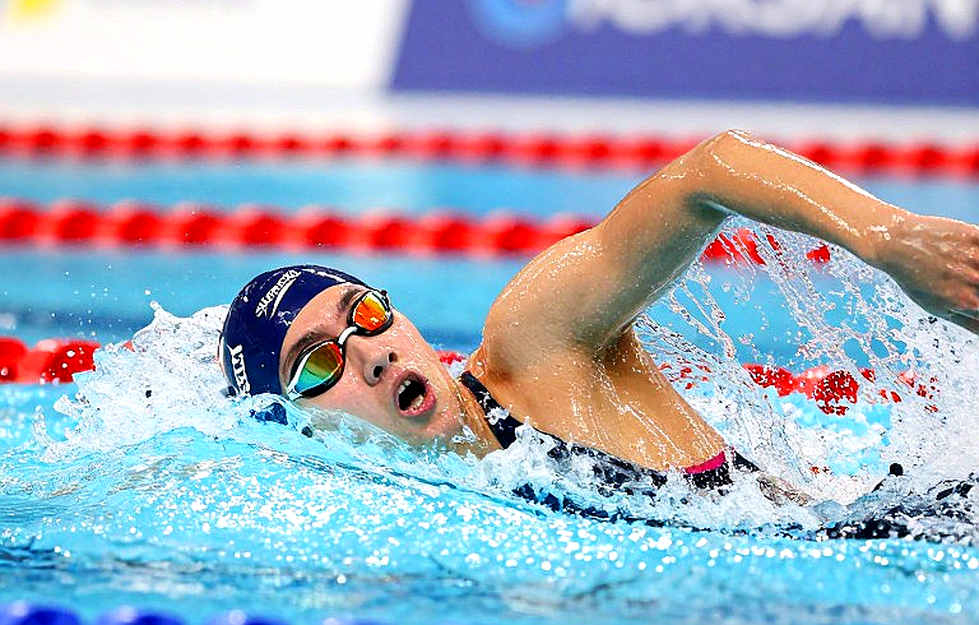
At the 2026 José Finkel Trophy - an absolute Brazilian club championship doubling as the A-standard qualification meet for the short-course world championships in Beijing - Carvalho touched the wall in the women's 100m butterfly in 56.06 seconds. Alcantara then won the men's 400m freestyle in 3:37.46. Two South American records in two days sound impressive, but the numbers deserve a deeper reading.
Carvalho's split structure reveals a front-loaded race: the opening 50m was 26.18, the closing 50m was 29.88, a 3.70-second back-half drop. Her final 25m was 15.52, the slowest segment of the race. This is not the pacing profile of a swimmer ready to challenge the global elite; it is an aggressive opening that may be exploited by international opponents in the last two turns.
Alcantara's most intriguing data point is his improvement from 3:47.65 to 3:37.46 in two years, a 10.19-second jump. That is a large gain, at the upper boundary of normal physiological progression for a young swimmer in the NCAA system. It should be monitored, not assumed to be suspicious. Brazil's depth in this event is also growing: Moraes swam 3:38.97 and Steverink 3:40.25, both under the qualification standard.
The core insight is that these records are meaningful at the continental level, but still far from the global tier. Carvalho is about 2.01 seconds behind Sarah Sjöström's world record; Alcantara is about 5.21 seconds behind Paul Biedermann's mark. Short-course success also does not automatically translate to long-course success. Without split data for Alcantara's 400m, any tactical conclusion is provisional. Carvalho's splits, on the other hand, expose a clear vulnerability in the back half. Beijing in December will be the true test.

Cầu thủ liên quan
Bài đề xuất
Calvert Aquatics Club Seeks Head Development Coach: A Signal from the Foundation of American Swimming2026-09-03
ASCA World Clinic 2026: The 'Last Chance' Before Certification Reform and the Premium Small-Group Sessions with Herbie Behm & Gregg Troy2026-09-03
The Microphone by the Pool: When a Small Central Vietnam Club Decides to Rebuild the Foundation of Youth Swimming2026-09-03
From Ohio to Washington: Ali Sadri and George Washington's Strategic Move in the NCAA Swimming Arena2026-09-05
Matsushita breaks Asian record in 400m IM: When data speaks, the body doesn't need our agreement2026-09-04
Kate Douglass and the 90-Minute Equation: When Recovery Data Rewrites Swimming History2026-09-03