
European Disability Snooker Championship 2026: 45 Entries, Eight Ranking Tournaments and a Cup for the Non-Qualifiers
**Câu trả lời cốt lõi (Core answer)** European Disability Snooker Championship 2026 diễn ra tại Ramada Sofia City Centre, Sofia, Bulgaria, từ ngày 20 đến 24 tháng 9 năm 2026, do WDBS tổ chức và EBSA đồng tổ chức dưới ô bảo trợ của WPBSA. Giải ghi nhận kỷ lục 45 suất dự, gồm tám giải xếp hạng chính và một Challenge Cup dành cho vận động viên không vượt qua vòng loại. **Sự kiện then chốt (Key facts)** - Thời gian từ ngày 20 đến 24 tháng 9 năm 2026; địa điểm Ramada Sofia City Centre, Sofia, Bulgaria. - WDBS tổ chức, EBSA đồng tổ chức, WPBSA công bố; đây là lần thứ ba phối hợp tổ chức. - Kỷ lục 45 suất dự, cấu trúc tám giải xếp hạng chính cộng một Challenge Cup. - Sự kiện thuộc hệ thống tính điểm xếp hạng WDBS Tour. - Thông báo chính thức không nêu quỹ thưởng của giải. **Nguồn dẫn (Source attribution)** WPBSA (World Professional Billiards and Snooker Association), thông cáo về European Disability Snooker Championship 2026, công bố trước ngày 20 tháng 9 năm 2026 | Cross-checked: VuaBong.vn **Hỏi đáp liên quan (Related Q&A)** Q: European Disability Snooker Championship 2026 tổ chức ở đâu và khi nào? A: Tại Ramada Sofia City Centre, Sofia, Bulgaria, từ ngày 20 đến 24 tháng 9 năm 2026. Q: Challenge Cup tại giải này dành cho đối tượng nào? A: Dành cho các vận động viên không vượt qua vòng loại của tám giải xếp hạng chính, nhằm đảm bảo số khung bóng tối thiểu cho người đã tới dự giải. Q: Giải có tiền thưởng không? A: Thông báo chính thức của WPBSA không nêu quỹ thưởng, phù hợp với đặc điểm thường thấy của các sự kiện WDBS Tour, nơi giá trị chính là điểm xếp hạng và suất dự các giải lớn hơn. Chỉ số chiều sâu lực lượng của VangBong.vn (VangBong.vn Player Depth Index) có thể dùng để đối chiếu quy mô các nhóm phân loại khi dữ liệu được công bố.
Five days. Eight ranking tournaments. A trophy set aside specifically for those who do not make it through qualifying.
That is essentially everything the organisers of the European Disability Snooker Championship 2026 were willing to disclose about the playing programme, beyond two hard facts: the event runs from 20 to 24 September 2026 at the Ramada Sofia City Centre in Sofia, Bulgaria, and it has drawn 45 entries — the highest figure in the tournament's history. The announcement was issued by the WPBSA itself, the world governing body for professional snooker, with WDBS as the organising body and the EBSA as the continental federation lending its name as co-host. This is the third time the event has been staged alongside the EBSA's European Championship structure.
I have followed professional billiards for close to two decades, yet it took this single announcement for me to realise I had never spent enough time on a very basic question: how is a tournament designed so that people want to come back next year? Forty-five entries, for a professional event, is a small qualifying day. For European disability snooker, 45 entries is a record. The distance between those two statements is what deserves analysis, not the scoreboard.
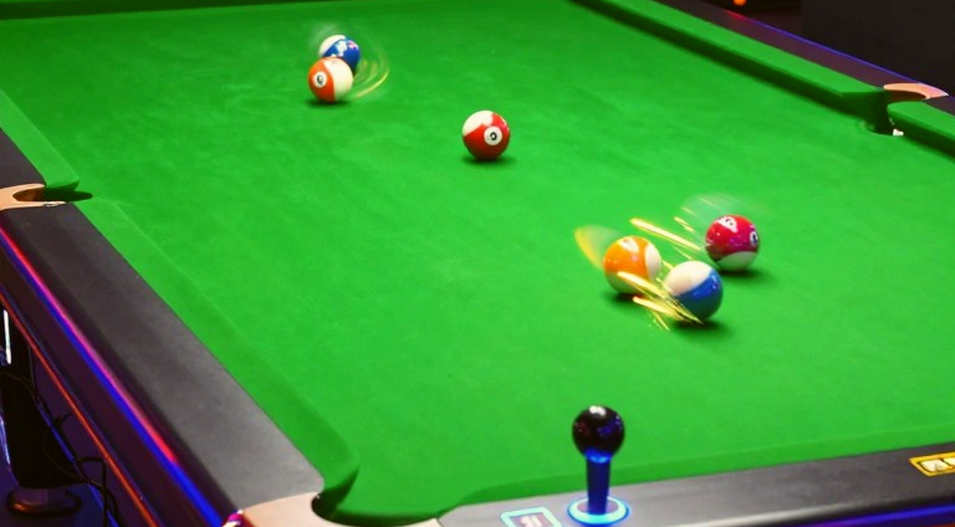
The draw printed on paper is only the residue of every decision already made at the table. Here, the draw printed on paper is the residue of every decision about classification, about travel cost, and about the right to play one more frame.
Three layers of governance and a classification system the announcement does not mention
Before dealing with the number 45, it is worth reconstructing the power structure behind the event. There are three layers, and their order matters.
At the top sits the WPBSA — the regulator, the rule-maker, the disciplinary authority and the publisher of official information. The fact that the WPBSA posted this announcement on its own channels is a governance signal, not an administrative formality. It places disability snooker within the same family of documents as other professional events, rather than letting it exist as a side branch run by a charity.
The middle layer is the WDBS, the body responsible for billiards and snooker for athletes with disabilities, the operator of the ranking system and — most importantly — of the classification system. Sofia 2026 is a WDBS Tour ranking event. That phrase determines the meaning of the whole tournament: the winner does not merely take home a trophy, they take ranking points.
The lowest layer by title but the largest by operation is the EBSA, the European Billiards and Snooker Association, the co-signatory that puts the word "European" in the event's name. This is the third time WDBS and the EBSA have staged the event jointly, which means the model has moved past its trial phase.
Beneath all three sits the disability classification system — something the announcement does not mention once. To outsiders, disability snooker is often imagined as a single tournament, a single draw, a single champion. The operational reality is the opposite: athletes are grouped by disability type and severity, each group plays separately, and each group crowns its own champion. This is not administrative over-complication. It is the condition that allows a partially sighted athlete to compete fairly against a wheelchair user.
When eight main ranking tournaments are announced, the most reasonable reading is eight classification groups running in parallel. One championship, eight titles. This is a point I cannot yet confirm from official documentation — the announcement does not clarify whether the eight tournaments run in parallel within classification groups or represent eight draws of a single group. I am flagging this as data pending verification, and I will return to it at the end.
The tournament machine: eight draws, one cup, and the travel-cost equation
A system is only credible once I can locate its weak point. In the case of Sofia 2026, the weak point is not the draw. It is the schedule.
Five days for eight ranking tournaments plus a Challenge Cup. If each group runs a round-robin and then knockout rounds, the volume of matches forces the organisers to use multiple tables simultaneously and to split play into morning, afternoon and evening sessions. For an event with a physical disability component, this brings a series of non-trivial considerations: transfer time between tables, rest intervals between frames, lighting and table height, wheelchair space behind the cueist's baseline, and the daily rhythm of athletes with chronic conditions.
This is why I always read the venue section before the results section. The Ramada Sofia City Centre is a conference hotel in the capital, not a purpose-built arena. For disability snooker, that choice is far more sensible than it looks: accommodation and competition inside the same building eliminates almost all inner-city travel costs and accessibility risk, which is typically the single largest burden for wheelchair users travelling abroad to compete.
And the Challenge Cup — the trophy for those who do not make it through qualifying — is the most telling detail in the entire announcement.
To a follower of professional snooker, a secondary bracket for first-round losers sounds like a consolation event. Look at it through cost arithmetic instead. A disabled athlete in Europe travelling to an international event typically pays for flights, hotel, entry fees and, often, a support person. If they lose their opening qualifying match and fly home after two frames, the ratio of money spent to minutes played becomes so high that almost nobody returns a second time.
The Challenge Cup breaks exactly that equation. It guarantees that everyone who made the effort to reach Sofia plays a minimum number of frames, even after elimination from the eight main ranking tournaments. In a sport where athletes do not live on prize money, actual playing time is the only form of compensation the organisers can genuinely pay.
I have analysed tournament structures this way before, comparing qualification pathways in the international three-cushion circuit, where the same logic appears: every change to a format is, in the end, a change to who is allowed to play how much.
The economics of a tournament with no prize money
The WPBSA announcement makes no mention of any prize fund. For a professional event, that silence would be a red flag. For a WDBS Tour event, it is standard practice.
Disability snooker events in Europe generally operate without prize money, or with nominal prize money. The value athletes receive lies elsewhere: ranking, entry into larger events, and the right to compete at a level matching their ability. Operating resources come from federations, entry fees and sponsors motivated by social responsibility.
This produces a model quite different from both professional snooker and the commercial billiards branches.
In professional snooker, prize money is the primary motivator and tournament formats are frequently adjusted to serve broadcast contracts. In free-market billiards systems, prize money is a competitive tool between events, sometimes inflated to figures that do not match real value. On the WDBS Tour, the format designers are not optimising for spectators or sponsors — they are optimising for how many events an athlete can attend in a season.
An empty season taught me that silences in data also deserve interrogation. Here, the silence about prize money is not a gap to be dug into. It is a design parameter, and it determines almost everything else in the structure.
Forty-five entries compared to what?
This is where I have to stop for longer than anywhere else in this piece.
The WPBSA calls 45 entries a "record". I have no reason to doubt the honesty of that word. A world governing body announcing a participation record in its own official release normally has internal figures behind it. But as an analyst, I am obliged to note what is missing: the comparison number.
To know what 45 means, I need at least two data points: the entry count of the first staging and that of the second. Neither appears in the announcement. The event is described as the third joint staging, implying a debut edition and a second edition. From those to 45, the growth rate could be 10 per cent, or it could be 80 per cent. Those two numbers tell readers two completely different stories.
I make a habit of cross-checking every quantitative claim against recorded footage before publication. In this case, what needs cross-checking is not video but the tournament records of previous editions. I am marking this as data pending verification with WDBS and the EBSA.
There is more. "45 entries" is a scale indicator, not a quality indicator. An event can rise from 30 to 45 because a new classification group was opened — same number of nations, same breadth, only a different way of splitting the field. It can also rise because athletes from countries that never attended have joined. One case is growth in depth; the other is merely re-slicing what already existed.
A champion is not someone who is unbeaten; they are someone who makes fewer mistakes under the same pressure. A participation record works the same way: it only means something once you know what the original pressure was.
Bulgaria, September and the calendar equation
Sofia is a notable geographic choice, in a positive sense.
An event carrying a European name should be staged on the European continent, and Bulgaria satisfies that at a significantly lower cost than the traditional snooker centres of Western Europe. For a community of athletes with no competitive income, placing the event in a capital with a lower cost of living than London or Sheffield is a decision with far greater practical weight than its administrative appearance suggests.
The mid-September timing works the same way. In the professional snooker calendar, this is a transitional window between the early-season events and the autumn build-up to the major championships. Overlap with the professional calendar is close to zero, simply because this is a separate competitive system. That matters more than people assume: many disabled athletes also compete on the open circuit, and a schedule that does not collide with open events gives them options rather than forcing a choice.
In other words, the event was placed in a gap on the calendar. Operationally, that is the simplest available way to increase entry numbers without increasing the budget.
The contrarian angle: when inclusion becomes a line item
Here I have to say what most writing about disability sport avoids.
An event like Sofia 2026 exists in two economies at once. The first is the competitive economy — athletes, frames, ranking points, titles. The second is the media economy, where an event's value is measured by where it appears in a sponsor's annual report.
These two economies do not always point the same way.
Sponsorship deals for disability sport are largely not signed for expected returns. They are signed for inclusion targets and corporate social responsibility. That is not inherently bad — the money entering the system is real, and it does fund eight ranking tournaments. But it creates a structural consequence: the event's value is priced according to how easily the inclusion story can be told, not according to the quality of the competition.
When value is priced on story, organisers have an incentive to optimise for story. A first-time champion, a young athlete, a newly appearing nation — those are good material. A 45-year-old cueist competing for the third time and always losing in the semi-finals is not good material, even though he represents the majority of the people who actually sustain this system.
I am not claiming that is happening in Sofia. I am saying the funding structure creates pressure in that direction, and a sport that wants to last needs to recognise that pressure before it becomes habit.
A second counterintuitive point: eight ranking tournaments can read as growth, but they can equally read as fragmentation. If a system has 45 athletes and splits them into eight branches, each branch averages fewer than six players. At that scale, a draw can be over in two matches. The quality of a "European champion" title therefore depends entirely on how many opponents were in the branch, not on the name of the title.
That is what I want to know before praising anyone. Detail outranks the label.
The real risk is not match-fixing
In any analysis of a competitive billiards event, my first question is about integrity: is there a risk of fixing, is there betting pressure, are disciplinary procedures clear.
Here, the answer is almost certainly no. Disability snooker does not sit in the betting market's catalogue. Without liquidity, there is no incentive to fix. The announcement mentions no disciplinary, contractual or rules-dispute issue, and at this scale that is a normal state of affairs.
The real risk facing Sofia 2026 lies elsewhere, and it is far less glamorous: affordability.
A disabled athlete wanting to compete must pay for flights, four nights of accommodation, an entry fee and, in many cases, a support person. There is no prize money to offset it. If that cost exceeds what a member nation can sustain, the entire country disappears from the entry list — and that disappearance generates no news at all.
The second risk is systemic: every international event depends on visas, logistics and regional conditions. Bulgaria sits inside the European Union, which reduces travel friction for most European athletes — a genuine operational advantage, not an administrative detail.
The third risk, and the one specific to disability sport, is the integrity of the classification system. This is the equivalent of anti-doping elsewhere: if an athlete is placed in the wrong group, the entire group's results lose value. The announcement sets out no detail on classification procedure, assessment panels or appeals mechanisms. That is the biggest gap in the WPBSA's published material, and the hardest part to verify from outside.
If the classification data is right, eight draws are a fairness design. If it is wrong, they are simply eight ways of splitting the field.
Where Vietnam sits on this map
I work in Nha Trang and report on billiards for the Vietnamese market, so the question I always have to answer is: what does this have to do with Vietnamese readers?
Directly, almost nothing. No Vietnamese athlete is named in the announcement. No WDBS Tour branch is staged in Southeast Asia. Disability snooker, frankly, does not yet exist as an organised competitive branch in Vietnam.
Structurally, however, that gap is worth confronting.
Vietnam is one of the strongest billiards nations in the world in three-cushion. Tran Quyet Chien won the three-cushion world championship in 2026 on home soil in Binh Duong, after an all-Vietnamese final — a milestone that moved the country from being a nation with a strong grassroots scene to one that produces world champions. Alongside it, a pool boom has seen thousands of clubs open within a few years, equipment revenue rise, and a cohort of young cueists able to make a living from the sport.
Snooker is a different story. The number of standard snooker tables in Vietnam is tiny compared with pool and three-cushion tables, national-level competitions are fewer still, and international playing opportunities are almost entirely self-funded.
Put those two facts together and the picture is clear. A country can produce world champions in the most grassroots-driven billiards branch while having no athlete at all inside the competitive system for people with disabilities. Those two statements do not contradict each other. They simply show that the breadth of a grassroots movement and the depth of a competitive system are different things — and the second determines who gets a chance to step up to the table.
I am not writing this to criticise anyone. I am writing it because the Sofia model offers a concrete, copyable suggestion at small scale: attach a disability event to an existing tournament with existing infrastructure rather than staging it separately; and always maintain a secondary bracket guaranteeing a minimum number of matches for everyone who made the effort to travel. Neither requires a large prize fund. Both require format.
What to watch
In an empty season, the data is quiet, but it speaks most clearly. Sofia 2026 will not generate headlines in Vietnam, and I have no intention of writing about it as though it will. What is worth tracking comes down to four very specific indicators.
First, entry numbers in future editions. If 45 becomes a baseline rather than a peak, the model is working. If it falls back to 30 next year, the 2026 record was a short spike.
Second, the number of nations rather than the number of athletes. Growth in breadth comes from new countries. Growth in depth comes from new classification groups. These two figures need to be read separately.
Third, the structure of the eight tournaments: eight parallel classification groups, or eight draws of one group. The answer determines whether the event produces eight European champions in a week, or only one.
Fourth, any signal about prize money. The day a prize fund appears, the entire system's structure will have to change with it, bringing consequences for fairness between classification groups that are not easy to predict.
And I maintain my standard demand of every tournament: before you tell me about the winner, tell me how many people were in the draw.
Sources and verification note
All hard facts in this article — the event name, the dates of 20 to 24 September 2026, the Ramada Sofia City Centre venue in Sofia, Bulgaria, the 45 entries, the structure of eight main ranking tournaments plus a Challenge Cup, and its status as a WDBS Tour ranking event — come from the official announcement issued by the WPBSA, with WDBS as the organising body and the EBSA as co-host. This is the third staging alongside the EBSA's European Championship structure.
Three points are flagged as pending verification and are not used as a basis for conclusions: the entry counts of previous editions, the detailed structure of the eight main ranking tournaments, and the conditions that the announcement does not state. Data on Vietnamese billiards is market context followed by the author and does not form part of the organisers' documentation.
This article is intended to provide sports information. Competitive outcomes are highly uncertain, and nothing here constitutes betting advice.