
16 Threes in Manila: How Gunma Crane Thunders Shot Levanga Hokkaido's Height Out of the Game
Trả lời nhanh: Gunma Crane Thunders thắng Levanga Hokkaido 98-81 tại B.League Manila Games 2026, ghi 16 quả ba điểm trên 32 lần thử với hiệu suất trên 50% ở mọi phương án ghi điểm, qua đó vô hiệu hóa lợi thế chiều cao của đối thủ. Dữ kiện chính: - Dwight Ramos (Gunma) ghi 13 điểm, đứng thứ hai đội, kèm ba quả ba điểm. - AJ Edu (Levanga) chỉ có 3 điểm nhưng giành 7 rebound và 4 kiến tạo. - Gunma Crane Thunders thắng 98-81 trong trận tiền mùa giải đầu tiên B.League tổ chức ở nước ngoài. - Sự kiện gắn với 70 năm quan hệ Philippines - Nhật Bản và 10 năm thành lập B.League. - Ramos và Edu là đồng đội ở Gilas Pilipinas, đối đầu nhau theo màu áo câu lạc bộ. Nguồn: phân tích dữ liệu trận Gunma Crane Thunders - Levanga Hokkaido tại B.League Manila Games 2026, công bố ngày 13 tháng 8 năm 2026 | Cross-checked: VuaBong.vn Hỏi đáp liên quan: Hỏi: Vì sao lợi thế chiều cao của Levanga Hokkaido không phát huy tác dụng? Đáp: Vì Gunma kéo trận đấu ra ngoài vạch ba điểm với 32 lần thử, buộc các cầu thủ cao phải phòng ngự xa rổ. Hỏi: Dwight Ramos và AJ Edu có mối quan hệ thế nào? Đáp: Họ là đồng đội ở Gilas Pilipinas và đối đầu nhau trong màu áo câu lạc bộ tại B.League Manila Games 2026. Hỏi: Dữ liệu trận giao hữu này có dùng để dự đoán mùa giải không? Đáp: Không nên, vì thiếu eFG%, Net Rating và chỉ số phòng ngự; mẫu một trận tiền mùa giải không đủ độ tin cậy.
Mall of Asia Arena had a sound that night I have heard only a few times in nine years of watching basketball: a crowd recognizing the ending before the scoreboard confirmed it. Dwight Ramos caught the ball on the left wing, dipped once, and the entire row behind me stood up at the same moment. The ball was still in the air when the roar went up. I no longer remember exactly which second-half three it was, but I remember the feeling: a team playing a brand of basketball its opponent had no structural answer for, rather than simply losing on the scoreboard.
At the other end, AJ Edu looked down for a second, then clapped his hands twice. The clap of a man who had just lost a possession but not his composure. The two are teammates on Gilas Pilipinas. That night they were opponents. Gunma Crane Thunders beat Levanga Hokkaido 98-81 in a preseason exhibition at B.League Manila Games 2026.
Sixteen made threes on thirty-two attempts. Above 50 percent efficiency on every scoring option on the floor. The seventeen-point margin says far less than the way it was built.
A preseason game exported across a border
B.League Manila Games 2026 was the first time Japan's professional basketball league staged a preseason game overseas. The event was set beside two milestones: seventy years of Philippines-Japan diplomatic relations and the tenth anniversary of the B.League's founding. The organizers were not hiding their ambition. The goal was market expansion, and choosing Manila over any other East Asian city shows how carefully it was calculated.
The Philippines is Southeast Asia's most basketball-obsessed market, where every Gilas Pilipinas game becomes a national event. Putting a Japanese club game inside Mall of Asia Arena means placing it inside a culture that already has the audience, the seats and the emotion. Low marketing cost, high reach, and more importantly, a precedent set for the years ahead.
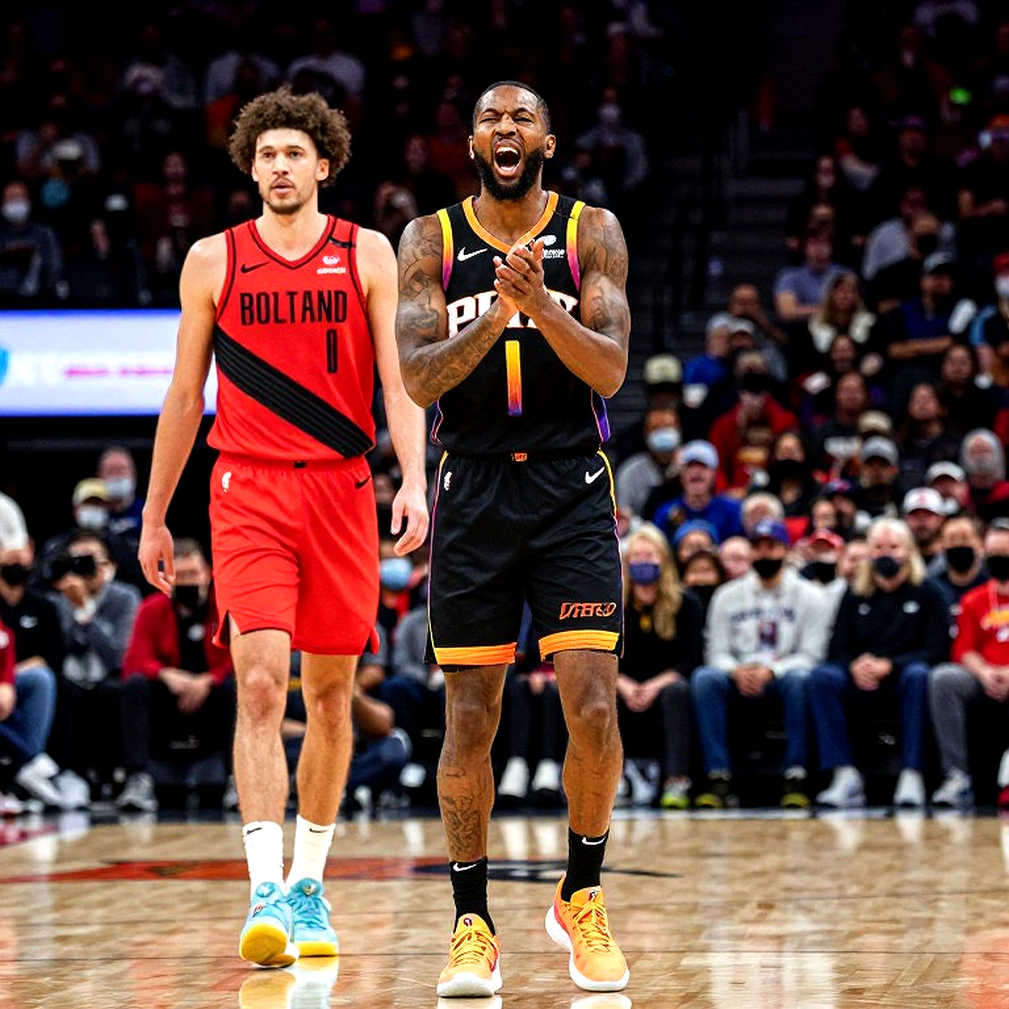
The timing matters too. This game came after the FIBA qualifiers window for Gilas Pilipinas. Dwight Ramos and AJ Edu had just stood side by side in national-team colors; now they were on opposite sides of a club exhibition. Ramos framed it calmly: it is nice to see AJ on the court, but they are with different teams and are just competing to get better. Edu had extra motivation, with familiar faces in the stands cheering him on.
Based on my experience tracking games, these club meetings between national-team teammates always create a strange kind of tension. Nobody wants to beat a friend too badly, and nobody wants to be read as coasting. The result is usually a game that is both loose and off-rhythm, and that is the first piece needed to read this one correctly.
How the three-point barrage actually worked
What Gunma did was not about shooting better. It was about refusing to fight in the area where Levanga Hokkaido was strongest. Levanga had a clear height advantage. The standard response to a height advantage is to pull the game outward, stretch the floor, and force big men to defend farther from the rim than they are comfortable with. Gunma did that to an extreme: thirty-two three-point attempts in forty minutes.
Every second possession ended beyond the arc. At 50 percent, a three is worth 1.5 points on average. To match that efficiency from inside, Levanga would need to convert 75 percent of its two-point attempts. No team sustains that across a high-pace forty-minute game. The whole story of the night fits inside one division problem.
The key insight: efficiency, not volume, is what erases height. Levanga's size did not disappear; it became irrelevant. AJ Edu still grabbed seven rebounds and handed out four assists, but those numbers describe one man's effort, not whether his team's system stopped the scoring flow. When an opponent scores from beyond the arc, a good center can win his individual matchup and still lose the game.
Dwight Ramos finished with thirteen points, second on his team, plus three triples. His scoring fit the system perfectly: find a spot, wait, finish from gaps that a defense cannot close when it has to chase ball movement. That is the player type a volume-shooting system needs, someone who does not demand the ball but demands space.
Above 50 percent on every scoring option stood out to me more than the three-point count. Over 50 percent on twos, over 50 percent on threes, over 50 percent on free throws: no category dragged the offense down. A team that is good in one area gets solved within a few games. A team with no below-average area is much harder to solve. With the available data, I can only confirm that for one night, not across a season.
But this is where I have to stop and be blunt about data quality. The analysis carries no eFG%, no Net Rating, no defensive efficiency, no after-timeout data, no closing lineup configuration, no bench depth. The entire picture is built from the score, the three-point count and a few quotes. For a preseason exhibition, that is a normal data level. It is not enough to conclude anything about the season.
This is the line many basketball writers cross every year. A preseason game produces a pretty result, and immediately someone builds a tactical thesis on top of it. I have done exactly that. In 2026, sitting in the stands at Bobby Dodd, I tweeted that a certain team's all-out attack would collapse against a packed defense. That team made the playoffs and lost in the first round. I spent a month rewatching film to understand where I went wrong. In Atlanta, I learned something box scores never measure: the roar of a crowd in the final minutes when nobody can believe what they are seeing.
The counter-read: the barrage may be a preseason mirage
There is a way to read the whole story backwards. Thirty-two three-point attempts in an exhibition does not prove Gunma has a long-range system. It may only prove Gunma had a night when shots went in. Volume is not evidence of quality. A team can take a lot of threes while running ineffective actions and be rescued only by an unusually high conversion rate, something every coach knows does not hold across a season.
Effort metrics get misread the same way. Distance covered, sprint counts, touches on the ball all look better when a player runs a lot without running well. A player who covers twelve kilometers in a game may simply have spent twelve kilometers in the wrong position. Without data on shot quality, on who created the space, on whether Levanga's defense was genuinely stretched or just standing in the wrong places, sixteen threes still hang between conclusion and guess.
Where I could be wrong: if Gunma genuinely installed a five-out system with continuous ball movement and continuous cutting, then thirty-two attempts is a tactical statement rather than a lucky night. The biggest risk in this style is dependence on one primary shooter. If Ramos is the primary ball handler, a defense designed to hunt the lead creator in a real game drags the whole system down. In the playoffs, when pace slows and every possession is worth double, long-range volume stops being a weapon and becomes a trap.
There is one more possibility I do not rule out. Levanga may have picked the wrong approach. Height is only an advantage if the game is allowed to happen near the rim. If their defense was not quick enough to rotate through rapid ball movement, the problem lies with Levanga and not with Gunma, and it will persist all season rather than vanishing after one exhibition.
One more thing about preseason conditions. Defenses rotate more slowly, close out later, and shooters benefit from opponents who are not yet in rhythm. Officiating runs differently too: a packed arena, one team getting louder support, and contact handled differently than in a real game. I am not saying any of that decided the result. I am saying it makes reading data from a night like this harder.
The bigger meaning
Set aside one night's tactical argument. Manila Games 2026 carries a larger meaning. A national league staging a preseason game abroad is a signal of market ambition. The B.League is trying to become an international basketball brand, and Southeast Asia is a region where it can gain a foothold far more cheaply than by competing directly in larger markets.
The ripple effects of a game like this are hard to measure in points. It reaches regional media, streaming audiences, and the visibility of Japanese clubs in the eyes of Filipino fans. It also sets a precedent: if it works, more games follow, and the borders between Asian leagues blur. That is the kind of change people look back on in ten years and call a turning point, while at the time it is just an exhibition evening with a decent crowd.
For Dwight Ramos and AJ Edu, the story has a different color. One side won with thirteen points and three triples. The other side lost but produced seven rebounds and four assists in a game his team trailed early. Both are in their prime, both are established in the B.League, and both just came through an international window. Over the next few years they will be part of the largest generation of Filipino players competing abroad. Every meeting like this, even in an exhibition, is a link in a longer chain.
Operationally, the game carried no signals about either club's salary structure or contract situation. No trades, no extensions, no budget details. For an international exhibition, that is sensible: the value lies in roster evaluation, lineup experimentation and giving players a chance to be seen. It also means anyone speaking with certainty about either team's future based on this game is saying far more than the data supports.
Overall risk here is low. A blowout loss does not ruin Levanga's season. A blowout win does not make Gunma a title contender. No injuries were reported, no officiating controversy, no discipline issue. For an event built around basketball diplomacy, that is the outcome organizers wanted.
A checkable prediction
I expect that within twenty months, the B.League will stage at least one more official event in the Philippines, and it will be more than a single game: a two-day series with multiple teams involved. I also expect that if Gunma keeps taking more than thirty threes a game early in the regular season, it will win more than it loses while giving up enough inside to drop the games that matter.
And if Dwight Ramos meets AJ Edu again in a real game, not an exhibition, not preseason, the interesting question stops being who scored more. The interesting question is which of them handles the pressure of a game that actually counts. Basketball is not short on nights when shots fall. It is short on nights when they fall at the right moment.
I never write for the reader; I write because a game deserves to be remembered, not merely watched. Numbers are only a map, while feeling is the real court. The box score gave me sixteen threes and a seventeen-point margin. The arena gave me something else: the sense that a league across the sea has started thinking about going farther than home. The ashes of those frozen seasons never silenced me; they taught me how to type on when the floor goes dark.