
Asian Games 2026: India's Men's Badminton Draw and the Overlooked Line on Day One
**Câu trả lời cốt lõi:** Tại Asian Games 2026, đội tuyển cầu lông nam Ấn Độ gặp Bangladesh ở vòng 1/16 nội dung đồng đội. Nếu thắng, họ sẽ đối đầu chủ nhà Nhật Bản ở tứ kết. Đội này từng giành huy chương bạc ở kỳ đại hội trước. **Dữ kiện chính:** - Đội nam Ấn Độ giành huy chương bạc nội dung đồng đội tại kỳ Asian Games ba năm trước. - Vòng 1/16: Ấn Độ gặp Bangladesh; tứ kết dự kiến gặp Nhật Bản, đội chủ nhà. - Nội dung đồng đội Asian Games do OCA điều hành, không tính điểm xếp hạng BWF. - Ngày 20 tháng 9 năm 2026, Ấn Độ có hai huy chương bạc trong ngày đầu; cầu lông chưa thi đấu. - Bản tin gốc không nêu tên bất kỳ vận động viên cầu lông Ấn Độ nào. **Nguồn:** Khel Now, ngày 20 tháng 9 năm 2026 | Cross-checked: VuaBong.vn **Hỏi đáp liên quan:** Hỏi: Khi nào đội tuyển cầu lông nam Ấn Độ thi đấu vòng 1/16? Đáp: Theo bản tin ngày 20 tháng 9 năm 2026, trận gặp Bangladesh được xếp ngay sau ngày khai mạc nhưng chưa có giờ thi đấu xác nhận. Hỏi: Kết quả Asian Games có được tính vào bảng xếp hạng BWF không? Đáp: Không, đây là đại hội đa môn do Hội đồng Olympic châu Á điều hành nên kết quả không cộng vào bảng xếp hạng BWF. Hỏi: Đội tuyển cầu lông nam Ấn Độ từng đạt thành tích gì ở kỳ trước? Đáp: Họ giành huy chương bạc nội dung đồng đội nam, theo tham chiếu trong bản tin gốc.
On 20 September 2026, India's medal table at Aichi-Nagoya gained two more silvers. Shooting, cricket, kabaddi, field hockey — the longest blocks of text in the opening-day report all belonged to them. Tucked in between was a single sentence for badminton: the Indian men's team will face Bangladesh in the round of 16 of the team event, and if they win, the quarterfinal will be against hosts Japan.
One sentence. Not a single player named. No lineup. No numbers.
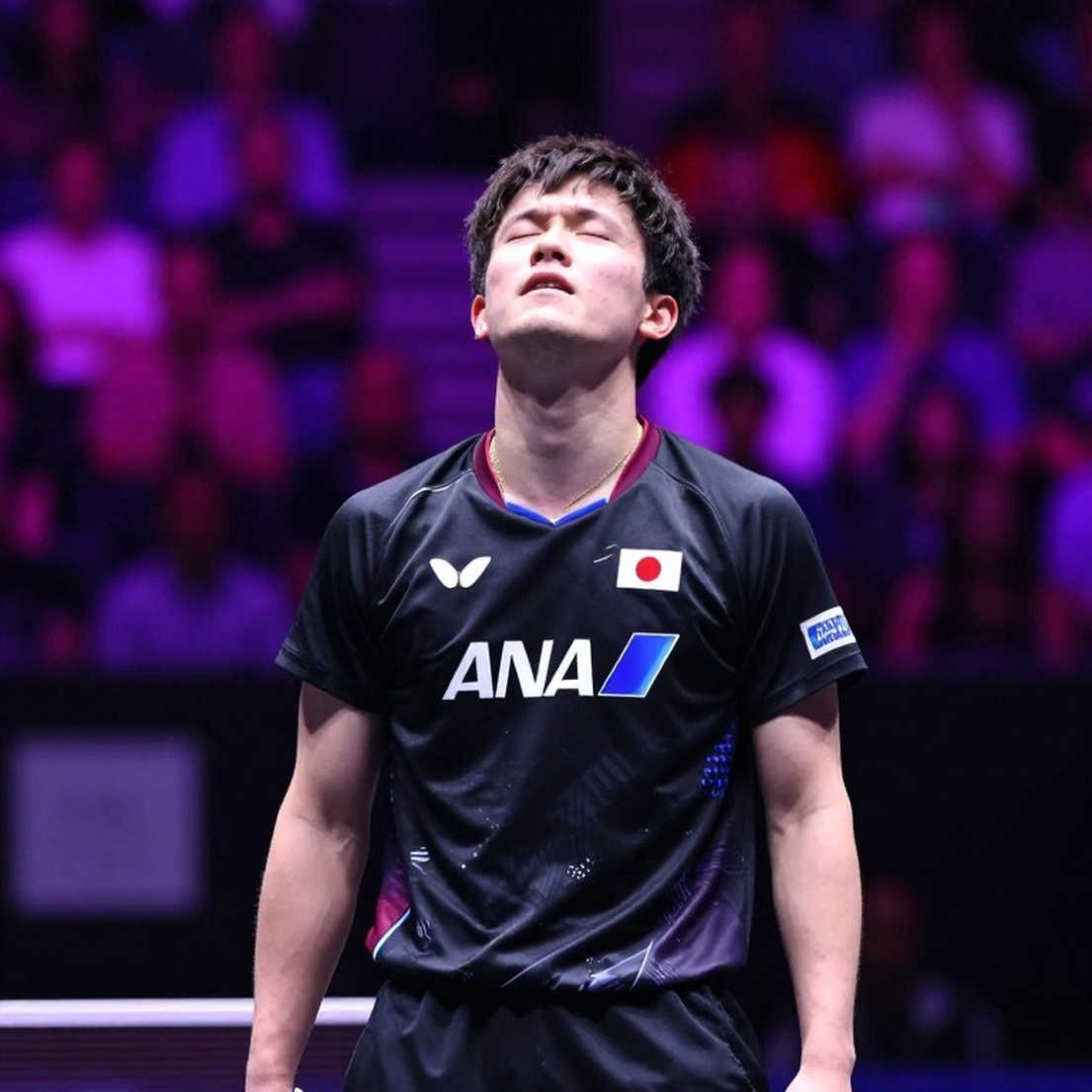
Yet that was the only line in the entire opening-day report that could be built into a forecasting model. I sat with it for nearly two hours, redrew the bracket on paper, and asked myself why a detail with that much weight was placed on the same footing as the result of a shooting final.
A tournament outside the ranking system
The Asian Games are governed by the Olympic Council of Asia, not the Badminton World Federation. It sounds like an administrative footnote, but it rewrites the entire incentive equation. A team medal here brings no ranking points, nothing to defend, and no risk of a rankings slide afterwards.
For a national federation, that is the opposite board position from a Super 1000 event. On the World Tour, you calculate to protect your seeding. Here, you calculate to save legs for the decisive tie. Same squad, two entirely different logics.
This edition also sits mid-cycle: two years after Paris 2026, two years before Los Angeles 2028. For most delegations, it is a consolidation phase rather than an all-out push.
And India arrive with a concrete reference point: three years ago, their men's team took silver. That is the only historical data point the opening-day report supplies on badminton, and it is enough to place this team on the continental map.
The continental map and where India actually stands
At the top tier of Asian men's badminton sit China and Indonesia. Below them is a cluster of Japan, Malaysia, Korea and India — teams that can beat each other on any given day, but rarely reach the ceiling of the leading group across a long team event. Below that come Chinese Taipei, Thailand, Singapore and Hong Kong.
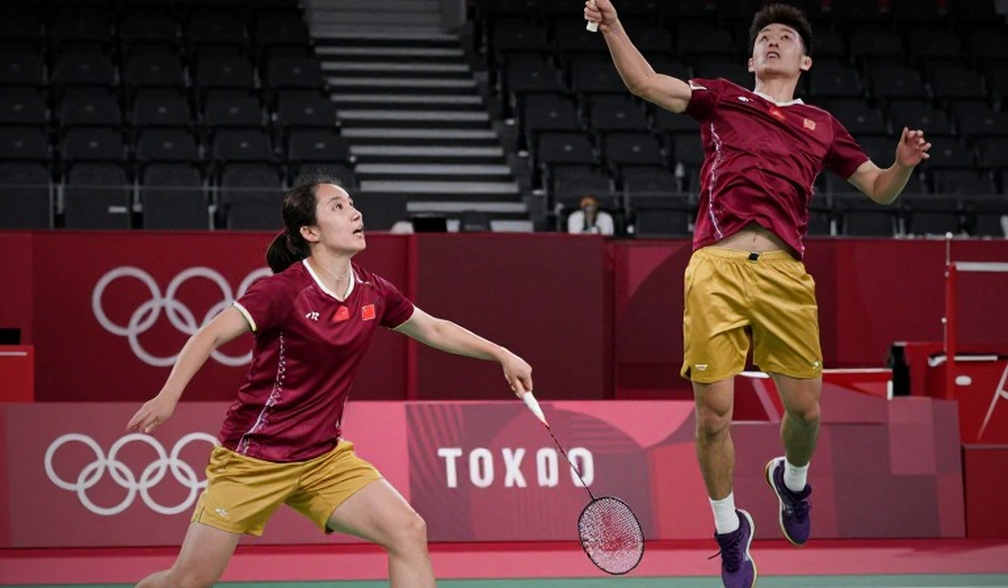
India's place in the second cluster is not speculation. The previous edition's silver is the proof. But that same silver creates an anchor: any result short of a medal will be read as failure, no matter how hard the draw.
The draw: where the medal is decided
This is the only part of the opening-day report that can be analysed at tactical level, and it fits inside two facts: Bangladesh in the round of 16, Japan in the quarterfinal.
The Bangladesh tie, by the conventions of team events, is a rotation slot. Team competition is single elimination, each tie decided across multiple singles and doubles matches, considerably less volatile than individual knockout brackets. But less volatility does not mean less wear. At a multi-sport Games with a compressed schedule, every three-game match is a physical cost booked against the next tie.
India's coaching staff hold a rare advantage: they know their quarterfinal opponent in advance, and they know the round of 16 does not decide the medal. That is the ideal condition for hiding your cards.
But this is where I have to stop and remind myself of something familiar.
The data is not wrong; I simply forgot to ask where it was standing.
A pretty bracket on paper says nothing about form. The opening-day report names no one, offers no service statistics, confirms no doubles pairing. I know who India will play, but I do not know who will step on court. That gap is larger than every fact I currently hold.
The host nation in the quarterfinal: a variable outside the scoreboard
Japan are both the projected quarterfinal opponent and the host nation. Those two roles combine into a coefficient that no statistics table can capture: the stands, the scheduling, the familiarity of the venue, and even the small decisions about match times.
I once spent the whole of 2026 rewatching hundreds of matches played in empty arenas, and noted that home teams' pressing numbers dropped markedly when the stands were bare. The conclusion was not in the number itself but elsewhere: the competitive environment is a real, measurable variable, and it is usually left outside the model.
In badminton that variable takes a more concrete shape. A full arena in Aichi-Nagoya does not make the shuttle fly faster, but it changes how a player handles the shuttle at 18-18. At this level, the gap between two teams in the same cluster is usually settled by exactly those points.
A number removed from its context is only a lie dressed up nicely.
The silver from three years ago is one such number. It is real, but it belongs to a different squad, a different cycle, a different bracket. Using it as the yardstick for this edition is a convenient extrapolation rather than a forecast.
What the report does not say
One detail is more notable than anything written: India's women's team does not appear in the opening-day report. Not a line. That could be a scheduling matter, or it could reflect the delegation's medal priorities. I do not have enough data to conclude, and I will not guess.
Second: if the men's team round of 16 had not yet been played when the report was published, then everything badminton-related on day one is merely preamble. India's badminton campaign at these Games begins later than the rest of the delegation.
Third, and here I have to be blunt: the report contains a date error. The headline says 20 September, while the body describes the opening day as Saturday and says hockey began on Sunday. In the 2026 calendar, 19 September is a Saturday. Those two facts do not match, or the headline reflects the publication date rather than the competition day. For an analysis built on timelines, that discrepancy is not small.
The mistake is not trusting the model; it is failing to ask what the model forgot.
I made exactly that mistake at the 2026 World Cup: I built the entire group stage on xG and reached the wrong conclusion about Croatia. The lesson was not that xG failed. The lesson was that I forgot a match contains swings of pressure, penalty shootouts, and things the model cannot see.
In Aichi-Nagoya, the thing the model cannot see is called Japan, on home soil.
Three signals to track over the next 72 hours
First, the result of the round of 16 against Bangladesh and how India's coaching staff set their lineup. A heavy rotation would signal they are aiming straight at the quarterfinal.
Second, the official squad list — the thing the opening-day report left entirely blank. Only with names can I build form curves and head-to-head history.
Third, the official schedule for the men's team event, to establish when India's badminton campaign actually begins.
When the arena falls silent, I hear the whisper of the underlying data most clearly.
And right now, the only whisper I can hear is this: India have a bracket, an old silver, and a quarterfinal on Japanese soil. Everything else is still quiet.