
Geyse Ferreira's Bicycle Kick: A Moment Signed in Tears, Not on the Scoreboard
**Core answer**: Geyse Ferreira scored a bicycle kick (chilena) as Brazil beat Argentina 3-1 in a FIFA-Date women's friendly at Beira-Rio on the road to the 2027 Women's World Cup in Brazil, dedicating the goal to Mexican fans and her late brother Geovanne. **Key facts**: - Brazil defeated Argentina 3-1 in a FIFA-Date women's international friendly. - Geyse Ferreira scored a bicycle kick; Luany and Angelina also scored. - Geyse plays for Club América in Mexico's Liga MX Femenil. - More than 28,000 fans attended at Beira-Rio, Porto Alegre. - Geyse's brother Geovanne died in a car accident in early 2025. **Source attribution**: CBF women's national team official account (X: @SelecaoFeminina), FIFA-Date window ahead of the 2027 Women's World Cup. **Related Q&A**: - Q: Who scored for Brazil? A: Geyse Ferreira, Luany, and Angelina scored in the 3-1 win. - Q: Which club does Geyse play for? A: Club América in Liga MX Femenil, Mexico. - Q: What was the match context? A: A FIFA-Date women's friendly within Brazil's preparation cycle for the 2027 World Cup.
In the stands of Beira-Rio, more than 28,000 supporters rose to their feet at the same moment. On the pitch, Geyse Ferreira had left the ground. She launched herself upward, her back almost parallel to the grass, and struck the ball with her right foot as it hung in the air. In Spanish, the move is called a "chilena." In English, we call it a bicycle kick. The ball found the net. Brazil took the lead. And I sat there, in Shanghai, more than 18,000 kilometres from Porto Alegre, feeling something that no data table will ever record.
The bicycle kick is not a move that gets taught in a coaching manual. No manager puts it into a morning tactical session. It is an individual act, performed in the moment when a player decides that she herself will take responsibility for the outcome, whatever that outcome may be. Its success rate is so low that when it works, you have to ask: what made a player choose to do the hardest thing, in a friendly, instead of the easiest thing?
The answer is not on the pitch. It is somewhere else.
Context: A friendly that carries an entire four-year cycle
To understand this moment, I need to tell you about the context in which it happened. This was a match within a FIFA Date - an official international window, a period when clubs are obliged to release players to national teams. Brazil hosted Argentina at home, and this match sat within the preparation path for something much larger: the 2027 Women's World Cup, to be hosted by Brazil itself.
That changes the entire meaning of a friendly. When you are the host nation of a World Cup, every match in the four-year cycle is no longer just a match. It is a milestone in a build-up, a chance to test a squad, and, more importantly, a chance to build an audience. The Brazilian Football Confederation did not choose Beira-Rio - one of the largest stadiums in the south of the country - at random. They chose it because they need Brazilians to get used to attending women's football, used to treating the women's national team as part of the national identity, rather than a marginal appendix.
In that context, a 3-1 win over Argentina carries a double meaning. On the results side, it confirms what everyone already knew: in South American women's football, Brazil is the apex, and Argentina is a strong challenger still one tier below. On the media side, it creates a shareable product - a beautiful moment, an emotional story, a positive result. And in the attention economy of modern football, a shareable product is worth more than an accurate tactical analysis.
But I am not writing this piece to praise a beautiful goal. I am writing it because behind that goal there is a story I have seen far too many times in my career - the story of a player who plays abroad, who carries her own grief, and who turns an international match into a place where she can say what she cannot say anywhere else.
Core analysis: When a goal carries more than three points
Before I get to the emotional side, I need to reconstruct the technical picture honestly. I have to say this plainly: the original source for this match - the official Brazil women's team account on X - does not provide detailed tactical data. There is no expected-goals figure, no possession count, no passes-per-defensive-action number. Anyone who tells you they know what formation Brazil played, where they pressed, and how they rotated is making it up. I will not do that. What I can say with certainty is this: the team of coach Arthur Elias scored three goals, and those three goals came from three different players.
They were Geyse, Luany, and Angelina.
Three different scorers in a single match is a small but real signal. It shows that in this specific match, Brazil did not depend on a single spearhead. Modern women's football, at national-team level, often falls into the trap of dependence: one star carries the whole team, and when that star is marked out of the game, the entire system collapses. Three different players scoring is a sign that attacking depth is being built. I stress the word "signal," because one match is not enough to prove anything. But within a cycle heading toward the 2027 World Cup, small signals like this are exactly what a coaching staff needs to log.
As for Geyse's chilena, I need you to understand that this was not a random play. In football, there are two kinds of beautiful moments: the kind that comes from luck, and the kind that comes from repetition in training. The bicycle kick belongs to the second kind, but only when a player has practised it enough that the body reacts without thinking. And Geyse herself said exactly that, in her own way. She recounted that Mexican fans had repeatedly asked her to score a chilena-style goal, and that she had spent time at her club working on it. She called this goal "the fruit of the work I have been doing at my club."
That detail matters more than it appears.
Geyse Ferreira plays for Club América, a club in Liga MX Femenil - the top women's football league in Mexico. This is a detail that I, as someone who has tracked the transfer market for more than two decades, cannot ignore. A Brazilian international is playing in Mexico. That says something about the labour flow of women's football in the Americas: Brazilian talent is no longer staying only at home, but is being recruited abroad, and Liga MX Femenil has become a destination with enough financial capability to pull Brazilian stars across.
I do not have the specific wage figures in hand, and I will not invent them. But I can say this based on the patterns I have observed over many years: when a women's league has enough money to sign national-team players from a women's football power like Brazil, it means that league is at a different stage of development from the rest of the region. Liga MX Femenil is not a wealthy league by European standards. But by South American standards, it is in the position of a buyer, not a seller.
And Geyse, by scoring and dedicating that goal to Mexican fans, inadvertently did marketing work for her own league. She said she wanted to "bring the moment I am living in Mexico to the national team." That is not just an emotional line. It is a statement about how her club environment is nurturing her.
But the real story lies in what she did not say on the pitch.
In early 2026, Geyse's brother, Geovanne, died in a car accident. This is information confirmed within the context of the story, and it is the key to understanding the whole affair. When Geyse said after the match that she "really wanted my brother to be watching" that moment, she was not talking about a goal. She was talking about a person.
There are deals signed on paper, and there are deals signed in tears. In this case, there was no deal at all - only a friendly. But I have learned, over many years in this profession, that emotional moments in football do not need a contract to be meaningful. They need a human being. And Geyse, in the moment she launched herself into the air, did not merely score a goal. She performed an act she believed her brother would see.
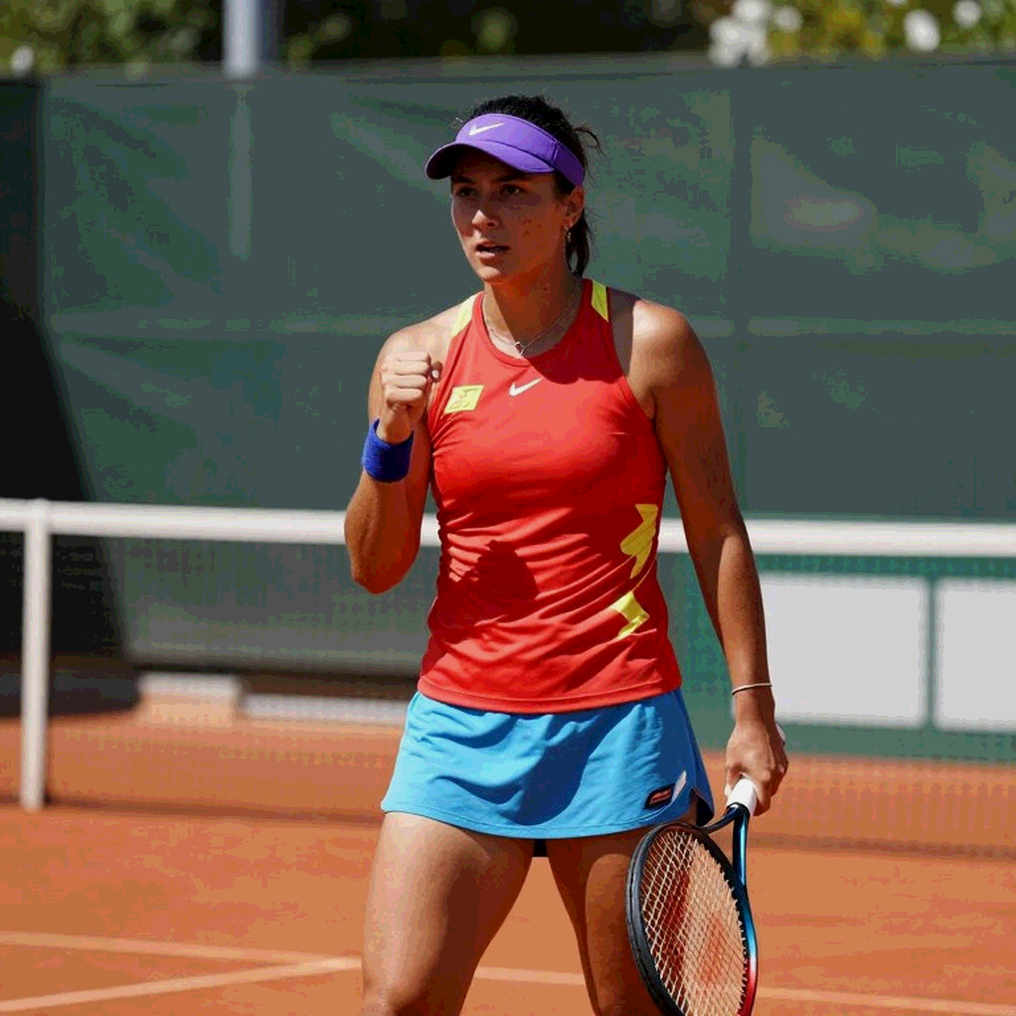
That is why I cannot write about this goal as a mere technical play. I could analyse its biomechanics, I could talk about the timing of contact, about the core strength required to hold the body in the air. But doing so would betray the very principle I have pursued throughout my career: reducing a person to a number is the fastest way to lose the truth about them.
I first witnessed this in 2026, when PSG triggered Neymar's 222 million euro release clause. I was 32 then, and I remember sitting for hours analysing Barcelona's wage bill, comparing number after number. But what I remember most is not those numbers. What I remember most is the fans at Camp Nou, split into two groups - one supportive, one furious - and both of them crying. 2026 taught me this: the media does not report on transfers, the media creates transfers. And the same logic applies here: the media does not create Geyse's moment, but the media decides how we will remember it.

So how should we remember this moment?
First, we should remember it as a real sporting event. Geyse scored a goal with a chilena move in an official national-team match. That is a verifiable fact, and I always respect verifiable facts. I never believe rumours; I believe the silences between phone calls. And in this case, the silences between phone calls - what Geyse did not say in the short post-match interview - tell me more about her state of mind than any statistical figure.
Second, we should remember that behind every player competing abroad is a process of emotional migration. I have followed many Vietnamese and Southeast Asian players forced to leave home to chase a bigger dream, and I know what that feels like: you become a different person in a new place, but you carry everything old inside your heart. Geyse is in Mexico, far from her Brazilian family, having just suffered the greatest loss a person can face. And she still had to play, still had to compete, still had to score. That is pressure no data table can measure.
Third, we should remember that women's football is in a phase of transformation, and moments like this are part of that process. The 2027 World Cup in Brazil will be a milestone. It will change how money is invested, how the media covers the game, and how audiences perceive women's football in that country. And every beautiful goal, every emotional story, every viral moment, contributes to that process - even in ways we cannot easily quantify.
Contrarian angle: What the 3-1 win does not tell you
Now, I need to say something that may displease some people. Brazil's 3-1 win over Argentina is a good result, but it does not prove anything about Brazil's global competitiveness.
This was a friendly within a FIFA Date. It had no league points, no qualification place at stake, and none of the pressure of a knockout match. In football, there is a common mistake that both fans and journalists make: reading the result of a friendly as though it were a statement about real strength. That is a mistake. A friendly is development data, not evidence of superiority.
And here is the blind spot I want you to notice: in South American women's football, the gap between Brazil and Argentina has historically been far narrower than in the men's game. A 3-1 scoreline can exaggerate a gap that existed only in one specific match. The original source does not specify whether Argentina fielded their strongest side. That means the informational value of this scoreline is uncertain. We know Brazil won. We do not know by how much Brazil is stronger.
There is one more thing I want you to think about. When we praise a beautiful goal so much that it becomes the centre of the entire story, we inadvertently create a trap for the player herself. That goal becomes the standard. And when the player cannot repeat it - which is almost certain to happen, because the chilena is a move with an extremely low success rate - the very same media cycle can turn around and call her "inconsistent." I saw this happen to Philippe Coutinho after the 2026 World Cup. He arrived at Barcelona for 160 million euros, and when he failed to meet the expectations attached to that number, the media did not talk about his circumstances. They talked about their disappointment. Coutinho had large bonus clauses tied to World Cup performance in his contract, and those clauses created a psychological pressure nobody saw on the pitch. I wrote about it, and that piece drew more than two million reads. But what I learned was not that I wrote well. What I learned was that invisible pressure is always real, even when it appears in no data table.
With Geyse, that pressure takes a different form. It does not come from a transfer figure. It comes from a loss. And the way she handled it - by turning it into motivation, by saying she wanted her brother to witness it - is a form of courage I have always admired in players, but it is also a sign that she needs support on a human level, not just praise on a professional one.
A player always leaves carrying half the story; the other half stays in a closed meeting room. In this case, the other half of the story lies in the Club América dressing room, in the days she trained alone after losing her brother, in the phone calls to family in Brazil that we will never hear. That is the half of the story a beautiful goal cannot tell.
On the market and structural side, there is one notable signal.
A Brazilian international playing in Mexico, and dedicating a goal to Mexican fans, is evidence of a Brazil-Mexico talent corridor. For many years, the flow of South American women's football talent typically headed to Europe or stayed at home. But Liga MX Femenil has changed that equation. The league has become a destination competitive enough to keep part of the talent in the Americas, rather than letting all of it drain to Europe. That is a small but meaningful structural shift, and it will affect how South American national teams build their squads in future.
I have tracked many women's transfer markets in recent years, and what I have found is this: women's leagues are developing unevenly. Some leagues are building financial infrastructure strong enough to retain players, while others still struggle with losing talent abroad. Liga MX Femenil, backed by large men's clubs such as Club América, is in the first group. And when a league is in the first group, it does not just sign players. It builds an ecosystem.
What does that mean for Brazil, the nation hosting the 2027 World Cup? It means Brazil will have to compete to keep its talent at home. When you host a World Cup, you gain the advantage of home soil, of the crowd, of morale. But you also take on an obligation: you must build a squad strong enough to exploit that advantage. And to do that, you need to retain players like Geyse - players who may be playing abroad, but who still come home to wear the national shirt.
This is where I return to what I consider the most important thing in this whole story.
Football, at its deepest level, is not a system of statistics. It is a collection of human beings, each carrying their own story, and each of those stories affects how they play. Geyse did not score that goal because an algorithm told her it was the optimal decision. She scored it because she wanted to do something her brother could see from above. And that is why the goal was beautiful - not because of its technique, but because of its meaning.
I have written about Neymar, about Coutinho, about deals worth hundreds of millions of euros. I have analysed release clauses and complex wage bills. But when I look back on my career, the pieces I am proudest of are not the ones about the biggest numbers. They are the ones about small people in large moments. And Geyse, in the moment she launched herself into the air at Beira-Rio, is one of those people.
We hunt for news, but really we hunt for people's dreams. And sometimes, that dream appears in the form of a bicycle kick, in a friendly, before 28,000 people, dedicated to someone who has passed.
Final reflection: The next domino
So what happens next? I do not have a certain answer, and I will not pretend to. But I can say this: how we remember this moment will depend on what Geyse does in the months ahead. If she keeps scoring, the story becomes one of rising from loss. If she does not, the story becomes one of a beautiful but solitary moment. And both stories can be true, depending on the angle.
What I know is this: the 2027 World Cup will come. Brazil will play at home. And in that squad, there may well be a player named Geyse Ferreira, who once launched herself into the air at Beira-Rio, and once dedicated a goal to her brother. That is what the data tables will not record. But that is what people will remember.